A rupture-disc purchase becomes risky when the request gives only a pipe size and pressure class. By the end, you will have a quotation-ready data package, a method for checking the disc and holder, and a purchase-order record that prevents temperature, orientation, and material errors.
Key takeaways
- State burst pressure at the specified burst temperature, not only at 25 °C.
- Send process conditions, drawings, datasheets and relief-system details with the RFQ.
- Check cycling, vacuum, backpressure, corrosion and dust hazards before choosing construction.
- Compare suppliers by technical equivalence, certificates, fit and purchase-order accuracy.
Build the pressure-and-temperature specification before requesting a quote
A quotation is not actionable unless it states the required burst pressure at the specified burst temperature. Burst pressure at 25 °C is not interchangeable with burst pressure at the process temperature because disc strength and certified burst value change with temperature.
Define these rupture disc ordering requirements before requesting a price:
1. Identify the protected equipment tag, vessel or pipeline service, design pressure, maximum allowable working pressure, normal operating pressure, set or burst pressure, and pressure-side tolerance. Keep normal pressure safely below the disc’s rated burst point; a disc that operates too close to burst pressure can fail during routine fluctuations.
2. State normal, design, and upset temperatures, the required burst temperature, and temperature-side tolerance. Specify the fluid composition and phase, including corrosive, toxic, flammable, polymerising, or combustible-dust service.
3. Describe each relieving scenario, such as blocked outlet, fire exposure, runaway reaction, or gas expansion. Give the required relieving rate, required flow capacity, allowable constant and built-up backpressure, discharge piping arrangement, and vent destination.
4. Report vacuum conditions during cooldown, draining, steam-out, condensation, or pump-out, including vacuum magnitude and temperature. Do not assume a positive-pressure disc withstands vacuum.
If a pressure-relief valve shares the arrangement, state whether the disc is upstream of it and how interspace pressure will be detected: tell-tale, pressure switch, or gauge. Request the complete compatible assembly—disc, holder, gaskets, fasteners or clamp, and any vacuum support, sensing, or fragment catcher—rather than a membrane alone.
Send the documents and process information that make the RFQ actionable
A rupture disc quotation in vadodara is not actionable if it gives only a diameter and pressure. State the protected equipment tag, vessel or pipeline service, design pressure, operating pressure, required burst pressure at the process temperature, and whether the quoted value is minimum, nominal, or maximum. Include the manufacturing range or tolerance.
Send these items with the RFQ:
- P&ID showing the protected equipment, relief path, isolation valves, downstream header, and installation orientation.
- Equipment datasheet or nameplate photograph showing tag number, volume, design pressure, design temperature, nozzle size, and connection details.
- Nozzle and holder drawings showing flange standard, nominal bore, facing type, bolt circle, gasket seating, clamp arrangement, and available face-to-face space.
- Photographs of the installed nozzle, holder, adjacent piping, supports, and access area. Include a scale or known dimension.
- Process composition, phase, concentration, solids or dust content, corrosion concerns, cleaning chemicals, and expected fouling.
- Vacuum conditions, backpressure, cyclic pressure history, required flow capacity, and any vacuum-support, sensing, or fragment-catcher requirement.
- Required code and edition, such as ISO 4126-2, plus the owner, insurer, or statutory authority documentation rules.
Use this compact check before sending the rupture disc ordering requirements:
| Input | What it confirms | Omission risk |
|---|---|---|
| Material compatibility | Wetted disc and gasket materials | Corrosion or leakage |
| Holder drawing | Assembly fit and seating | Installation failure |
| Burst temperature | Applicable certified rating | Incorrect pressure selection |
Request a complete assembly quotation: disc, holder, gaskets, fasteners or clamp, certificates, identification marking, and traceability records.
Match disc construction to cycling, vacuum, backpressure, and process hazards
Frequent pressure cycling can fatigue a forward-acting tension disc and cause premature rupture. For compressor pulsation, batch swings, or repeated start-ups, ask for a fatigue-resistant reverse-acting or supported design, then confirm its cycle rating and operating-to-burst-pressure margin. A disc rated only for positive pressure is not automatically suitable for vacuum.
- Specify every vacuum event, including cooldown, draining, steam-out, condensation, and pump-out. Give the vacuum magnitude and temperature; require a vacuum-supported design or separate vacuum breaker when the disc cannot withstand the condition.
- State whether backpressure is constant, variable, or generated by a connected relief header. The supplier must check burst performance and relieving capacity at that backpressure, not at atmospheric discharge.
- Describe the complete process-side exposure: fluid composition, concentration, chlorides or halides, moisture, solids, cleaning chemicals, and hydrogen exposure. Select wetted materials for corrosion, permeation, erosion, and polymer compatibility; a generic stainless-steel choice can fail in a contaminated or wet service.
- Size the disc for the named relieving scenario, phase, required flow rate, relieving temperature, and allowable backpressure. Nominal pipe size and flange pressure class do not establish capacity. Include a rupture-indicator requirement when a failed disc must trigger an interlock or alarm.
Treat industrial rupture disc manufacturer india as a search term, not proof of suitability. Request the proposed construction, wetted-material grade, vacuum rating, backpressure basis, flow coefficient or certified capacity, and burst tolerance for the specified temperature. Confirm these against the governing code and process hazard review.
Check fit, relief arrangement, and required compliance documents
Do not approve a quotation until the complete assembly matches the vessel or pipe connection and the relief path. Your rupture disc ordering requirements must identify the protected equipment tag, nozzle size, flange standard, facing, holder dimensions, installation orientation, and whether the disc sits alone or upstream of a pressure-relief valve.
Check these items against the approved drawing and P&ID:
- Confirm the quoted disc, holder, gaskets, bolts or clamp, vacuum support, fragment catcher, and sensing parts form one compatible assembly. A membrane with the wrong holder or seating detail will not seal or burst as specified.
- State constant and built-up backpressure, discharge-pipe size and routing, vent destination, and required flow capacity. Ask the supplier to confirm the effect on burst pressure, flow area, and valve operation.
- If a disc sits between the vessel and relief valve, specify the interspace monitoring method: tell-tale, pressure gauge, pressure switch, or another approved arrangement. Trapped pressure can load the valve and hide a leaking or ruptured disc.
- Name the governing vessel or piping code, required certification jurisdiction, owner specification, statutory inspection regime, and insurer requirement. Write the required ISO 4126-2 edition or ASME code instead of “as per standard.”
- Request dimensional drawings, material certificates, heat or batch traceability, identification markings, burst-test records or certificate of conformity, and the applicable design and test standard. ISO 9001 certification alone does not prove pressure-relief performance.
Reject the quote if it omits burst-temperature conditions, code acceptance, or a clear document list. Ask for written confirmation that the assembly fits the named connection and performs with the stated backpressure.
Compare suppliers on technical equivalence, documentation, and the final purchase order
Compare a local quote with every alternative against the same assembly and evidence, not against distance alone. A rupture disc quotation in Vadodara is comparable only when burst pressure is stated at the specified process temperature, with minimum, nominal, or maximum value and manufacturing range clearly identified.
| Check | Supplier A | Supplier B |
|---|---|---|
| Complete assembly | Disc, holder, gaskets, bolts or clamp, vacuum support, sensor, fragment catcher | Same items, with model numbers |
| Technical identity | Tag, size, connection, material, thickness, flow direction, backpressure | Identical fields and values |
| Evidence | Drawing, material certificate, burst-test record, conformity certificate, batch traceability | Same documents and marking details |
| Supply risk | Lead time, alloy import exposure, packing, calibration and document turnaround | Lead time, alloy import exposure, packing, calibration and document turnaround |
| Support | Installation guidance, replacement stock, field response | Installation guidance, replacement stock, field response |
Reject the lower price if it substitutes a holder, changes facing, omits temperature-specific burst data, or offers a general ISO 9001 certificate without product-performance evidence. A rupture disc supplier for heavy manufacturing in Vadodara must also state replacement availability and corrosion-protective packing; a delayed disc can extend an outage.
Record these items on the purchase order:
- Protected-equipment tag, disc tag, quantity, and spare quantity
- Nominal size, holder model, flange standard, facing, and seating dimensions
- Material grade, thickness, burst pressure, burst temperature, tolerance, and manufacturing range
- Flow direction, vacuum requirement, backpressure, detection device, and required certificates
An industrial rupture disc manufacturer in India, including Flammer Technologies Private Limited, should be judged by whether its delivered assembly and traceable documents match those purchase-order fields—not by its address.
Related product
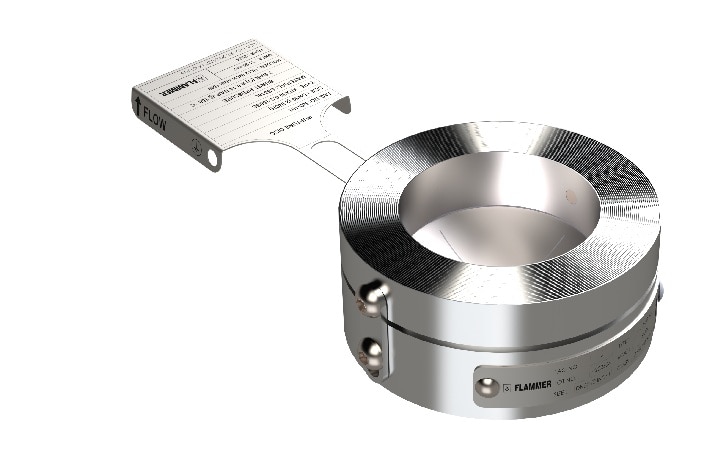 | Rupture Disc Established in 2019 and headquartered in Vadodara, Gujarat, Flammer Technologies Pvt. Ltd. View product → |
Frequently asked questions
What pressure and temperature details must a rupture disc RFQ include?
State the required burst pressure together with the specified burst temperature. Include operating pressure, operating temperature, design pressure, design temperature and any pressure or temperature cycling.
Which documents and process information make a rupture disc quotation actionable?
Send equipment drawings, nozzle and holder details, existing disc datasheets, process-media information, operating conditions, relief-system data and the required compliance documents.
How should you choose rupture disc construction for a heavy manufacturing plant?
Match construction to pressure cycling, vacuum exposure, backpressure, corrosion, temperature and process hazards such as combustible dust or reactive media.
What should you check before approving rupture disc fit and compliance?
Verify nominal size, orientation, holder compatibility, relief arrangement, burst-temperature basis, tolerances, material traceability, test records and certificates required for the installation.
Keywords