Milling, micronizing, drying, blending and dust collection can create an explosible atmosphere inside equipment even when the powder looks harmless during normal production. By the end, you will know how to test the dust, separate dust hazards from solvent-vapour hazards, specify the installation, and verify that a proposed vent protects the actual vessel and room.
Key takeaways
- Classify dust explosibility before selecting a vent.
- Reject flameless vents where toxic, hot or oxygen-rich discharge remains unsafe.
- Match vent area, Kst, Pmax and equipment geometry to the process.
- Demand test reports, installation drawings and isolation evidence before approval.
Which pharmaceutical processes create an explosible dust hazard?
Milling, pulverising, micronizing, sieving, blending, tablet compression, coating, drying, pneumatic conveying, charging and filter cleaning can create explosible dust. A powder need not look dusty during normal operation: fine particles can escape at transfer points, seals and filters. An explosion can disperse settled dust layers, turning them into secondary fuel.
| Process | Where dust forms | Exposure to ignition |
|---|---|---|
| Milling and pulverising | Mills, feed points and discharge chutes | Hot bearings, mechanical impact or foreign metal |
| Micronizing and sieving | Classifiers, screens and product receivers | Electrostatic discharge or friction |
| Blending and tablet compression | Blender seals, hoppers and presses | Static discharge or overheated components |
| Coating and drying | Spray zones, dryers and exhaust filters | Overheated dryers or solvent-related ignition |
| Pneumatic conveying and charging | Transfer lines, bins and vessel inlets | Static discharge, impact or an incorrect connection |
| Filter cleaning | Baghouses, cartridge filters and dust deposits | Smouldering filter deposits |
Do not infer hazard from the ingredient name. Test the formulation and process condition that will actually enter the vessel, including:
- Kst using ASTM E1515 and Pmax and explosibility using ASTM E1226
- Minimum ignition energy, minimum explosible concentration and dust-layer ignition behaviour
- Particle-size distribution, moisture content, airborne concentration and agglomeration
- Actual binders, coating materials and dried residues
Particle size, moisture and binders can change the result. Use those representative values when selecting a pharmaceutical dust explosion vent, and investigate grounding, bonding, temperature detection, spark detection and housekeeping alongside venting.
When is a flameless vent the wrong technology?
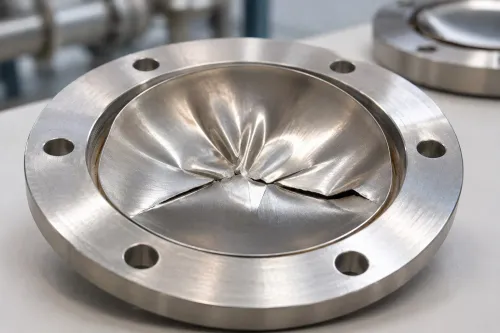
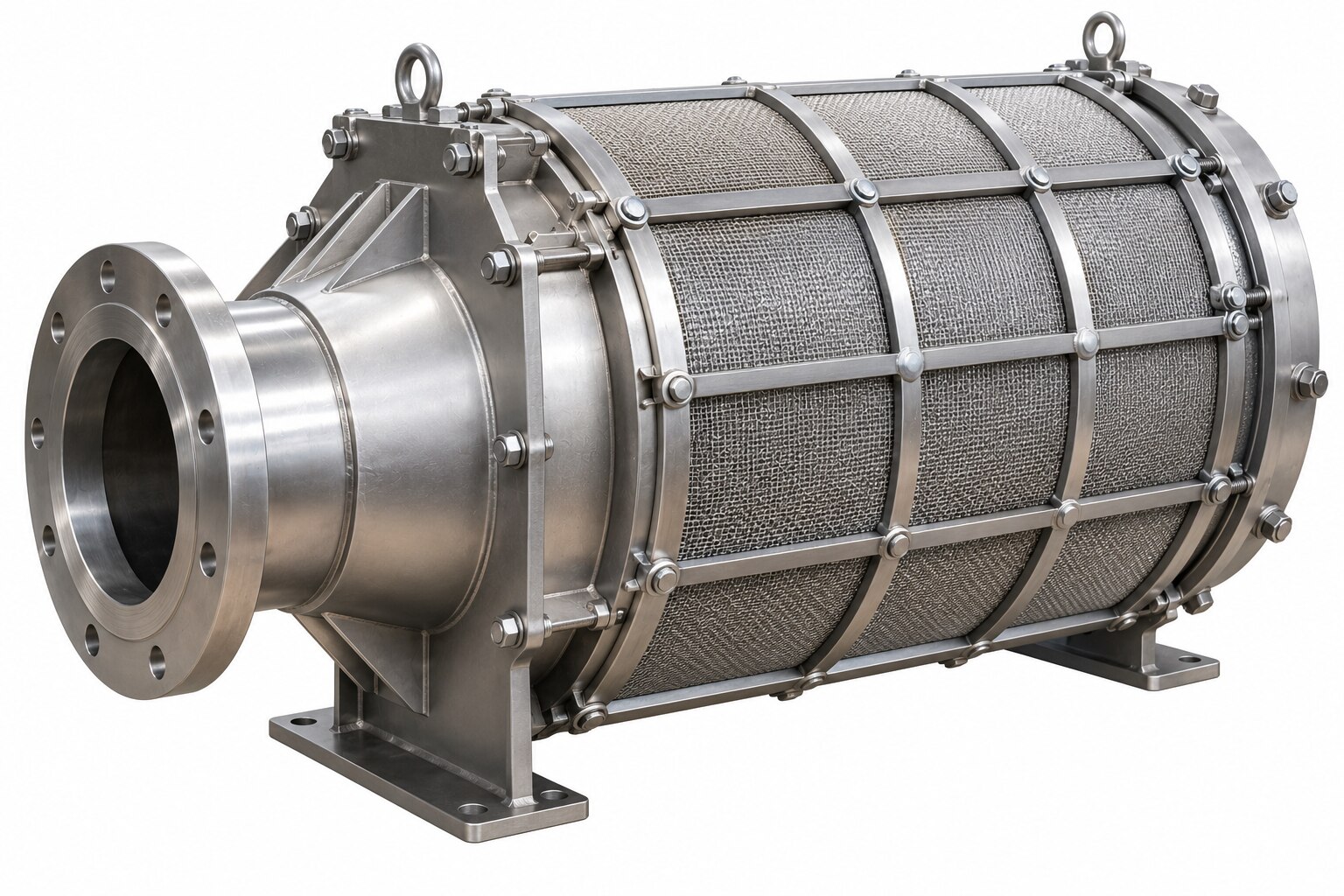
A flameless vent is the wrong technology when the credible event is a solvent-vapour explosion, gas explosion, detonation or runaway reaction rather than a combustible-dust deflagration. It is a tested deflagration-venting assembly for combustible dust, not a pressure-relief valve for ordinary process overpressure and not protection against every unrestricted vapour explosion.
1. Ask whether alcohol or solvent vapour can exist during charging, drying, coating, cleaning or solvent recovery. Also check for a dust-vapour hybrid, such as powder suspended in an ethanol atmosphere.
If either hazard exists, assess vapour concentration, ignition sources, pressure development and the isolation strategy separately; do not size the vent from dust Kst and Pmax data alone.
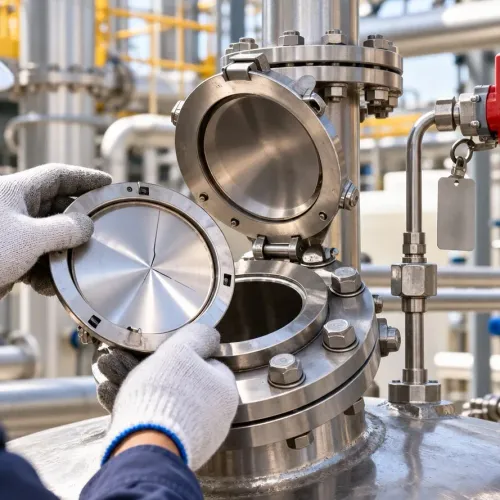
2. Use a flameless vent only where the tested assembly matches the dust, vessel and operating conditions. Suitable flameless explosion vent applications include dust collectors, cartridge and bag filters, mills, micronizers, dryers, blenders, mixers, sieves and pneumatic-transfer receivers.
3. Treat “flameless” as flame reduction, not complete hazard removal. The assembly does not eliminate grounding and bonding, spark and temperature detection, housekeeping or isolation on connected ducts and chutes. Without those controls, flame and pressure can propagate through transfer lines, while hot gases, smoke and dust still enter the room after activation.
How do you size and install the assembly on pharmaceutical equipment?
Size the complete flameless vent for pharmaceutical plants against the vessel, dust and room—not the vent label alone. The supplier needs:
- Vessel volume and geometry, including the proposed opening
- Maximum explosion pressure, Pmax, and Kst
- Allowable reduced pressure and the enclosure’s pressure rating
- Initial pressure, operating pressure and vacuum conditions
- Operating temperature and dust characteristics, including fouling or cleaning effects
- Venting orientation and certified connection size
- Connected ducting, valves and isolation devices
- Occupancy, room layout and the discharge direction
The weakest enclosure component must withstand the verified reduced explosion pressure. Check the filter housing, access door, sight glass, glovebox window, rotary valve and duct connection, allowing for ageing, corrosion, fatigue and installation effects; a vendor’s reduced-pressure figure does not automatically prove that the equipment can tolerate it.
Install the assembly using the certified connection size, reinforce the vessel around the opening, and follow the tested orientation. Keep the vent path unobstructed, with inspection and cleaning access preserved.
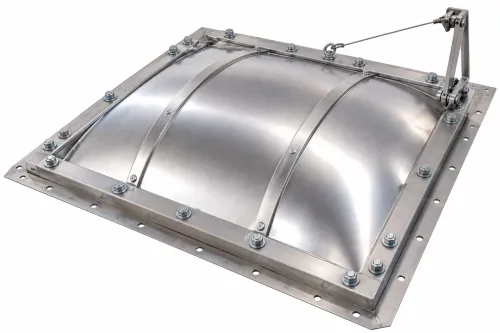
A different vent panel, mesh arrangement, protective screen, insulation, HEPA filter, acoustic cover or weather hood can increase discharge resistance and invalidate certified performance unless the supplier confirms the change.
Check vacuum service before approval: verify the assembly resists the vessel’s normal negative pressure, does not deform, and cannot pull product or cleaning residue into the flame-arresting element. The same checks apply to a filter receiver, bin, dryer, mill, blender or other vessel.
How should an indoor discharge zone and isolation plan protect people?
A flameless vent reduces external flame and burning-particle discharge; it does not make the outlet harmless. After opening, hot gases, a pressure wave, smoke, toxic decomposition products and expelled dust can enter the room.
1. Mark the discharge zone before fixing the vent. Aim it away from operators, escape routes, air intakes, HVAC returns, combustible storage and adjacent equipment. Record room geometry, occupancy, ambient temperature and humidity, discharge direction, cleaning chemicals, electrical classification, and local fire-safety and hazardous-area requirements for indoor explosion protection in vadodara.
2. Match the room and vessel to the complete assembly’s tested maximum reduced explosion pressure, residual pressure, response characteristics, operating-temperature range and dust limitations. Check the filter housing, doors, windows, ducts and connected equipment against that pressure; a flameless element does not replace structural protection or ordinary overpressure relief.
3. Treat the vent opening as a predictable event in the containment design. Coordinate sealed enclosures for potent compounds, pressure cascades, operator protection and cleaning validation with the relief opening, or the discharge can defeat containment and invalidate cleaning controls.
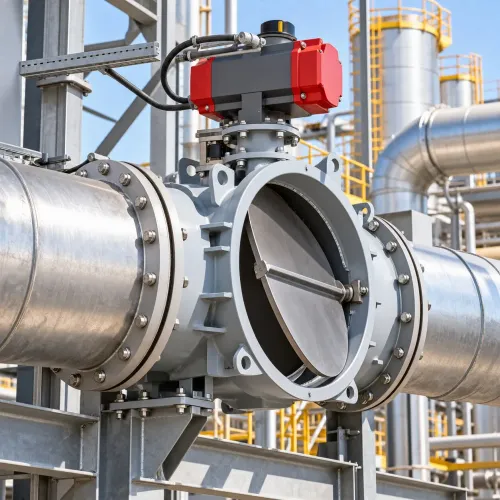
4. Isolate every connected dust-collection line, pneumatic-transfer pipe, product chute and duct. Use a tested isolation valve, chemical barrier, fast-acting device or another suitable method at equipment boundaries; otherwise flame and pressure can propagate into connected plant.
Keep the marked zone accessible for inspection and free of temporary storage. Have the process-safety, vessel, HVAC and local approval teams approve the arrangement before commissioning.
What evidence should you demand before approving a Vadodara installation?
Do not approve a flameless explosion vent for pharmaceutical processing in vadodara because its label says “flameless.” Approve it only when the evidence matches the formulation, equipment and room where it will operate.
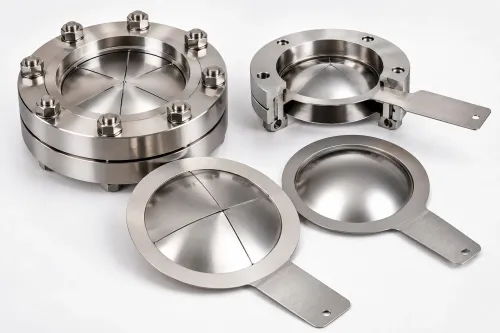
1. Request the complete assembly’s exact certificate or test report, device marking, tested vent area, maximum reduced explosion pressure, allowable enclosure pressure and response characteristics. Confirm that the test covers the vent panel, flame-arresting element, frame, seals and connection—not only a panel or mesh.
2. Check the stated operating-temperature range, initial-pressure limits, dust category, installation orientation and connection details against the vessel’s actual temperature, pressure, volume, geometry and vent opening. Record cleaning chemicals, inspection access, product fouling limits and any restriction caused by dust deposits or HEPA filters.
3. Match the evidence to the tested formulation and process condition: Kst, Pmax, particle size, moisture, concentration and agglomeration. Reject a document that covers a different powder, vent area, vessel volume or orientation.
4. Ask the supplier to explain how the assembly complies with EN 16009 for flameless explosion venting devices, EN 14491 for dust explosion venting and NFPA 68, and which ATEX equipment requirements apply. Also record the Vadodara room geometry, occupancy, ambient conditions, electrical classification and local Gujarat approval requirements.
5. Obtain drawings, structural calculations, discharge-zone controls, isolation devices and commissioning checks. Connected ducts, chutes and dust-collection lines need tested isolation.
Flammer Technologies Private Limited can provide an application-specific document pack for review by the vessel designer, process-safety engineer and local approval authorities before purchase.
Related products
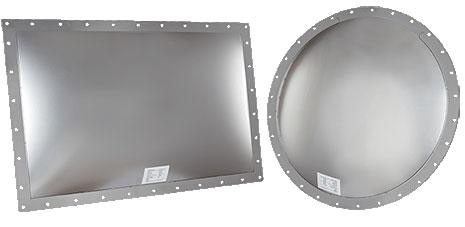 | Explosion Vents At Flammer, we are manufacturers of Explosion Vent — purpose-built passive safety devices designed to protect your industrial equipment, your... View product → |
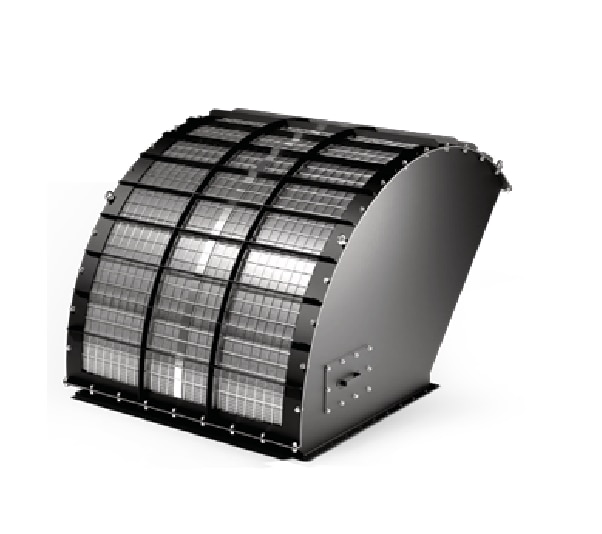 | Flameless Explosion Vent At Flammer, we are manufacturers of Flameless Explosion Vents — specialist safety devices that protect industrial equipment from explosion pressure... View product → |
Frequently asked questions
Which pharmaceutical processes create an explosible dust hazard?
Milling, micronizing, sieving, blending, tablet compression, coating, drying, conveying and filter cleaning can release combustible fine dust.
When is a flameless vent the wrong technology?
Choose another solution when vented gases, flames, pressure, toxic dust or heat cannot be safely contained inside the available space.
How do you size and install a flameless vent on pharmaceutical equipment?
Use the dust Kst and Pmax values, vessel volume, vent opening, reduced pressure and installation geometry specified by the manufacturer and design standard.
What evidence should you demand before approving a Vadodara installation?
Request dust-test results, certified performance data, calculations, drawings, material details, inspection records and documented isolation arrangements.
Related product
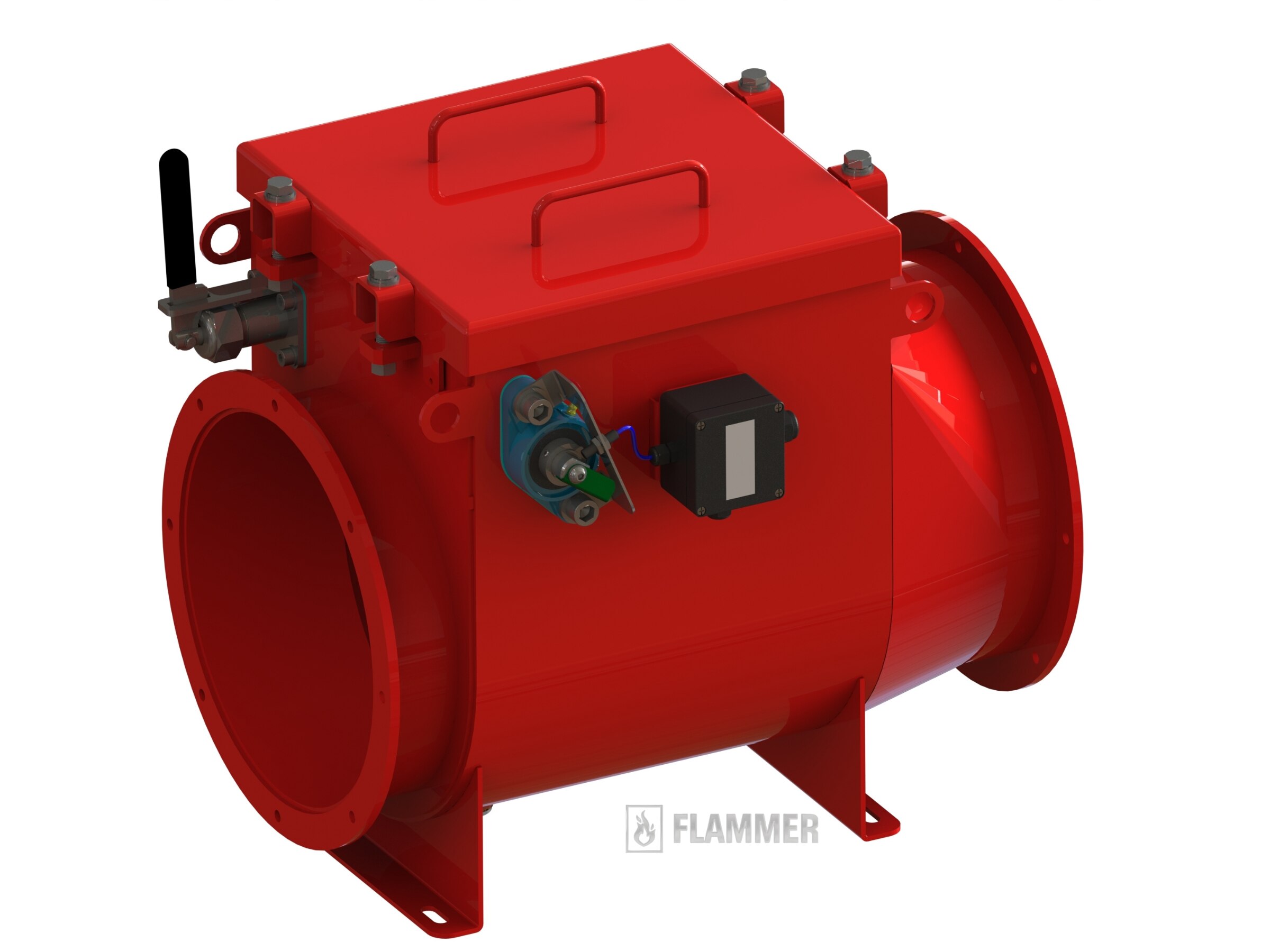 | Dust Explosion Protection Devices Explosion Isolation Valve ( B-FLAP I PRO) Explosion Isolation Valve: B-FLAP I PRO Explosion Isolation Flap Valve — Standard (Carbon Steel) The B-FLAP I PRO is Flammer's certified passive... View product → |
Keywords