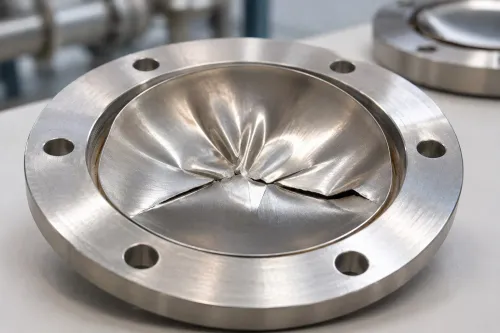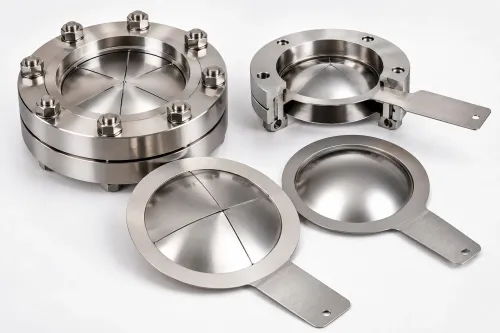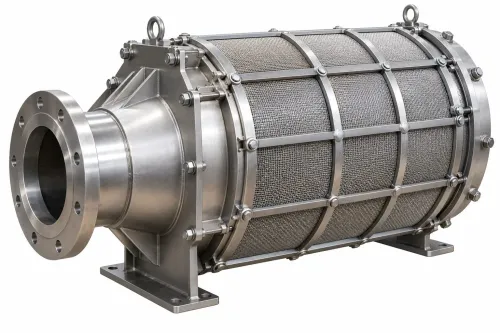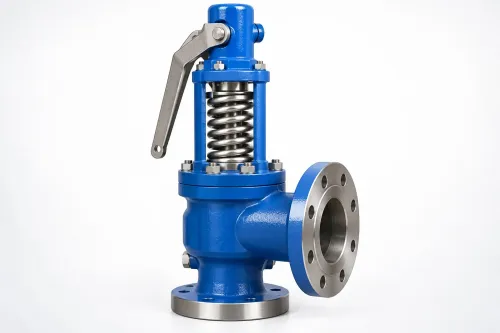
A pharmaceutical dust-conveying line can connect a mill, mixer, filter receiver, cyclone, fan and tablet-production area into one propagation path. By the end, you will know where an isolation flap valve belongs, which dust and system data determine its suitability, how it compares with other isolation methods, and which documents and installation checks to demand before approving a Vadodara plant design.
Key takeaways
- Provide Kst, Pmax, MIE and dust-layer data before requesting a quote.
- Place the valve between connected equipment to interrupt flame and pressure propagation.
- Treat the flap valve as isolation, not as a substitute for explosion venting.
- Record closure, interlock and inspection checks during commissioning and maintenance.
Where the flap valve sits and how it stops propagation
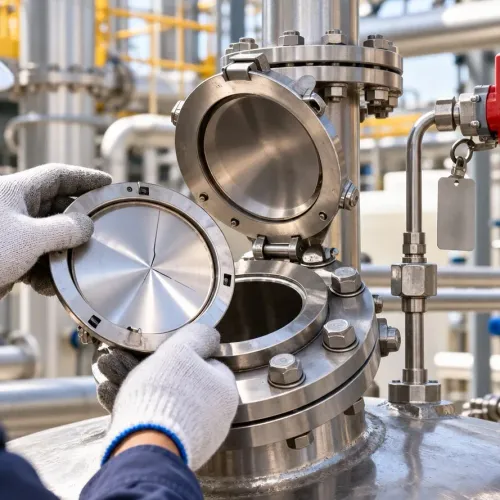
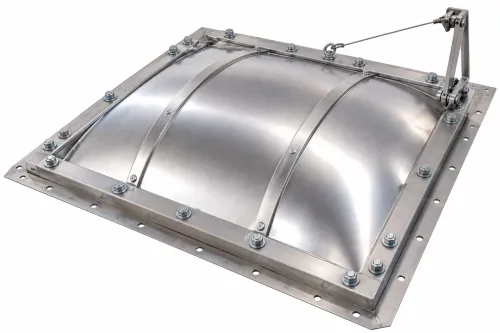
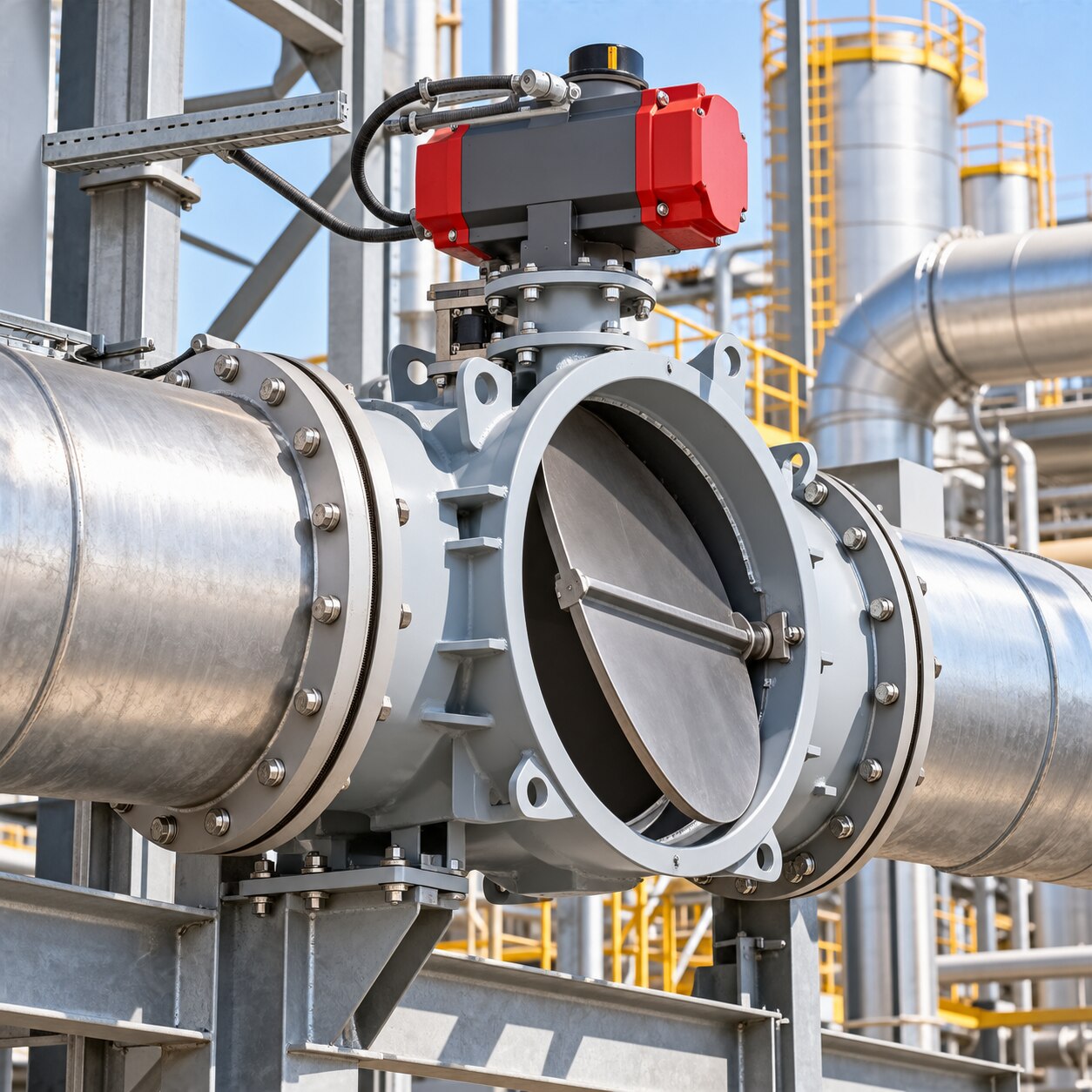
An explosion isolation flap valve sits in the conveying duct between connected equipment, such as a dust collector and process vessel, cyclone, filter receiver, mill, mixer or tablet-production area. In a pharmaceutical plant, its job is to interrupt propagation through the line, not to relieve the explosion inside either vessel.
- An explosion starts in a vessel or duct, creating a pressure wave that travels through the conveying pipe with flame and burning dust.
- The changing pressure and airflow push the flap toward its closed position.
- The flap moves onto its seat before the flame front reaches the connected equipment.
- Closure limits the passage of flame, pressure and burning dust, reducing the chance that the event propagates into the next vessel.
This passive sequence works only within the valve’s tested flow direction, geometry and operating limits. Deposits that hold the flap open, a fouled hinge, the wrong orientation, or a nearby bend or reducer can defeat seating.
An explosion vent opens a vessel or duct to discharge pressure; an isolation valve blocks propagation between vessels. Venting, suppression, containment and pressure relief remain separate engineering functions. A flap valve therefore cannot replace an explosion vent on the protected equipment.
Do not place the valve on the most convenient spool. The required closing distance and response depend on tested geometry, conveying conditions, flow direction and installation limits. That distance must be calculated from the actual duct arrangement, including branches and fittings, as part of a complete dust conveying explosion protection design.
Why pharmaceutical dust requires a complete propagation assessment
A complete propagation assessment starts with the actual dust: active pharmaceutical ingredients, excipients, lactose, starch, sugar, and dust generated during tablet or capsule processing. Test representative material, because particle size, moisture, concentration, blending and test method change explosibility. Do not replace a fine, dry process fraction with a generic database Kst value.
A flap valve for combustible dust is only as reliable as this design basis.
Map every connected route before selecting the device:
- Include each vessel, duct, filter, fan, cyclone, rotary valve, screw conveyor, vacuum line, aspiration duct, filling line, bypass and transfer point.
- Treat a rotary valve or unprotected bypass as an alternative flame and pressure route around the main isolation device.
- Retain bonding and grounding, bearing-temperature monitoring, foreign-metal detection, hot-surface control, and spark detection or suppression where justified.
- Control deposits: dust can hold the flap open or stop it seating, while a fouled hinge can defeat closure. Cleaning, deposit control and functional inspection belong in the dust conveying explosion protection system.
| Dust basis | Why it matters | Required action |
|---|---|---|
| Fine, dry process fraction | Smaller, drier particles can produce a different Kst and ignition response | Test that fraction |
| Blended API and excipient | Blending changes concentration and explosibility | Test the actual blend |
| Lactose, starch or sugar dust | Material identity alone does not define hazard | Record particle size, moisture and test method |
| Tablet or capsule dust | Processing creates a distinct airborne fraction | Include it in representative testing |
The data sheet and evidence needed before you request a quote
A quote for an explosion isolation flap valve for pharmaceutical in Vadodara needs a process data sheet, not only a nominal pipe diameter. Give the supplier these details:
1. Conveying conditions: air velocity, duct diameter, bends, reducers, branches and complete geometry; airflow direction; positive or negative operating pressure; pressure and temperature range; allowable pressure drop; dust loading; vacuum level; pulsation; clean-in-place method; inspection access; and the distance between every connected item.
2. Explosion basis: maximum reduced explosion pressure and Pmax, Kst, minimum explosible concentration, dust minimum ignition energy, particle-size and moisture condition, dust-layer risk, connected-equipment volume, explosion-vent arrangement and vent discharge direction. State materials of construction, surface finish, gasket compatibility and product-retention risks.
3. Require a certified operating envelope for pressure-vacuum conveying covering continuous negative pressure, reverse flow and pulsating transport. Positive deflagration-pressure evidence alone does not prove safe behaviour under vacuum or changing flow.
Before purchase, request the exact model revision, nominal size, approved orientation, isolation-distance limit, dust-test condition, pressure and temperature limits, and current certificate or test report. For B-FLAP I PRO in Vadodara, ask for the manufacturer’s declaration, test report, installation manual, conformity documentation and third-party certificate where applicable.
Confirm document names and acceptance requirements with the supplier and India’s authority having jurisdiction, or the export-market authority. ATEX or IECEx evidence alone does not establish Indian site approval, hazardous-area classification or electrical-equipment compliance.
Related product
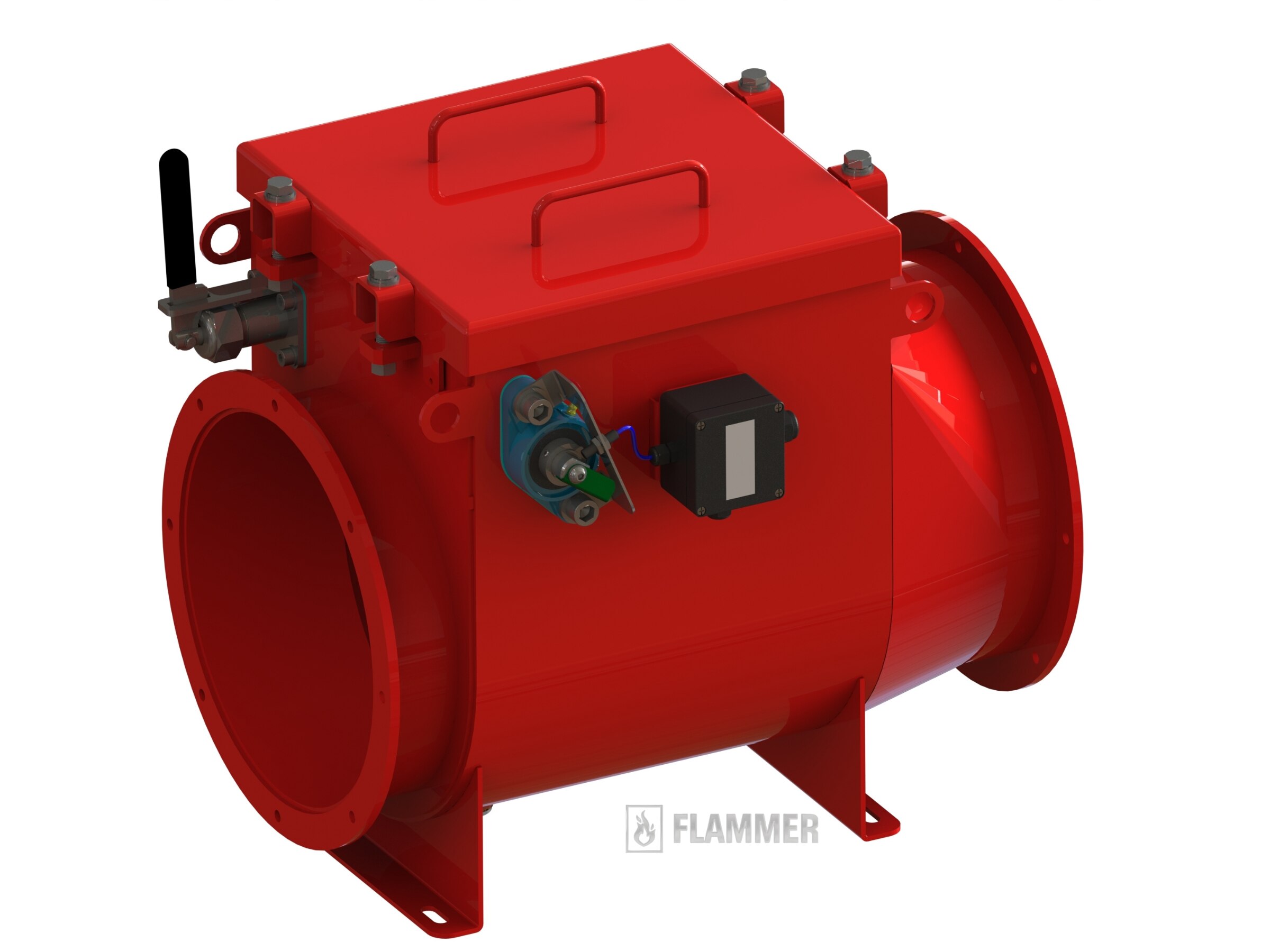 | Dust Explosion Protection Devices Explosion Isolation Valve ( B-FLAP I PRO) Explosion Isolation Valve: B-FLAP I PRO Explosion Isolation Flap Valve — Standard (Carbon Steel) The B-FLAP I PRO is Flammer's certified passive... View product → |
How flap valves compare with chemical and mechanical alternatives
A passive flap is preferable when the conveying line needs rapid, power-independent isolation without adding extinguishing residue. A pharmaceutical plant choosing an explosion isolation valve should still match the device to the tested dust, pressure profile, airflow direction and hygiene requirements.
| Option | Detection and closure | Pressure, power and pressure drop | Cleaning and conveying fit |
|---|---|---|---|
| Flap valve for combustible dust | Passive response to pressure and flow; no detector or actuator | Certified deflagration pressure rating; no power; confirm allowable pressure drop | No chemical residue; inspect the seat and hinge for fouling; well suited to pneumatic conveying within its certified envelope |
| Chemical isolation | Detector triggers rapid agent discharge | Requires controls, storage and power; pressure rating depends on the complete system | Agent residue complicates cleaning and product-contact risk; suitable only with validated residue control |
| Fast-acting slide gate | Detection and powered mechanical closure | Positive closure, but response time, actuator power and controls require verification | Seals and guides need maintenance; pressure drop and conveying speed must match the design |
| Rotary airlock | Continuous material transfer rather than event detection | Isolation depends on tested leakage, speed, pressure rating and dust conditions; driven power required | Good process transfer, but product pockets and seal wear matter; an ordinary airlock is not an isolation device |
| Non-return or backdraft damper | Responds to reverse flow or pressure reversal | May lack dust-deflagration pressure rating; pressure drop can restrict conveying | Simple and passive, but hinge fouling can prevent seating; use only when tested for the hazard |
Hygiene can disqualify a theoretically effective device: uncleanable crevices, incompatible elastomers and retention pockets create cross-contamination. Check clean-in-place access, surface finish, gaskets and inspection points separately from explosion-test evidence.
Installation, commissioning and ongoing checks in a Vadodara plant
Verify the valve location from the tested isolation distance, not from the nearest convenient spool. For an explosion isolation flap valve for pharmaceutical in Vadodara, calculate the position against the actual duct route, including bends, reducers, branches and connected equipment.
- Before commissioning, confirm the certified mounting orientation, airflow direction, pressure and temperature limits, bonding continuity, inspection access and cleanability. Check that the pipework matches the certified configuration.
- Record the valve identification, model revision, installation distance and orientation. Demonstrate free flap movement and positive seating, then document actuator or interlock checks where fitted.
- Inspect for dust deposits, hinge fouling, gasket damage, corrosion, restricted flap travel and poor seating. Record cleaning without damaging the seat or changing duct geometry.
- Repeat functional checks after duct modifications, process changes, new powder blends or altered conveying velocity. A search for B-FLAP I PRO in Vadodara is not a specification.
Before selecting that unit, verify its certificate scope, test dust, size, pressure and temperature envelope, approved orientation, isolation distance and pharmaceutical cleanability. Confirm the current certificate or test report against the installed configuration.
Keep the valve review separate from the plant’s complete explosion-risk assessment and statutory acceptance. ATEX or IECEx evidence does not by itself establish Indian site approval, hazardous-area classification or operating compliance.
Frequently asked questions
Where does an explosion isolation flap valve sit in a pharmaceutical dust-conveying system?
It sits in the conveying duct between connected equipment such as a dust collector, process vessel, cyclone, filter receiver, mill or mixer. It isolates the equipment so an explosion in one vessel does not propagate through the duct to another.
Why is pharmaceutical dust data needed before selecting an isolation flap valve?
Dust particle size, moisture, concentration, Kst, Pmax, minimum ignition energy and layer characteristics affect the explosion hazard. Request test reports or representative laboratory data before selecting the valve, because a generic combustible-dust classification is not enough for system design.
What information should you provide when requesting a flap-valve quote?
Provide duct diameter and material, conveying velocity, pressure and temperature, dust name and composition, Kst and Pmax, MIE, equipment layout, expected airflow direction, cleaning method, hazardous-area classification and the required isolation arrangement.
How does a flap valve compare with chemical or mechanical explosion isolation?
A flap valve provides mechanical isolation by closing the conveying path. Chemical systems use a detector and suppressant discharge, while other mechanical systems use barriers or fast-acting valves. Compare response time, pressure rating, hygiene requirements, reset procedure, false-trigger risk, inspection access and compatibility with the dust and cleaning process.
Keywords