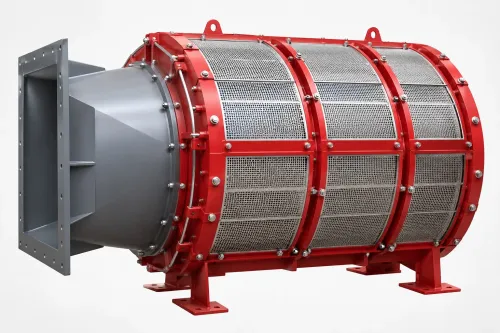
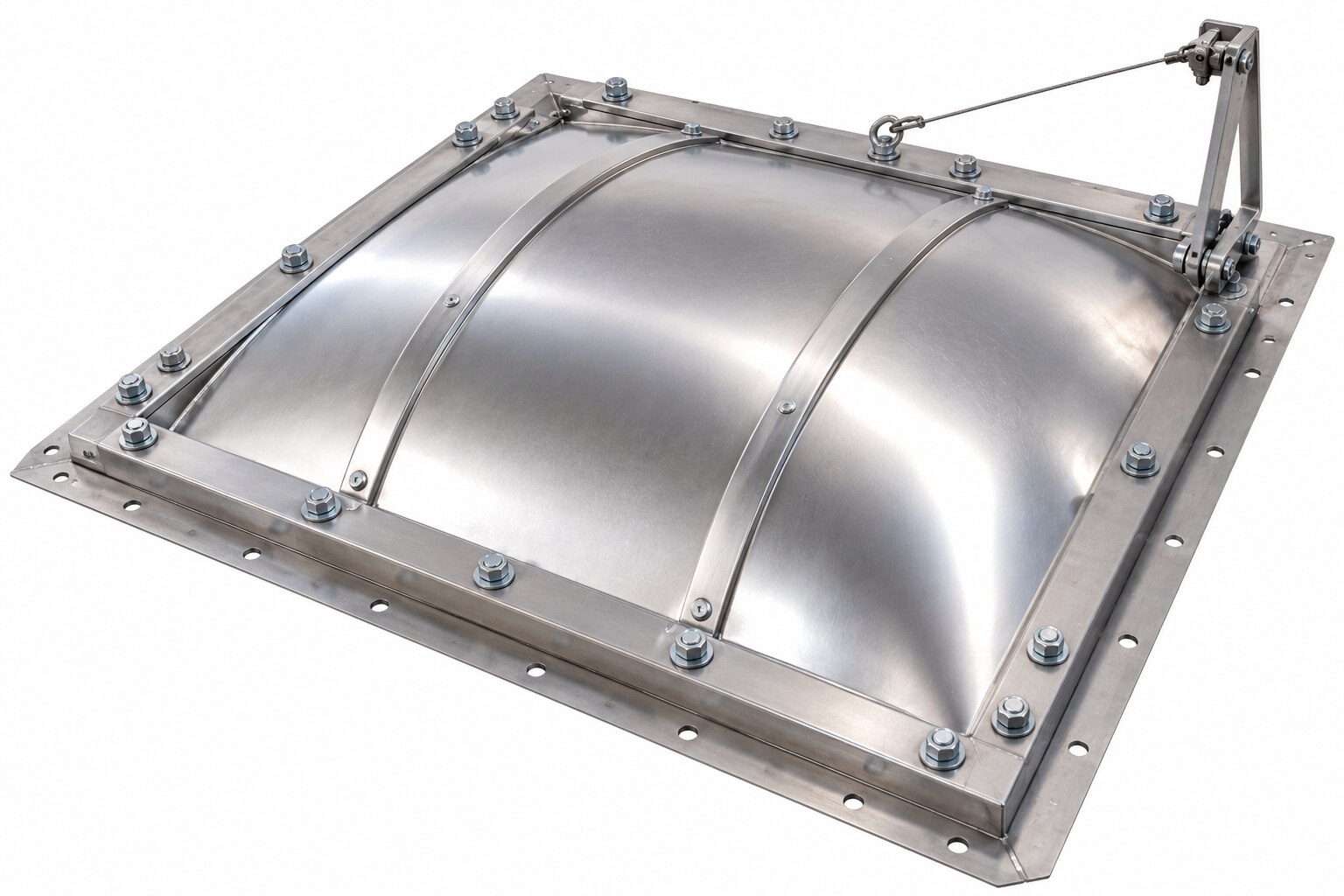
A safe vent arrangement cannot be selected from equipment volume or a catalogue panel size alone. You need a documented calculation based on representative powder-test data, the actual vessel or collector geometry, pressure limits, vent-panel behaviour, ducting, isolation and the Vadodara site layout; the sections below show what to collect, calculate and verify.
Key takeaways
- Collect vessel drawings, process conditions and connected-equipment details before sizing.
- Use Kst, Pmax, Pred and MEC test data for the calculation.
- Account for ducts, isolation devices and vent discharge paths—not just panel dimensions.
- Compare installation drawings, testing documents and commissioning support before choosing a Vadodara supplier.
What an explosion-vent sizing service must collect before calculation
An explosion-vent sizing service is an engineering assessment, not a panel quotation. Before calculation, the engineer must inspect the equipment and collect the documents that define its pressure boundary, process conditions and connected hazards.
1. Record the equipment name and service, internal volume, dimensions, shape, elevation, operating temperature, maximum allowable pressure, vacuum rating, design pressure, construction material and enclosure strength. Obtain GA and fabrication drawings showing filter and internals layouts, inlet and outlet duct sizes, fan location and connected equipment.
2. Collect the process-flow diagrams and P&IDs, pressure and temperature records, cleaning cycles, pulse-jet details, solvent use and operating ranges.
Include every connected vessel, filter, mill, dryer, room and duct; an explosion vent for sizing pharmaceutical plant in Vadodara cannot be calculated from vessel volume alone because ducts, fans, obstructions and connected equipment alter pressure development and flame propagation.
3. Survey the proposed outdoor discharge route. Confirm the roof or wall location, monsoon exposure, drainage, panel-replacement access, nearby personnel routes, air intakes, process-room openings, electrical and instrument interfaces, adjacent equipment and contamination-sensitive areas. Flame, hot gases, pressure and burning product need a defined exclusion zone.
4. Require the calculation package to state the calculated vent area, target Pred, panel arrangement, duct assumptions, exclusion zone, isolation points, inspection requirements and approval hold points. Stop approval until drawings, site conditions, panel data and process assumptions match the installation.
Which dust tests, pressure inputs and standards govern the calculation
A defensible explosion vent size calculation India requires measured powder data, not a generic Kst table. Test a representative pharmaceutical powder for Kst, Pmax, MIE and MEC, and record whether the evidence covers dust clouds, settled layers or both.
Record the test basis, sample condition, particle-size distribution, moisture, concentration and processing history. Milling, drying, blending and solvent exposure can change the result, so retest when the formulation or process basis changes.
The calculation file should state these inputs:
- Enclosure volume, geometry and connected vent duct
- Maximum allowable pressure and operating temperature
- Vent opening or activation pressure
- Pred, Pmax and Kst
- Ignition sensitivity
- Selected panel’s certified discharge characteristics
- Duct length, cross-section, bends and outlet restrictions
| ASTM E1226 | Dust-cloud explosibility testing | Establishes whether the representative powder can explode and supports severity data |
|---|---|---|
| EN 14034 series | Maximum explosion pressure and maximum rate of pressure rise | Provides test methods for Pmax and pressure-rise behaviour |
| EN 14491 | Dust-explosion venting protective systems | Governs vent-area determination, including enclosure, vent device and duct effects |
| NFPA 68 | Explosion protection by deflagration venting | Applies when named by the project, client, insurer or statutory authority |
Indian practice does not create a separate physical formula. Name the governing standard and edition, use consistent SI units, and account for the enclosure, vent device and duct.
A pressure-relief valve or rupture disk controls ordinary overpressure. A deflagration venting system relieves rapidly developing explosion pressure and requires explosion-specific sizing.
How powder properties and pharmaceutical equipment change the required area
One vent area cannot be copied between products or machines: finer particles, lower moisture, higher concentration, lower bulk density, milling and drying can intensify combustion or change ignition. Retest a representative sample when formulation, particle-size distribution, moisture, solvent content or process history changes.
Laboratory results, not a chemical name or vendor’s typical Kst table, establish whether the powder is combustible.
Every equipment review must record actual internal and free volume, inlet and outlet connections, dust deposits and connected rooms. For dust collector explosion vent sizing, include both sides of the filters and fan-induced vacuum.
| Equipment | Sizing questions |
|---|---|
| Dust collectors and filters | Check bag arrangement, clean-side volume, pulse-jet cycles, fan position and duct restrictions. |
| Fluid-bed and spray dryers | Check heating zones, air volume, spray conditions, solvent vapour and exhaust path. |
| Mills and granulators | Check moving parts, ignition sources, feed connections and product hold-up. |
| Blenders and sifters | Check moving internals, screens, deposits, free volume and room connections. |
| Silos and transfer lines | Check settled layers, conveying velocity, bends, reducers and connected vessels. |
Use cloud testing for suspended dust and layer testing where settled deposits can ignite. Assess a hybrid mixture when solvent vapour is present; vapour can change ignition behaviour and pressure rise.
Operating temperature, pressure cycles and fan vacuum determine the panel’s certified activation pressure, temperature range, gasket and corrosion resistance. They also determine its pressure-vacuum rating. Recheck these choices after cleaning or solvent changes, because a panel that opens during a vacuum cycle can fail before an explosion.
Worked example: why a dust collector’s nominal panel size is not the vent area
A dust collector’s nominal panel dimensions do not equal its safe vent area. The dust collector explosion vent sizing calculation starts with actual internal volume, clean-side and dirty-side geometry, filter arrangement, inlet and outlet ducts, fan position, and internal obstructions.
The engineer records these inputs before calculating:
- Representative powder Kst and Pmax
- Maximum allowable collector pressure and panel opening pressure
- Operating temperature and selected design Pred
- EN 14491, NFPA 68, or the named project standard
- Panel discharge characteristics, frame, hinges, seals and guard screens
The same panel behaves differently with a ducted outlet:
| Path | Calculation treatment | Main consequence |
|---|---|---|
| Short, straight path | Use the panel opening and unobstructed discharge assumptions | Lower resistance and simpler reaction-load assessment |
| Specified duct, cross-section and length | Include elbows, direction changes, reducers, weather hoods, filters, insulation and outlet restrictions | Higher resistance, altered reaction loads, or increased Pred |
The engineer iterates vent area and panel arrangement until calculated reduced pressure remains below the collector’s allowable pressure. A frame, hinge, seal, screen or obstruction can reduce effective opening area, so a nominal panel size cannot be accepted as the calculated relief area.
The review also checks propagation. An event can travel through inlet or outlet ductwork to a mill, mixer, dryer, granulator or occupied room; select and validate mechanical, chemical or fast-acting isolation with the venting design.
That documented iteration—not a catalogue dimension—is the defensible explosion vent size calculation in India.
How to choose the installation package and review a Vadodara supplier
A credible pharmaceutical explosion vent supplier in Vadara should submit a calculation-and-installation package, not a panel quotation.
Require the report to name the governing standard and edition, dust-test reports, volume and geometry assumptions, design Pred, panel activation pressure, operating-temperature range, pressure-vacuum rating, corrosion and gasket compatibility, replacement method, certificates or test evidence, vent-duct calculations, isolation assumptions and inspection instructions.
Review the outdoor discharge zone for flame, hot gases, pressure and burning product. Check personnel routes, air intakes, process openings, adjacent equipment and product-contamination risk; a roof outlet alone is not a design.
| Installation choice | Review evidence | When it applies |
|---|---|---|
| Outdoor vent | Exclusion-zone drawing and duct calculation | Preferred where flame and product can discharge safely |
| Flameless device | Limits for dust type, Kst, enclosure volume, temperature and maximum reduced pressure | Only when outdoor discharge is impossible |
| Duct isolation | Mechanical, chemical or fast-acting isolation device | Required where ducts connect other equipment |
A flameless device is not a universal indoor substitute. Ask Flammer Technologies Private Limited, or another local engineering partner, for the complete package and stated limits.
Accept the installation only after checking:
- Panel orientation and clear discharge path
- Correct fasteners, seals and drainage
- Replacement access
- Inspection records, certificates and drawings
- Records updated for future formulation or process changes
Related products
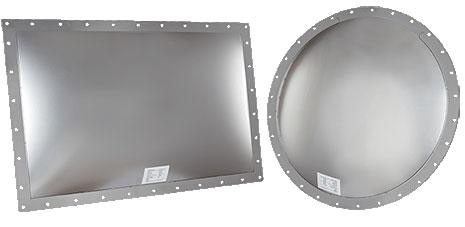 | Explosion Vents At Flammer, we are manufacturers of Explosion Vent — purpose-built passive safety devices designed to protect your industrial equipment, your... View product → |
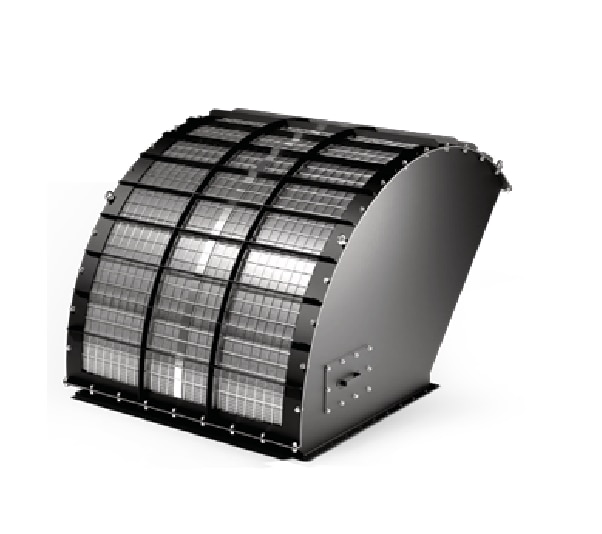 | Flameless Explosion Vent At Flammer, we are manufacturers of Flameless Explosion Vents — specialist safety devices that protect industrial equipment from explosion pressure... View product → |
Frequently asked questions
What information must an explosion-vent sizing service collect?
Provide equipment drawings, vessel volume, design pressure, process temperature, operating pressure, connected ducts, dust type and the intended vent location.
Which dust tests govern explosion-vent sizing?
The calculation uses tested dust-explosion data such as Kst, Pmax and minimum explosible concentration, together with the protected equipment’s pressure inputs.
Why is a dust collector’s nominal panel size not its vent area?
The required relief area depends on dust properties, vessel volume, reduced pressure, vent geometry, duct effects and installation conditions. The panel’s outside dimensions do not define its effective area.
How should you review a pharmaceutical explosion-vent supplier in Vadodara?
Request the calculation basis, equipment-specific drawings, material and test documentation, installation instructions, discharge-zone details and commissioning support before comparing quotations.
Keywords