
Monsoon moisture can attack more than the exposed face of a rupture disc: condensation, wet cleaning, trapped water, corrosion, and blocked discharge piping can compromise the complete relief path. By the end, you will have a practical inspection routine, a specification checklist, and a method for deciding whether a disc, PSV combination, or vacuum device fits your pharmaceutical process.
Key takeaways
- Inspect atmospheric faces, holders, wiring, and vent piping—not only the process-wetted disc.
- Use separate process-side and monsoon-side material compatibility checks.
- Keep discharge paths dry, open, supported, and free from condensate traps.
- Choose a rupture disc, PSV, combination, or vacuum breaker by the hazard.
How Vadodara monsoon moisture affects a rupture-disc assembly
Monsoon moisture attacks more than the disc. Humidity and rain can corrode the atmospheric face, holder, clamp, bolts, burst-indicator wiring, pressure sensor, and downstream vent piping, even when the process-wetted disc material is corrosion-resistant. A rupture disc for humid conditions therefore needs separate process-side and atmospheric-side compatibility checks.
Condensation is most dangerous during shutdown and restart. Temperature cycling draws humid air into cold metal and can leave liquid trapped between the disc and holder, where pitting, gasket swelling, distortion, or deposits can alter sealing and burst behaviour. CIP chemicals, SIP steam, condensate, insulation gaps, and washdown can impose harsher exposure than production service.
| Source | Clues | Check |
|---|---|---|
| Process-side wetting | Residue or corrosion faces the vessel; liquid follows the process path | Review batch, CIP, and SIP records; sample residue and inspect the wetted side |
| Atmospheric humidity or rain | Rust begins on exposed bolts, holder edges, wiring, or the upper enclosure | Compare damage with rain direction and inspect covers, seals, and drain paths |
| Condensation | Moisture sits in a low point or cavity after cooling or shutdown | Check temperature history, insulation, orientation, and the disc-holder gap without modifying it |
| Washdown | Water marks, detergent film, or splash deposits appear outside the process boundary | Compare damage with cleaning time, hose direction, and operator practice |
An unmonitored cavity between a rupture disc and PSV can also retain liquid, create backpressure, or stop the PSV sensing vessel pressure correctly. Use a pressure indicator, tell-tale, or suitable leak-detection device, and record the disc tag, burst marking, holder, gasket, and replacement date before deciding whether wetting caused damage.
The before, during, and after-monsoon inspection routine
For monsoon process safety equipment in Vadodara, complete the pre-rain inspection before humidity and washdown increase. Check the disc, holder, clamp, bolts, indication hardware, gaskets, insulation, drains, and discharge piping for pitting, corrosion, deposits, loose clamping, or trapped liquid. Confirm the outlet ends in a safe location and is not blocked.
1. Before the rains, verify installation direction, holder alignment, gasket seating, and manufacturer-specified clamp or bolt torque. Inspect the discharge route for rainwater, insects, dust, crystallised product, and corrosion debris. Test burst-indicator wiring and alarm continuity without disturbing the disc.
Record the tag or serial number, material certificate, marked burst pressure and temperature, manufacturing tolerance, holder identification, gasket details, and replacement date.
2. During operation, inspect the outlet, drain points, holder exterior, and indication hardware at each planned round. Investigate moisture, deposits, pressure changes, or an alarm immediately; do not bypass a failed indicator or clear a blockage while the vessel is pressurised.
3. After a prolonged shutdown, isolate and decontaminate under the site procedure, then inspect for condensation pockets, pitting, distortion, gasket hardening, and atmospheric-side corrosion. Test the drain path and indicator circuit. Replace a burst or damaged disc and its gasket before restart; replace any assembly that fails inspection rather than relying on its appearance.
Never drill the holder to remove trapped liquid. Document findings, photographs, corrective work, and the restart approval in the equipment history.
The specification checklist for sanitary pharmaceutical service
Confirm the service conditions before comparing suppliers. A pharmaceutical rupture disc in Vadodara must be selected for the actual process, not only its normal positive-pressure set point.
Check these items on the datasheet and purchase specification:
- Process: vessel volume, fluid, normal pressure and temperature, design pressure, required burst pressure at the specified temperature, relief rate, and whether gas, liquid, two-phase flow, or thermal expansion governs.
- Material: wetted disc and holder alloy, atmospheric-side corrosion resistance, gasket compound, fastener grade, and product-contact material traceability. “SS316” alone is not a sanitary specification.
- Hygienic design: crevice-free or drainable holder geometry, specified surface finish, flush connections, gasket compatibility, dead-leg control, and orientation that prevents trapped condensate.
- CIP and SIP: cleaning chemicals and concentration, flow velocity, maximum temperature, steam temperature, exposure time, thermal cycles, condensate drainage, and whether the complete assembly is approved for clean-in-place service.
- Vacuum: full-vacuum rating, reverse differential pressure, cooldown conditions, steam isolation, rapid condensation, and any approved vacuum-support arrangement. Positive-pressure suitability does not prove vacuum resistance.
- Documentation: certified burst-pressure tolerance, temperature basis, corrosion-compatibility statement, gasket and finish certificates, batch traceability, installation drawing, inspection method, and replacement instructions after rupture.
For sanitary pressure protection in Gujarat, ask Flammer Technologies Private Limited or another supplier to state each value rather than accepting “pharmaceutical grade” as evidence. A non-reclosing disc also requires a replacement plan for the disc and usually its gasket before restart.
Related product
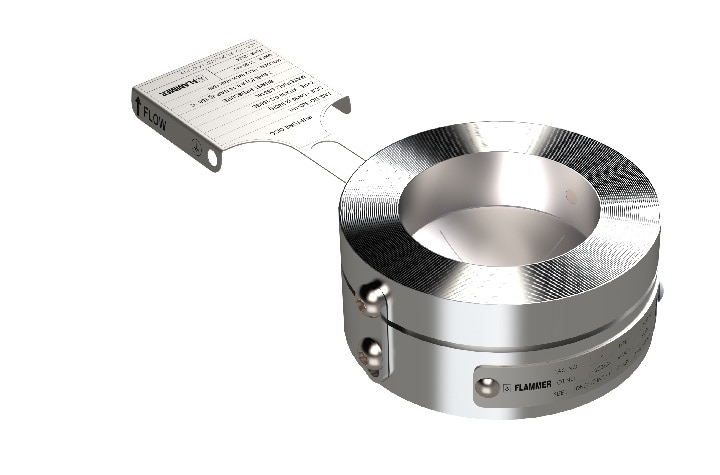 | Rupture Disc Established in 2019 and headquartered in Vadodara, Gujarat, Flammer Technologies Pvt. Ltd. View product → |
Choosing between a rupture disc, PSV, combination, and vacuum breaker
Choose a non-reclosing rupture disc when you need fast, leak-tight protection against a defined overpressure event and can safely replace the disc after it bursts. Do not use it alone where recurring pressure excursions are credible; every burst stops production and requires inspection before restart.
| Option | What it means | When it applies |
|---|---|---|
| Rupture disc | One-time pressure relief | Corrosive, fouling, rapid-rise, or tightly contained service where replacement is acceptable |
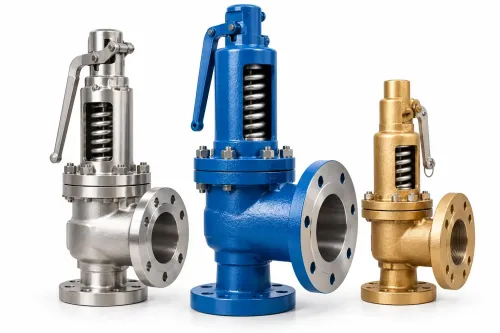
| PSV | Resettable spring-loaded or pilot-operated valve | Repeated excursions, controlled blowdown, or protection requiring automatic return to service |
| Disc plus PSV | Disc protects the PSV; the cavity needs monitoring | Corrosive process fluid, leakage prevention, or a PSV that must remain clean |
| Vacuum breaker | Admits gas to prevent external-pressure collapse | Vessel cooling, draining, condensation, or pump-out can create vacuum |
A rupture disc for pharmaceutical plants in Vadodara monsoon service is not sized differently merely because humidity rises. Assess atmospheric corrosion separately from process-side corrosion, then verify the holder, gasket, bolts, indicator, and discharge route.
Size the device for the governing scenario: external fire, blocked outlet, failed control valve, gas blow-by, thermal expansion of trapped liquid, exothermic reaction or runaway, compressor surge, and utility failure. For vacuum protection, calculate vessel collapse pressure against cooling, condensation, draining, and pump-out.
Use relieving pressure and temperature, fluid phase, required relieving rate, accumulation, inlet loss, built-up backpressure, and discharge-system resistance. In a disc-PSV assembly, monitor the cavity with a pressure indicator or tell-tale; trapped pressure can stop the PSV sensing vessel pressure correctly.
Preventing trapped moisture, blocked discharge, and repeat failures
A level or downward-sloping holder lets condensate leave; a pocket between the disc and holder can corrode the disc, alter burst pressure, and freeze a good restart. Use hygienic drains designed into the assembly, then insulate cold sections or apply controlled trace heating where the disc manufacturer permits it.
Never drill the holder or add an unapproved drain hole.
Keep rain and washdown water away from the atmospheric face, bolts, burst indicator, and discharge opening. Protect the outlet with a weather hood or routed connection that cannot reduce the required flow area.
Design the discharge route to prevent liquid accumulation, and connect it to containment when the process involves toxic, potent, sensitising, cytotoxic, flammable, or solvent-containing material.
For a disc installed before a PSV, treat the interspace as an instrumented cavity, not a dead space. Fit the manufacturer-approved pressure indicator, tell-tale, or transmitter and define the inspection response:
- A rising cavity pressure indicates disc leakage or rupture; investigate before the PSV operates against trapped backpressure.
- A wet or contaminated tell-tale requires isolation and examination, not simple draining.
- Record cavity pressure, alarm status, and discharge-path condition during monsoon rounds.
After any burst, isolate, depressurise, and establish the initiating cause before restarting. Replace the disc and its gasket with the specified parts; inspect holder faces, clamp condition, corrosion, indicator wiring, and discharge piping. Reinstall at the specified orientation and torque, document the batch and burst rating, then obtain a return-to-service approval.
A non-reclosing disc is never reset.
Frequently asked questions
How does Vadodara monsoon moisture affect a rupture-disc assembly?
Humidity and rain can corrode the atmospheric face, holder, clamp, bolts, burst-indicator wiring, pressure sensor, and downstream vent piping. Check process-side and atmospheric-side compatibility separately.
What should you inspect before, during, and after the monsoon?
Inspect the disc, holder, fasteners, seals, indicator wiring, sensor connections, vent piping, drains, supports, and weather protection before the monsoon. During and after it, check for water ingress, corrosion, blockage, condensate, and repeat leakage or failure.
What belongs on a sanitary pharmaceutical rupture-disc specification checklist?
Specify burst pressure and temperature, disc material, process compatibility, sanitary connection, surface finish, cleanability, gasket material, installation orientation, certification documents, and indicator requirements.
When should you choose a rupture disc, PSV, combination, or vacuum breaker?
Use a rupture disc for fast, non-reclosing relief; a PSV when controlled reseating matters; a combination when you need PSV protection with disc isolation; and a vacuum breaker for external-pressure or vacuum hazards.
Keywords