A combustible mixture inside a closed vessel can generate pressure faster than ordinary relief equipment can respond, turning a small ignition into a vessel-rupture event. By the end, you will know how an explosion vent works, which equipment needs an assessment, and which process data proves that a selected vent is suitable.
Key takeaways
- Assess equipment handling combustible dust, vapour, gas, or hybrid mixtures.
- Size vents using vessel volume, strength, Kst, Pmax, and reduced pressure.
- Discharge flame and hot gases to a safe, controlled location.
- Use isolation alongside venting when explosions could travel through connected equipment.
What an explosion vent is and what it does during a deflagration
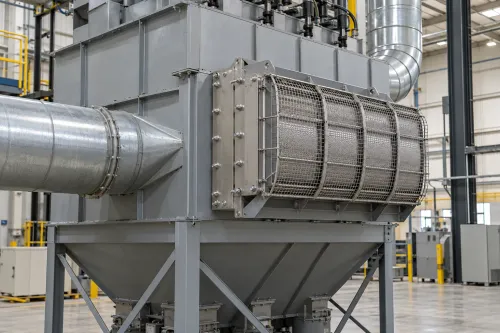
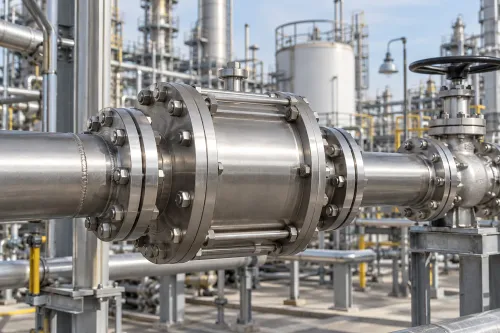
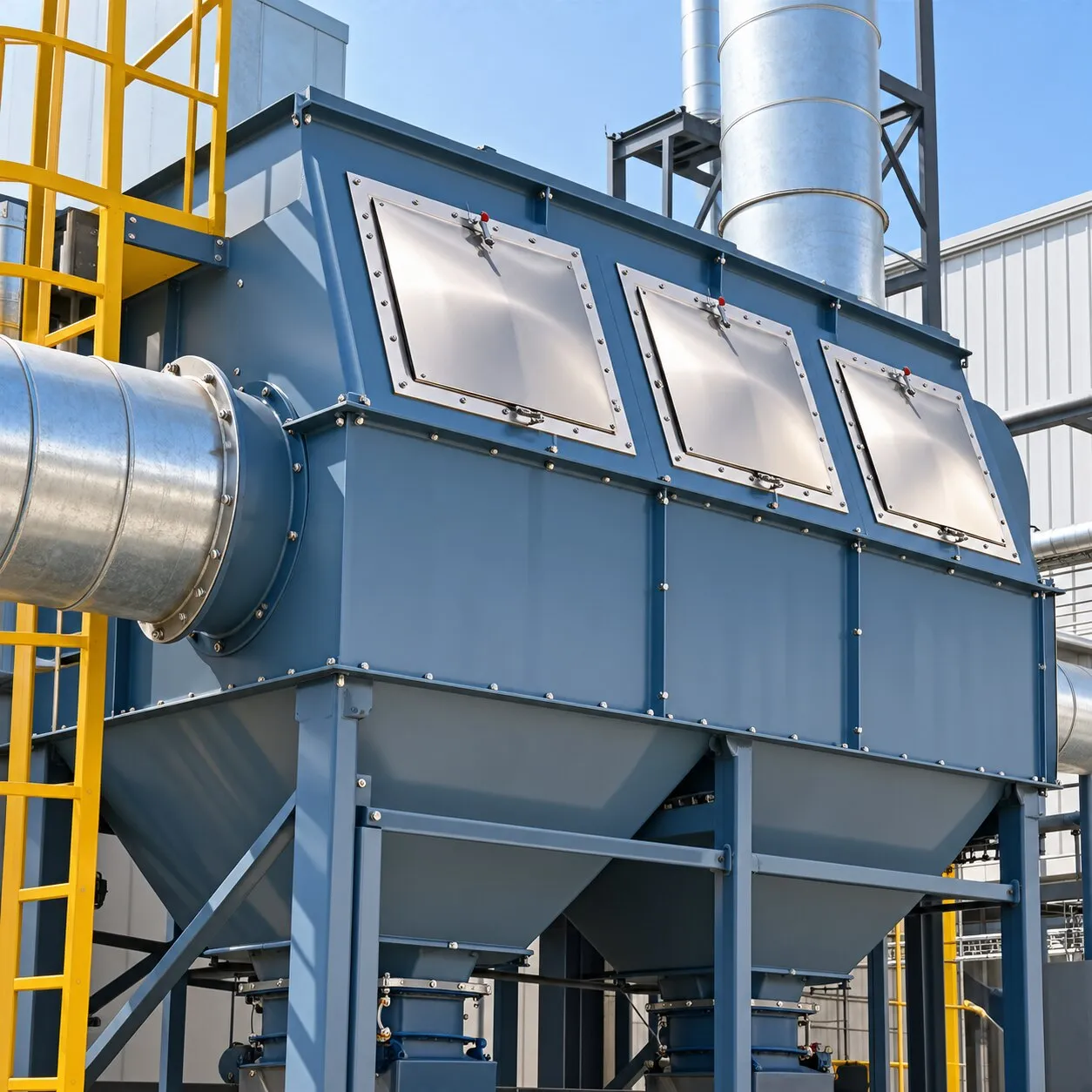
What are explosion vents? They are deliberately weak, pressure-responsive openings fitted to enclosed process equipment. A vent consists of a frame and a panel, burst membrane, or rupture element designed to open at a specified pressure and discharge flame, hot gases, and combustion products toward a safe location.
During a deflagration, pressure rises rapidly as combustible material burns inside the enclosure. The vent opens before internal pressure exceeds the equipment’s design strength, reducing the likelihood of a ruptured vessel, flying fragments, and structural damage. That is the explosion vent purpose: control the pressure consequence, not prevent ignition.
Explosion vents are passive devices, not ordinary pressure-relief valves. A deflagration flame front travels below the speed of sound in the unburned mixture, allowing a correctly designed vent to respond through controlled panel failure. A detonation includes a shock wave and cannot generally be made safe by simply adding a conventional vent.
A credible need for industrial explosion vent protection involves all four conditions:
- A combustible dust, gas, vapour, or hybrid fuel
- An oxidizer, usually air, at a combustible concentration
- An ignition source such as a spark, hot surface, flame, or electrostatic discharge
- A confined vessel or enclosure where pressure can build
The vent does not remove these hazards. Housekeeping, ignition control, bonding and grounding, temperature control, and explosion isolation remain necessary.
When a plant needs an explosion-vent assessment
A plant needs an explosion-vent assessment when combustible dust, gas, vapour, or a hybrid mixture can collect inside a confined process volume with an ignition source. Dust alone is not enough: the decision depends on the material’s explosibility, credible concentration, vessel geometry, operating temperature and pressure, and the consequences of an internal deflagration.
Check for these conditions:
- Combustible particles, vapour, or gas can enter, form, or accumulate inside equipment.
- Air or another oxidizer is present, and ignition could come from hot surfaces, sparks, static discharge, bearings, or electrical equipment.
- The enclosure can contain pressure, flame, and burning product long enough to damage the vessel or injure people.
- Connected ducts or vessels could transmit the event to another part of the plant.
Equipment that warrants a documented assessment includes:
| Equipment | Why it creates a credible concern | What changes the decision |
|---|---|---|
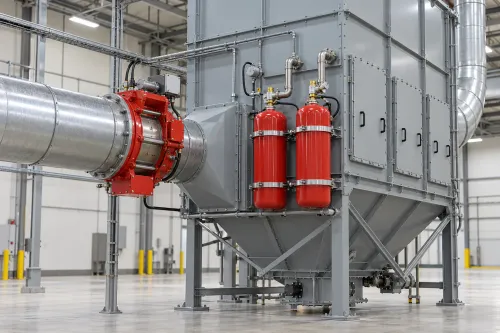
| Dust collectors, baghouses and cyclones | Fine dust and ignition sources combine in a confined housing | Dust Kst, concentration and vent discharge route |
| Silos, hoppers and tanks | Stored or transferred material can create suspended dust clouds | Filling method, volume, internal obstructions and hybrid vapours |
| Mills, pulverizers and mixers | Impact, friction or hot bearings can ignite dispersed material | Energy input, temperature control and material testing |
| Dryers and pneumatic conveyors | Airflow can suspend fuel and carry flame or pressure downstream | Gas velocity, moisture, isolation and connected equipment |
| Reactors and process vessels | Vapour, gas or dust may form during heating or reaction | Chemistry, pressure rise and credible ignition scenarios |
Industrial explosion vent protection is passive; it does not remove ignition hazards or replace housekeeping, bonding, grounding, temperature control, or isolation. Explosion vent safety also requires directing flame and hot gases away from people, air intakes and adjacent equipment.
How to determine the correct vent for process equipment
Start with the protected equipment, not the vent panel. Record its internal volume, shape, length-to-diameter ratio, compartments, nozzle arrangement, and design pressure; a vent sized for a simple bin can underperform on a long filter housing or vessel with internal obstructions.
Then establish the explosion data for the actual material and operating mixture. Use representative test results for maximum explosion pressure (Pmax), dust deflagration index (Kst), or gas deflagration index (KG), plus fuel concentration, initial pressure, and initial and maximum operating temperature. A generic product name is not a sufficient test basis.
| Input to compare | Why it changes the result | What to verify |
|---|---|---|
| Pmax and Kst or KG | Higher pressure or faster pressure rise demands greater relief capacity | Test report and units |
| Vessel volume and geometry | Larger or obstructed enclosures need different effective vent area | Internal drawings and volume calculation |
| Target Pred | Sets the maximum pressure the vented enclosure can reach | Vessel allowable pressure and calculation |
| Opening pressure and temperature | A panel that opens late, or loses strength at process temperature, can exceed the target | Rated range and restraint details |
| Vent area and discharge route | Small area, wrong orientation, or a blocked duct reduces pressure relief | Effective area, clear outlet, duct or flameless arrangement |
For an explosion vent for process equipment, check that the quoted effective area—not merely the panel’s outside dimensions—meets the calculation. Confirm fasteners, frame, isolation devices, and discharge location; an industrial explosion vent protection design fails if flames and pressure enter connected equipment or the panel cannot open freely.
How venting compares with valves, rupture discs and isolation
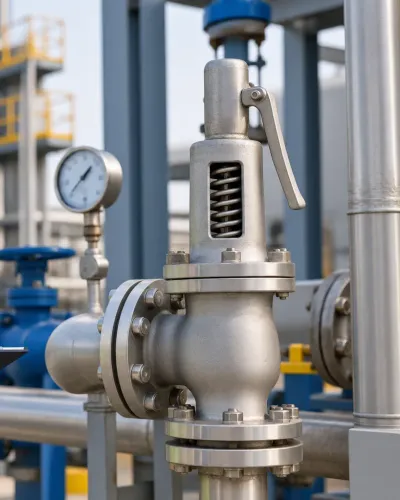
Do not treat a pressure safety valve or ordinary rupture disc as an explosion vent. Each device addresses a different pressure event, and a vented vessel can still need protection at every connected opening.
| Device | Primary job | Key limitation |
|---|---|---|
| Explosion vent | Discharges deflagration pressure and burning products through a panel or membrane | Does not stop flame travelling into connected equipment |
| Pressure safety valve | Relieves slower process overpressure by opening and reseating | It cannot open and pass enough flow during a rapid dust or gas deflagration |
| Rupture disc | Bursts at a specified static pressure | A standard disc is not automatically sized or tested for explosion venting |
| Vent duct | Carries discharge to a safer outdoor location | Duct length, bends and resistance can raise Pred and invalidate the vent design |
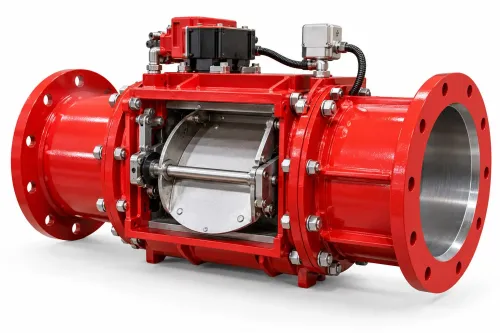
| Explosion isolation | Blocks flame, pressure and burning material at ducts, pipes, conveyors or transfer points | It does not reduce pressure inside the vessel |
The explosion vent purpose is to keep internal deflagration pressure below the enclosure’s strength. Use a pressure safety valve or rupture disc separately for routine overpressure; do not count either as explosion vent safety.
Connect a vent duct only after checking its resistance, discharge location and effect on reduced explosion pressure. A long or undersized duct can turn a correctly sized vent into an ineffective safeguard.
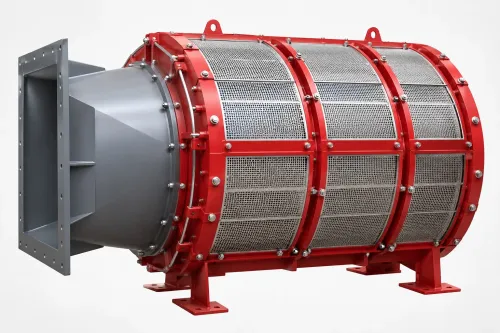
Install explosion isolation at inlets, outlets and linked equipment when flame or pressure could propagate. Flameless venting combines a vent panel with flame arresting and heat absorption where outdoor discharge is unsafe, but it still requires fuel-specific validation, maintenance and isolation.
What to include in an explosion-vent specification and inspection plan
Treat an explosion vent as reliable only after its design basis, installation and condition are traceable. The specification must match the actual equipment, material and deflagration data, not a generic panel catalogue.
1. Identify the protected vessel, connected sections, internal volume, geometry, operating pressure and temperature range. Name the process material and record its test basis, Pmax and Kst or KG.
2. State the required Pred, vent-panel opening pressure, temperature range and effective vent area. Record the calculation method and confirm that the selected explosion vent for process equipment matches those values.
3. Document the panel, burst membrane or rupture element, frame, orientation and discharge direction. Show the outlet location, clearances from people, structures, air intakes and adjacent equipment, plus any duct or flameless-device arrangement.
4. Verify the panel marking, certificate or test record, serial or batch number, dimensions, gasket and fasteners against the specification. Confirm that transport covers are removed, the vent is unobstructed and the frame is correctly sealed without over-tightening.
5. Define inspection frequency, responsible personnel, acceptance limits and replacement triggers. Replace a panel after activation, corrosion, distortion, damaged seals, altered process conditions or an unreadable identification mark.
Your explosion vent safety file should include drawings, calculations, inspection photographs, maintenance records and isolation measures for connected ducts. A supplier such as Flammer Technologies Private Limited can be evaluated against this schedule rather than by product name alone. A vent does not replace housekeeping, ignition control or explosion isolation.
Related products
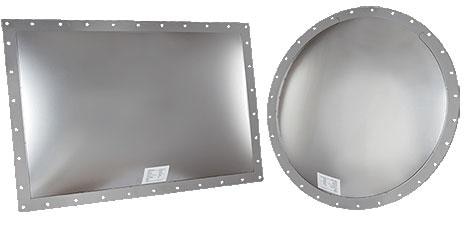 | Explosion Vents At Flammer, we are manufacturers of Explosion Vent — purpose-built passive safety devices designed to protect your industrial equipment, your... View product → |
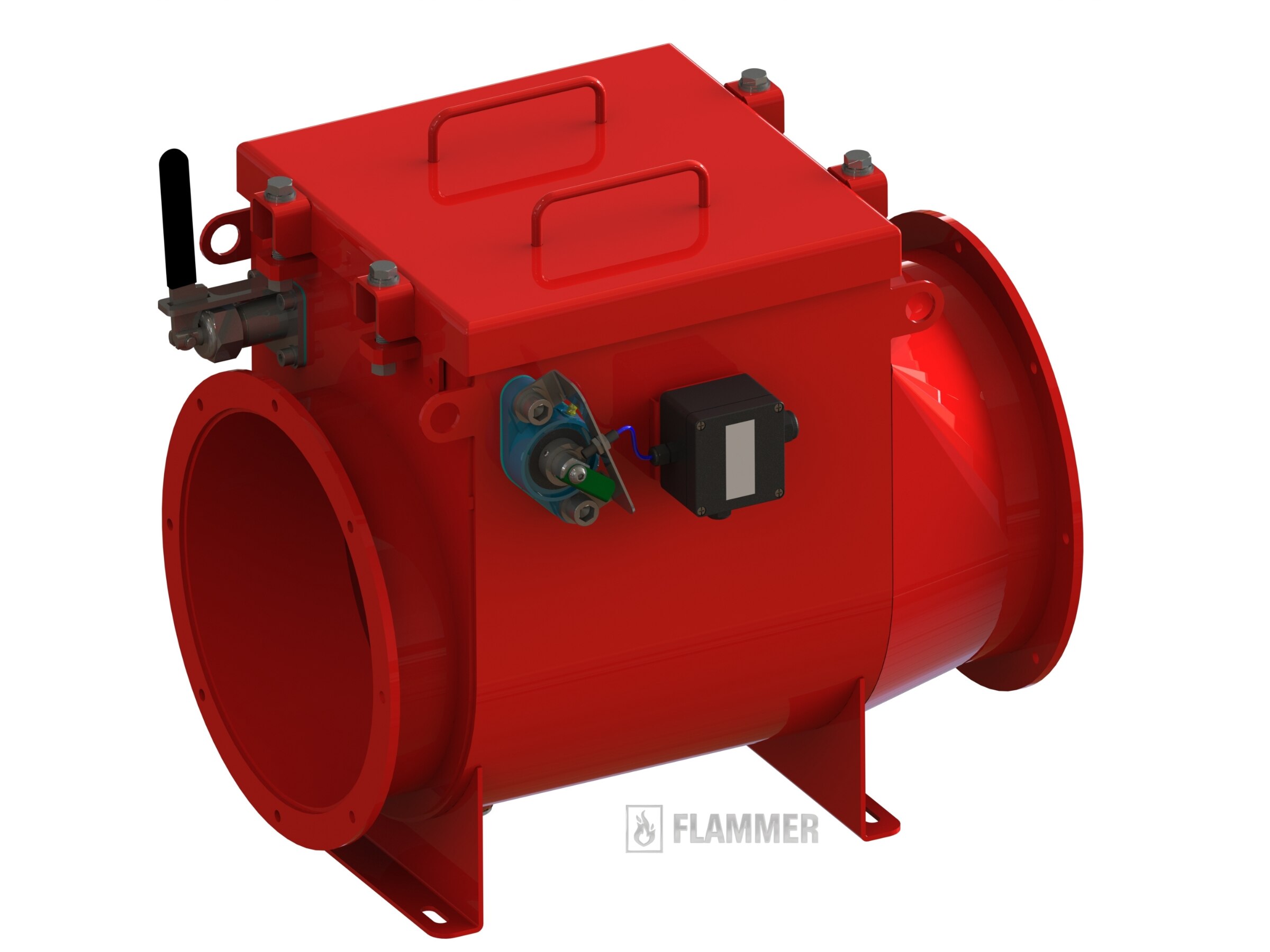 | Dust Explosion Protection Devices Explosion Isolation Valve ( B-FLAP I PRO) Explosion Isolation Valve: B-FLAP I PRO Explosion Isolation Flap Valve — Standard (Carbon Steel) The B-FLAP I PRO is Flammer's certified passive... View product → |
Frequently asked questions
What does an explosion vent do during a deflagration?
It opens at a specified pressure and releases flame, hot gases, and combustion products from enclosed equipment to limit internal pressure.
When does a plant need an explosion-vent assessment?
Assess equipment that can contain combustible dust, vapour, gas, or hybrid mixtures, especially when ignition and confinement could produce dangerous pressure.
How do you determine the correct explosion vent for process equipment?
Match the vent to the equipment volume, operating conditions, enclosure strength, fuel properties such as Kst and Pmax, target reduced pressure, and discharge arrangement.
How does explosion venting compare with valves, rupture discs, and isolation?
Venting limits pressure by releasing combustion products; valves control process flow, rupture discs relieve pressure, and isolation prevents flame or pressure from propagating to connected equipment.
Related product
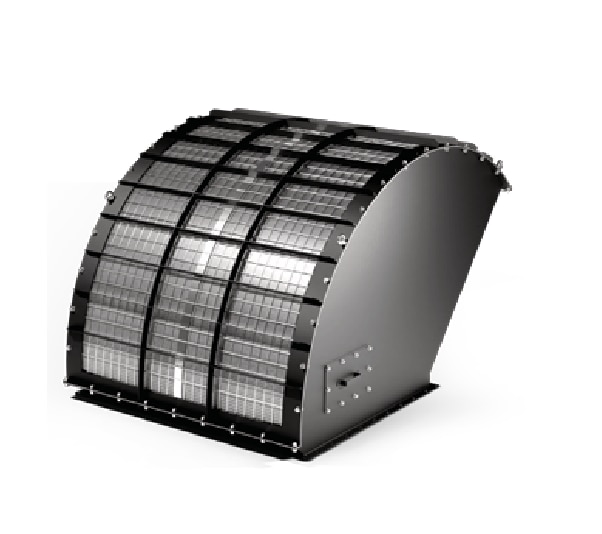 | Flameless Explosion Vent At Flammer, we are manufacturers of Flameless Explosion Vents — specialist safety devices that protect industrial equipment from explosion pressure... View product → |
Keywords