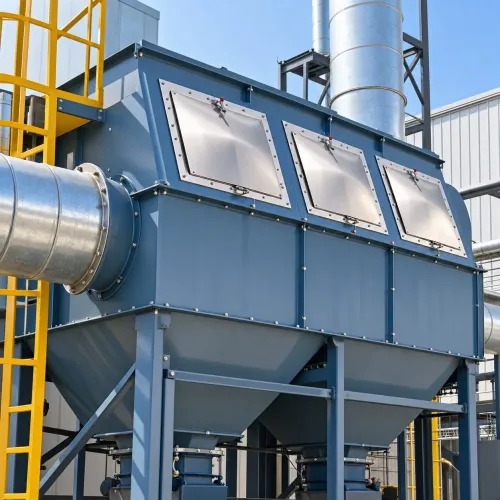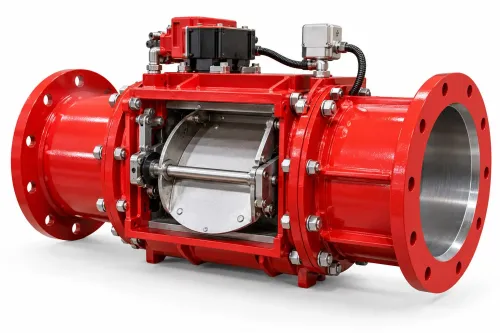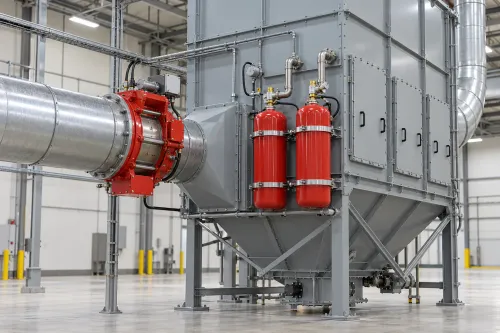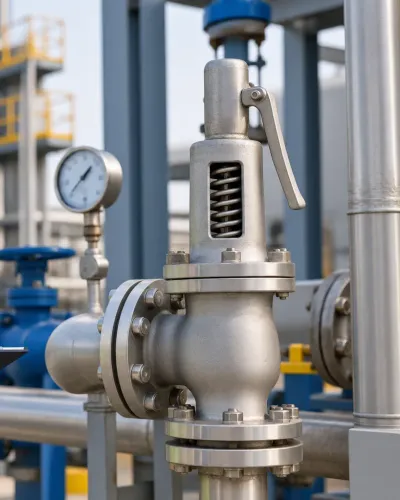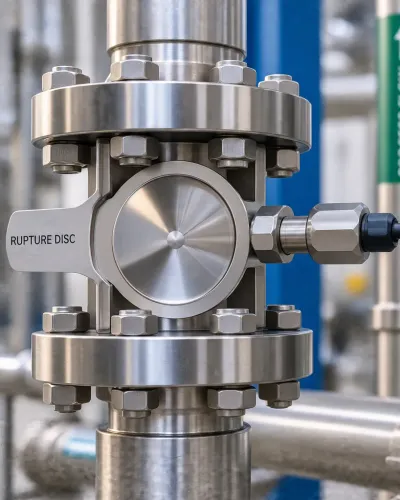
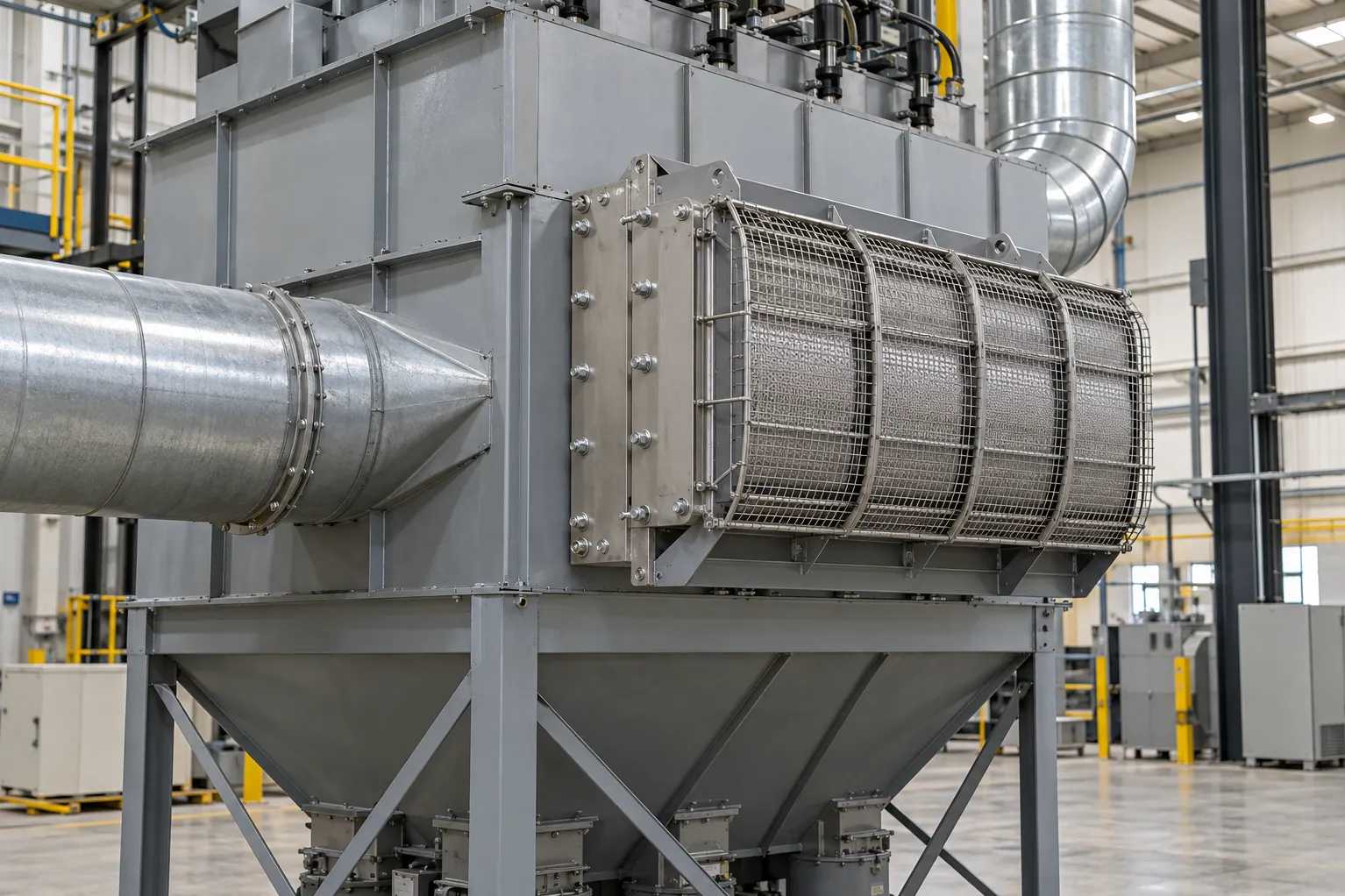
A conventional explosion vent releases pressure, flame and combustion products through an opening. When equipment is installed indoors, routing that discharge to a safe outdoor location may be difficult. A flameless explosion vent system is intended to reduce the external flame and retain much of the discharged dust while relieving pressure into a controlled surrounding area.
This technology is often considered for indoor dust collectors, filters, cyclones and processing equipment. It should never be selected solely because outdoor ducting is inconvenient.
Complete a Dust Hazard Assessment First
The facility must understand whether the handled powder can form an explosible dust cloud. Material identity alone is not enough because particle size, moisture, process conditions and accumulated deposits affect the hazard.
Testing and assessment may need to establish parameters such as:
- Maximum explosion pressure
- Maximum rate of pressure rise
- Dust explosibility index
- Minimum ignition energy
- Minimum ignition temperature
- Limiting oxygen concentration where relevant
These values support vent sizing, equipment-strength assessment and selection of complementary protection.
OSHA recommends dust-hazard inspection and control programmes together with measures such as deflagration isolation, pressure-relief venting and specialised suppressionsystems. Its combustible-dust guidance also stresses controlling ignition sources and dust accumulation.
Confirm the Protected Equipment’s Strength
The vent must open early enough and provide enough relief area to keep reduced explosion pressure within the equipment’s design strength.
Procurement teams should obtain the vessel or collector strength and verify that the proposed system has been sized for the actual enclosure volume, geometry, dust properties and vent activation pressure. A nominal vent selected from equipment size alone may be inadequate.
Examine the Installation Area
A flameless device reduces external flame but does not make the event harmless. Pressure, hot gases, noise and residual products may still enter the surrounding area.
The layout assessment should consider:
- Distance from personnel
- Escape routes
- Nearby combustible materials
- Ceiling and wall clearance
- Maintenance access
- Equipment platforms
- Vent orientation
- Room volume
- Possible secondary dust deposits
The device must not discharge into a congested location where people or equipment remain exposed.
Do Not Forget Explosion Isolation
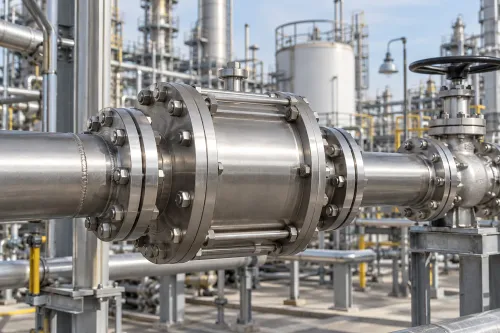
Venting the protected enclosure does not necessarily stop flame and pressure from travelling through connected ducts. Explosion isolation may be needed on inlets, outlets and product-transfer connections.
OSHA enforcement guidance distinguishes equipment protection from propagation protection and identifies isolation as a separate requirement. It describes passive and active isolation approaches for connected dust-collection systems.
A complete design should examine every connection rather than only the largest duct.
Prepare for Post-Activation Recovery
After activation, the area may contain dust, combustion residue and damaged components. The plant needs a controlled response covering shutdown, isolation, investigation and replacement.
Useful readiness checks include:
- Operators know the alarm and shutdown response.
- Replacement elements are identifiable.
- Access is available for safe inspection.
- The incident-investigation process is defined.
- Upstream and downstream equipment will also be checked.
- The system cannot restart before authorised release.
Evaluate the Provider’s Engineering Inputs
A supplier should request dust test data, enclosure dimensions, equipment strength, vent location and duct connections before proposing a system. If these inputs are absent, the quotation should be treated as preliminary.
Manufacturing and processing sites around Vadodara may have indoor dust collectors handling pharmaceutical, food, chemical, plastic or metal powders. Flammer Technologies Private Limited can participate in technical discussions for flameless explosion vent system requirements in Gujarat.
Readiness is achieved when material testing, vent sizing, equipment strength, room effects and explosion isolation are addressed together. The flameless vent is one component of a wider combustible-dust risk-reduction strategy, not a substitute for housekeeping, ignition control or documented hazard assessment.
Keywords