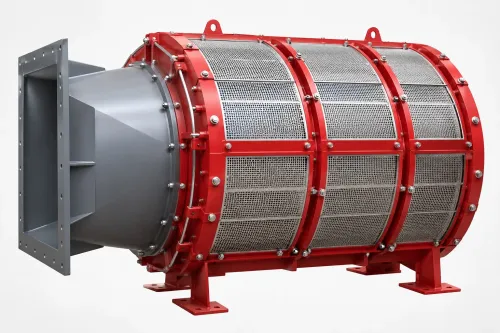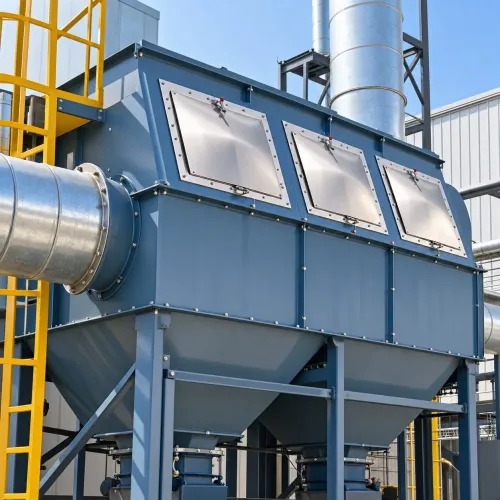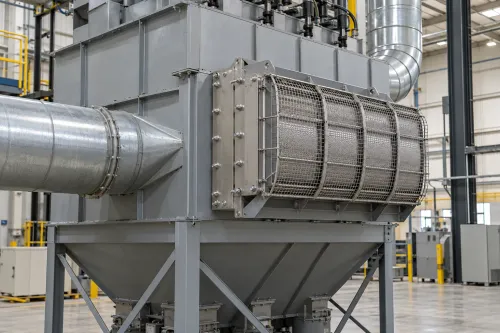
An explosion can begin inside a mill, dryer, dust collector, conveyor or processing vessel and propagate through connected ducts within milliseconds. Protecting the originating equipment alone may not prevent flame and pressure from reaching upstream work areas or downstream machinery.
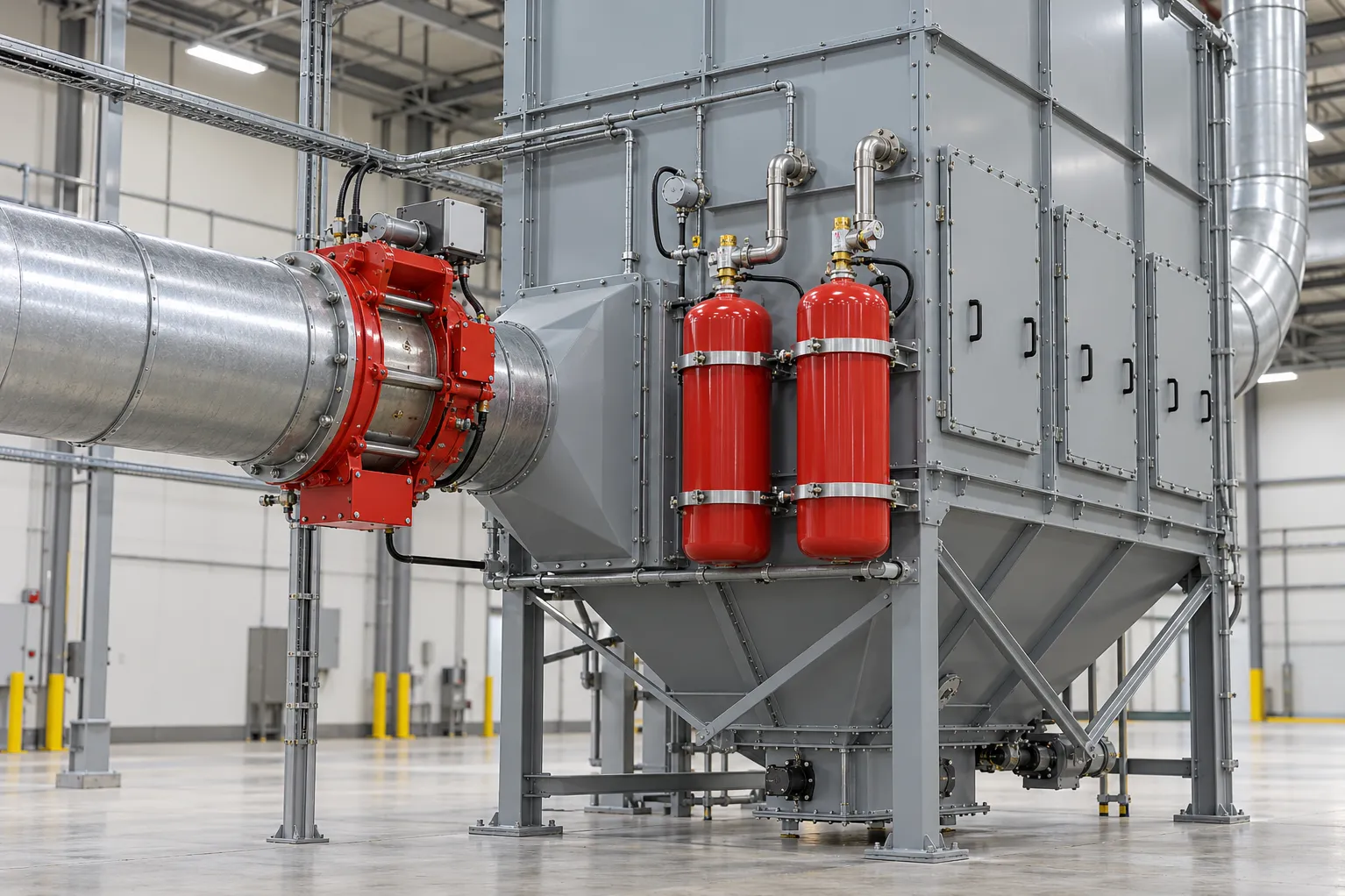
An explosion isolation and suppression system combines rapid detection with protective action. Suppression aims to control an incipient explosion inside equipment, while isolation helps prevent propagation through connected paths. Provider selection must therefore be based on hazard data, response calculations and system integration.
Start With the Complete Process Network
The provider should review the entire connected system, not only the enclosure where ignition is considered most likely. Relevant equipment may include:
- Dust collectors
- Mills and grinders
- Spray dryers
- Cyclones
- Silos and bins
- Pneumatic conveying lines
- Conveyors
- Air-return ducts
- Product discharge equipment
Every inlet, outlet and material-transfer path should be assessed for propagation potential.
Supply Valid Material Data
System design depends on the explosive characteristics of the handled dust, gas or hybrid mixture. Representative testing may be required where reliable data is unavailable.
The provider may need maximum explosion pressure, rate of pressure rise, explosibility index and ignition sensitivity information. For processes handling multiple materials, the design basis should reflect the credible worst case unless operating controls prevent that material from entering the protected system.
Compare Passive and Active Isolation
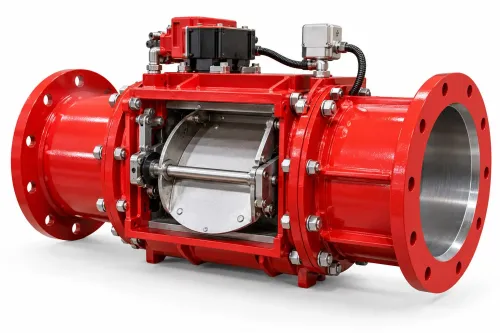
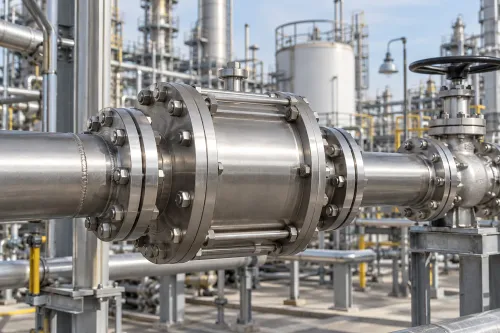
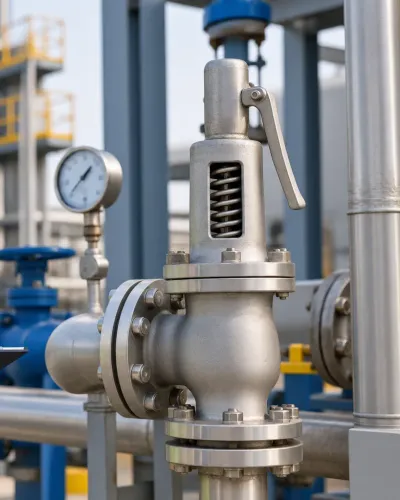
Passive devices respond through the physical effects of the explosion. Active systems use detectors, controllers and fast-acting valves or extinguishing barriers.
The appropriate method depends on duct diameter, flow direction, material loading, process velocity and installation distance. A device suitable on one inlet may not suit an air-return line or gravity discharge.
OSHA guidance identifies both active and passive isolation methods and stresses that venting or suppression of a collector may need separate propagation protection. Examples include engineered flap valves, rotary isolation devices and active detection with chemical isolation.
Examine Suppression-System Response
A suppression system must detect the developing event and discharge suppressant before pressure exceeds the protected equipment’s allowable reduced pressure.
During technical evaluation, ask for:
- Detection principle
- Response time basis
- Number and placement of detectors
- Suppressant quantity
- Discharge-container placement
- Controller logic
- Protected volume limits
- Equipment-strength requirement
- Alarm and shutdown outputs
- Recharge procedure
These values should be tied to calculations for the specific equipment rather than presented as generic product capabilities.
Review Functional Safety and Utilities
Active systems depend on sensors, wiring, power supplies and control logic. The design should address power loss, damaged cables, disabled containers and maintenance bypasses.
Plant personnel need clear indication of system health. Faults should generate an actionable alarm, and the process should not operate when critical protection is unavailable unless an authorised risk-controlled procedure permits it.
Verify Inspection and Lifecycle Support
Explosion-protection equipment requires periodic inspection and competent servicing. The provider should define:
- Routine visual checks
- Functional-test intervals
- Detector calibration
- Suppressant-container inspection
- Backup-power verification
- Replacement after discharge
- Availability of spares
- Technician training
- Documentation updates after process changes
Changes to duct routing, material, airflow or vessel volume can invalidate original assumptions. Management-of-change procedures should therefore include the explosion-protection system.
Look for Engineering Readiness
A suitable provider should ask detailed questions before issuing a final proposal. Warning signs include quotations prepared without dust data, enclosure strength, dimensions or duct layout.
OSHA has documented that dust-processing equipment may require both explosion protection and isolation between connected components. Its guidance refers to venting under NFPA 68 and suppression or isolation under NFPA 69 as distinct protective functions.
Flammer Technologies Private Limited can support explosion isolation and suppression system enquiries from Vadodara and industrial locations across Gujarat. A productive first discussion should include process drawings, hazard data, equipment details and the plant’s intended shutdown philosophy.
Provider selection should favour documented application engineering, transparent operating limits and maintainable lifecycle support. Explosion protection succeeds when detection, suppression, isolation and process shutdown function as one coordinated system.
Keywords