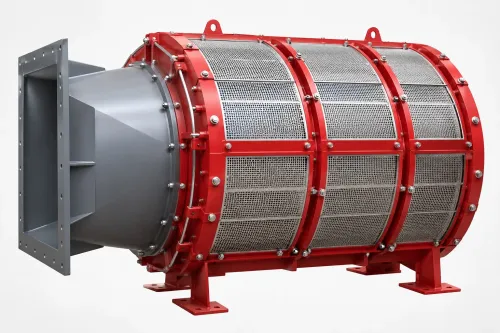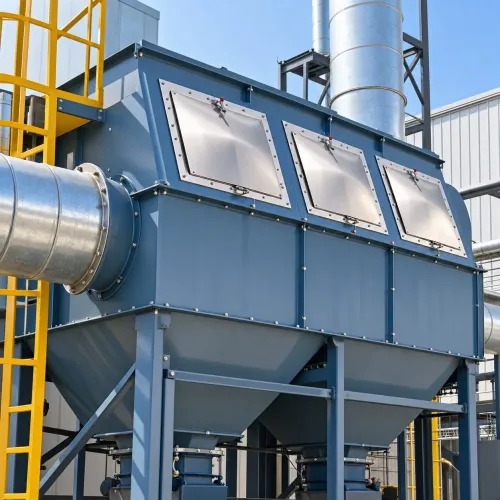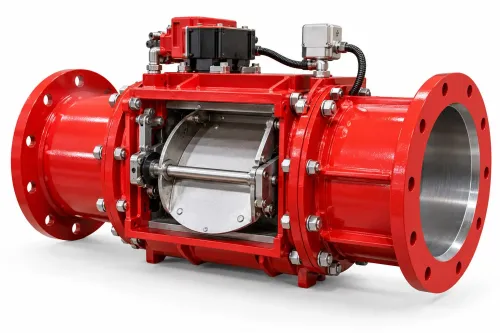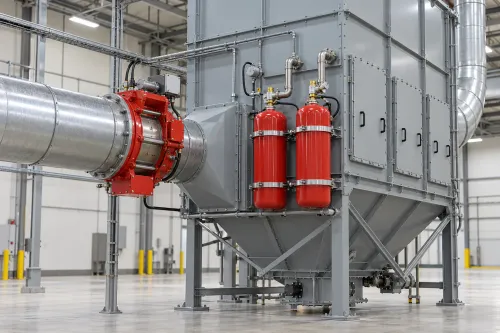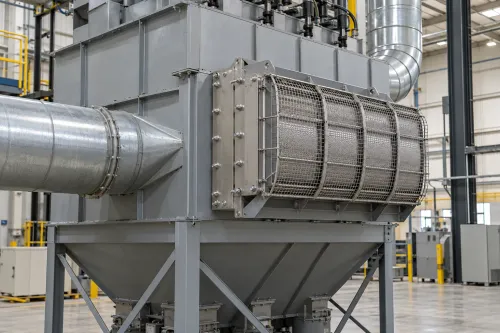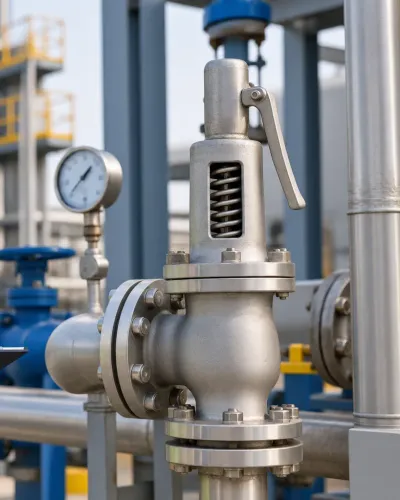
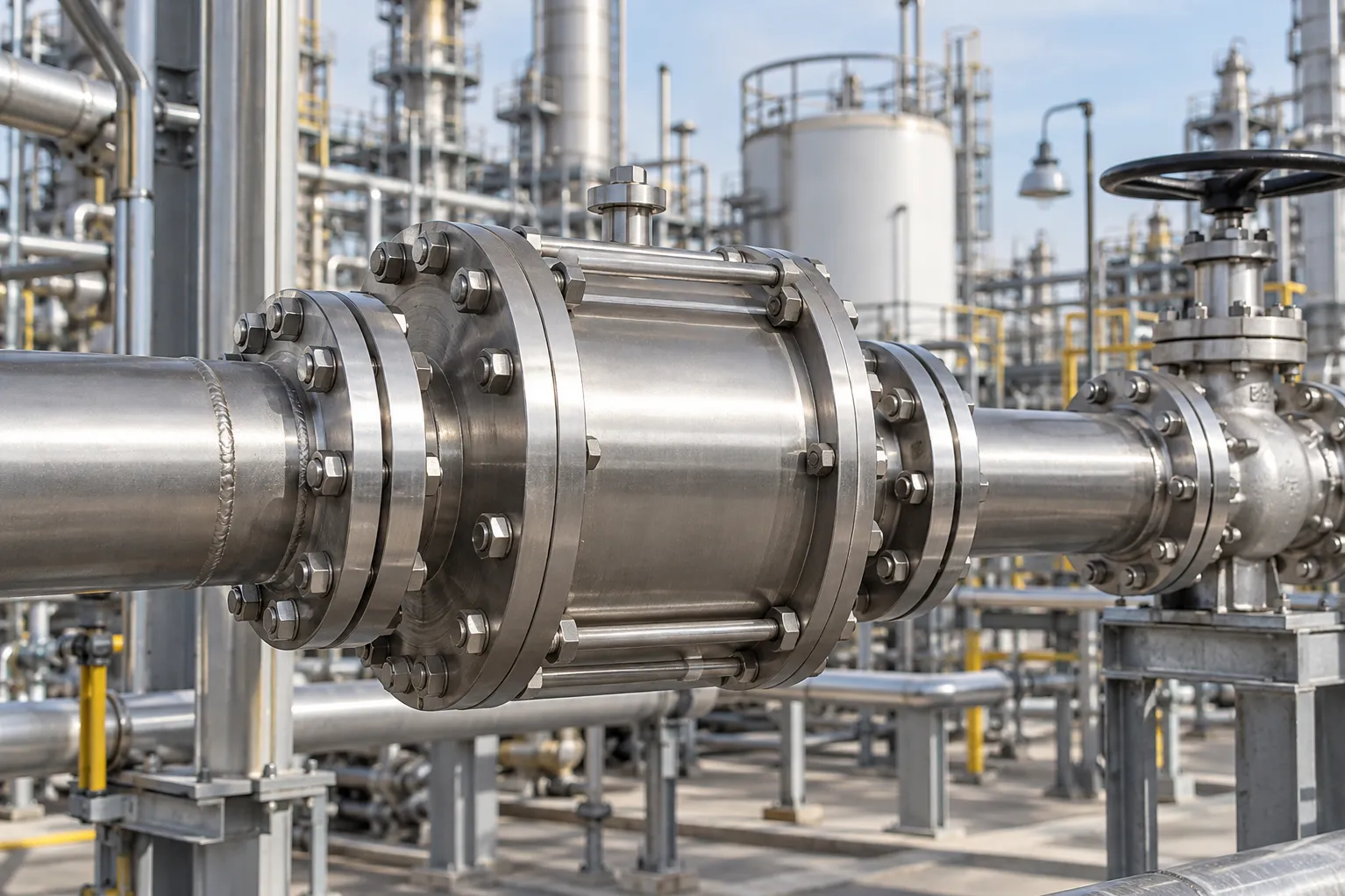
Flammable vapour systems can allow a flame front to travel through piping and reach tanks, process equipment or other connected areas. An industrial flame arrestor is designed to stop flame propagation under defined test and operating conditions while allowing normal gas or vapour flow.
Selecting an industrial flame arrestor manufacturer involves much more than matching the pipe diameter. Gas group, flame type, installation position, operating pressure, temperature and allowable pressure loss all affect suitability.
Identify the Combustion Scenario
The first question is whether the application involves deflagration, detonation or an end-of-line flame event.
A deflagration travels at subsonic velocity, while a detonation involves a more severe shock-coupled combustion front. A device tested for one condition should not automatically be used for the other.
The manufacturer needs to know:
- Possible ignition location
- Distance from the ignition source
- Pipe length and diameter
- Bends, valves and restrictions
- Gas or vapour composition
- Operating pressure and temperature
- Expected flow
- Installation orientation
These details help determine the required arrestor type and placement.
Define the Vapour Mixture
Flame propagation behaviour depends on the material. A generic statement such as “solvent vapour” is insufficient because different vapours can require different test groups or equipment designs.
Provide the normal and worst-case composition, including air or oxidant content. Also identify condensation, polymerisation, solids or corrosion that could obstruct the flame-arresting element.
If the process composition changes between products, cleaning cycles or operating modes, every credible mixture should be reviewed.
Evaluate Pressure Drop
A flame arrestor introduces resistance to flow. Excessive pressure drop can affect tank breathing, process throughput or equipment operation.
The manufacturer should provide pressure-drop information for the relevant flow rate, fluid and operating condition. Engineers should assess both clean and potentially fouled states.
For tank venting, the arrestor must not restrict breathing capacity to the point that the tank experiences unsafe pressure or vacuum. Pressure-vacuum protection and flame arresting should be evaluated as a coordinated system.
Review Fouling and Maintenance
The narrow passages that quench a flame can also collect dirt, corrosion products or condensed material. Regular inspection is therefore essential.
A maintenance plan should specify:
- Inspection interval
- Safe removal procedure
- Approved cleaning method
- Damage acceptance criteria
- Gasket replacement
- Correct reassembly
- Pressure-drop checks
- Records of flame exposure
After a known flame event, the arrestor should be isolated and inspected according to the manufacturer’s instructions before being returned to service.
Verify Documentation and Testing Scope
A credible industrial flame arrestor manufacturer should clearly state the operating limits and test basis of the offered model. Procurement teams should review:
- Arrestor type
- Gas or vapour group
- Maximum operating pressure
- Maximum temperature
- Connection standard
- Housing and element materials
- Orientation restrictions
- Pressure-drop data
- Installation distance limitations
- Inspection instructions
Do not accept a general certificate without confirming that it covers the exact size, model and service classification being supplied.
Consider Regional Operating Conditions
Vadodara and Gujarat have extensive chemical, petrochemical, pharmaceutical and tank-storage operations. High ambient temperatures, monsoon exposure and corrosive atmospheres can influence housing material, weather protection and maintenance frequency.
Flammer Technologies Private Limited can support technical enquiries for flame-arresting applications when customers provide complete vapour, piping and operating data. Final selection and placement should be reviewed through the facility’s process-safety and fire-protection procedures.
A flame arrestor is effective only within its defined application limits. Accurate vapour identification, correct placement and disciplined cleaning are essential for maintaining a clear flow path and dependable flame-quenching capability.
Keywords