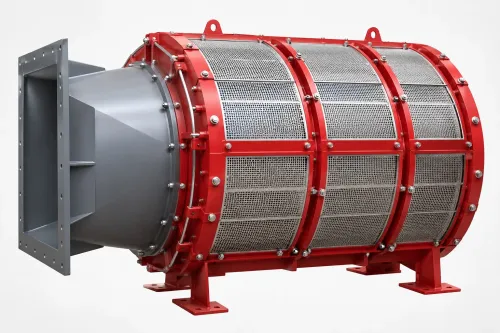

A rupture disc can lose its protection margin through corrosion, pressure cycling, chemical deposits, vibration, incorrect torque, or vacuum exposure long before it bursts. By the end, you will have a practical schedule, inspection method, replacement checklist, after-burst response, and a way to evaluate industrial support without treating a relief device as an ordinary spare part.
Key takeaways
- Set quarterly checks for corrosive, fouling, high-cycle, vacuum, or temperature-cycling service.
- Inspect the disc, holder, gaskets, relief path, and installation condition together.
- Replace a disc when corrosion, deformation, damage, or uncertain service history threatens performance.
- After a burst, isolate the system, investigate the cause, and document the replacement decision.
How to Set a Maintenance Schedule Around Process Severity
Set the interval from process severity, not from a generic annual calendar. A defensible starting point is quarterly inspection for corrosive, fouling, high-cycle, vacuum, or temperature-cycling service; six-monthly inspection for moderate, stable service; and annual inspection for clean, steady duty.
The manufacturer’s stated interval and the plant’s statutory inspection scheme override these starting points when they are more stringent.
- Classify each disc by corrosion rate, polymerisation or crystallisation, solids loading, pressure cycling, temperature excursions, vacuum exposure, vibration, and the consequence of losing the relief path.
- Inspect severe-service discs at every planned shutdown and review the interval after each inspection. Add tell-tale or pressure-indicator checks to operator rounds where the arrangement permits it.
- Inspect moderate-service discs at least every six months, and inspect stable clean-service discs at least annually. Shorten either interval after leakage, abnormal pressure behaviour, process contamination, or a near-miss.
- Check stored spares before issue: confirm packaging integrity, shelf-life or storage limits, corrosion, and the certificate. Do not install a disc with unknown storage history.
Your rupture disc maintenance in Vadodara schedule should record the tag, holder, material, marked burst pressure and temperature, installation date, process conditions, findings, photographs, and replacement reason.
A rupture disc maintenance service should also verify orientation, tell-tale passages, installation torque, and the relief-system configuration, then state whether the path was restored or placed under an approved temporary control.
How to Inspect the Disc, Holder, and Relief Path
Check the disc, holder, gaskets, and relief path for physical damage, contamination, and assembly errors before declaring the system serviceable. Confirm the disc tag, marked burst pressure and temperature, flow direction, holder identification, and the installed orientation against the equipment record.
- Inspect the disc face and edges for corrosion, pitting, bulging, dents, scratches, pinholes, coating loss, deposits, or fragments. Examine gaskets and retaining surfaces for cuts, extrusion, residue, and uneven compression.
- Check holder bolts, clamps, alignment, and seating. A reversed disc, trapped gasket, incorrect holder, loose fastener, or excessive tightening can cause leakage or premature failure.
- Trace the vent, tell-tale, burst-indicator, and discharge passages. Clear polymer, crystals, corrosion products, liquid, and dust; verify that piping has not sagged, frozen, or been obstructed.
- Inspect vacuum-support components, connected piping, vibration points, and nearby surfaces for distortion, impact marks, or process staining. Photograph findings before disturbing the assembly.
A burst normally leaves a separated or visibly fractured disc and can produce a pressure-release mark, fragments, or a triggered indicator. Leakage without rupture points to a pinhole, damaged seal, poor seating, or a blocked tell-tale passage; process residue around one joint often indicates gasket or installation leakage.
If the disc is intact but pressure loss continues, investigate connected valves, flanges, and instrumentation.
A rupture disc maintenance service should record the removed disc, photographs, findings, installation torque, orientation, replacement lot and certificate, and whether the relief path returned to service or remains under approved temporary control.
When Replacement Is Safer Than Continued Operation
Replace the rupture disc rather than return it to service when its opening path, pressure margin, or service history cannot be trusted. Do not try to recover a damaged disc with abrasive pads, sharp tools, unapproved solvents, or high-pressure water; cleaning can thin a scored section, remove a coating, or damage a seal.
- Replace it for corrosion, pitting, pinholes, scratches, dents, bulging, distortion, coating loss, damaged seals, or deposits that cannot be removed without risking damage.
- Replace it after a burst, suspected burst, leakage through the disc, or contact with an unknown pressure or temperature event.
- Replace it when the disc has unknown service history, exceeded its approved storage life, or was stored with damaged packaging, moisture, contamination, or deformation.
- Replace it when the holder, gasket, vacuum support, tell-tale passage, or retaining surface is damaged or incorrectly assembled.
| Finding | Why continued use is unsafe | Required decision |
|---|---|---|
| Temperature mismatch | Burst pressure is tied to the specified rupture temperature, not workshop temperature | Recalculate and replace if the marking does not match process conditions |
| Incomplete specification | Diameter and nominal pressure do not confirm material, vacuum rating, backpressure, or cyclic-duty suitability | Replace with a fully matched disc |
| Construction mismatch | Forward-acting, reverse-acting, scored, composite, and graphite-based designs behave differently | Obtain the specified construction |
| Uncertain history | Remaining burst margin cannot be established after significant corrosion or mechanical damage | Replace |
For rupture disc replacement in vadodara, confirm process-side and atmospheric-side conditions, burst pressure at the stated temperature, manufacturing range, material compatibility, vacuum rating, backpressure, and cyclic duty before ordering.
What to Do After a Rupture Disc Bursts
Treat a rupture disc after burst as an active process-safety incident, not a routine maintenance task. Stop the process under your site’s isolation, depressurisation, permit-to-work, and hazardous-material procedures. Control any release and treat the downstream piping, holder cavity, vent line, and surrounding area as contaminated until testing confirms otherwise.
- Isolate every connected energy and process source, depressurise to a verified safe destination, and confirm zero pressure with approved instruments.
- Secure the area, identify chemicals and residues, and obtain the required entry or hot-work permits before opening the holder.
- Inspect the holder, disc fragments, gaskets, vent line, downstream equipment, and discharge outlet. Remove deposits or fragments only after confirming the relief path is safe and unobstructed.
- Establish why the disc opened: record pressure and temperature trends, batch conditions, blocked outlets, thermal expansion, vacuum exposure, runaway reaction, fire exposure, corrosion, and possible installation errors.
- Photograph the assembly, preserve failed parts, record the disc tag and burst data, and document witness accounts before fitting a replacement.
For rupture disc replacement in Vadodara, match more than nominal diameter and pressure rating. Confirm the original design and flow direction, burst pressure at the stated temperature, manufacturing range, material compatibility, vacuum rating, backpressure, cyclic-duty capability, and holder type. Select forward-acting, reverse-acting, scored, composite, or graphite construction from the actual duty.
Before returning equipment to service, verify centring, orientation markings, clean seating faces, gasket arrangement, and the manufacturer’s bolt sequence and torque. Uneven or excessive loading can cause premature rupture; insufficient loading can cause leakage or vibration damage. Record the investigation and replacement certificate in the equipment file.
How to Organise Local Support, Records, and Relief-System Decisions
Require two scopes, not one price: emergency replacement and recurring engineering support. The first covers a matched stocked disc, safe isolation, and field installation; the second covers process review, spare rationalisation, corrosion or fouling assessment, inspection planning, and failure investigation.
Rupture disc maintenance in Vadodara must follow process severity, the manufacturer’s interval, and the plant’s statutory inspection scheme, using whichever is stricter.
Ask the provider to deliver:
- A verified record of disc size, type, burst pressure at temperature, material, holder, vacuum rating, and backpressure.
- Inspection of the holder, seating surfaces, gaskets, vent or tell-tale passages, and discharge path.
- Installation records showing orientation, cleanliness, gasket arrangement, bolt sequence, torque, replacement lot, and certification.
- A written service status: returned to service, or left under an approved temporary control.
- Coordination with your statutory inspector or competent person after a change, burst, or suspected blocked relief path.
Flammer Technologies Private Limited can be assessed against this scope by asking whether its local industrial rupture disc support includes engineering records and installation verification, not only replacement supply.
| Option | What it means | When it applies |
|---|---|---|
| Rupture disc | Non-reclosing protection with no moving parts | Corrosive, fouling, fast pressure rise, or leak-tight isolation duty |
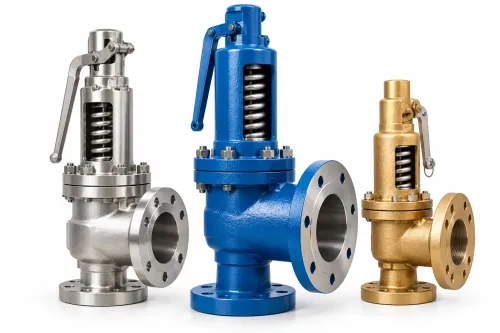
| PSV | Spring- or pilot-operated valve that reseats after relieving | Repeated relief is credible and controlled discharge is required |
| Disc plus PSV | Disc protects the valve; the cavity needs monitoring | Corrosive service, leakage prevention, or PSV isolation risk |
Do not substitute nominal diameter and pressure rating for a full match. Confirm process chemistry, burst tolerance, cyclic duty, temperature, vacuum, and backpressure before approving the arrangement.
Related product
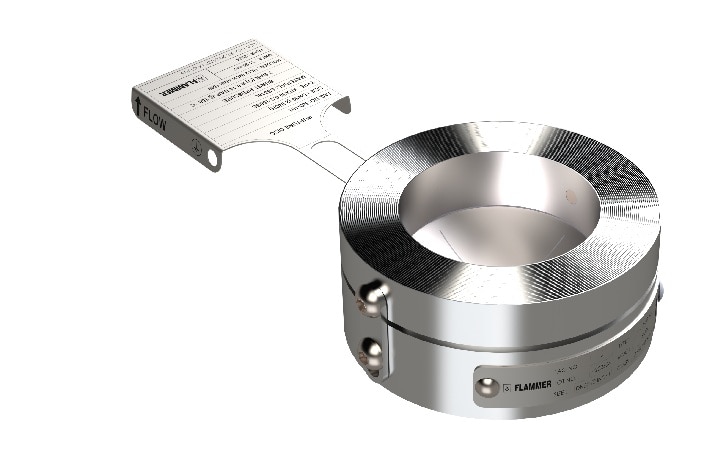 | Rupture Disc Established in 2019 and headquartered in Vadodara, Gujarat, Flammer Technologies Pvt. Ltd. View product → |
Frequently asked questions
How often should you inspect a rupture disc?
Set the interval by process severity: quarterly for corrosive, fouling, high-cycle, vacuum, or temperature-cycling service; six-monthly for moderate, stable service; and annually for clean, steady duty.
What should you inspect during rupture disc maintenance?
Inspect the disc for corrosion, deformation, fouling, scoring, and damage. Check the holder, gaskets, fasteners, alignment, and the unobstructed relief path.
When should you replace a rupture disc instead of continuing operation?
Choose replacement when the disc shows corrosion, deformation, damage, fouling, an uncertain service history, or conditions that no longer match its specified duty.
What should you do after a rupture disc bursts?
Make the system safe, control released material, identify why the disc burst, inspect the holder and relief path, and record the replacement and investigation before restarting.
Keywords