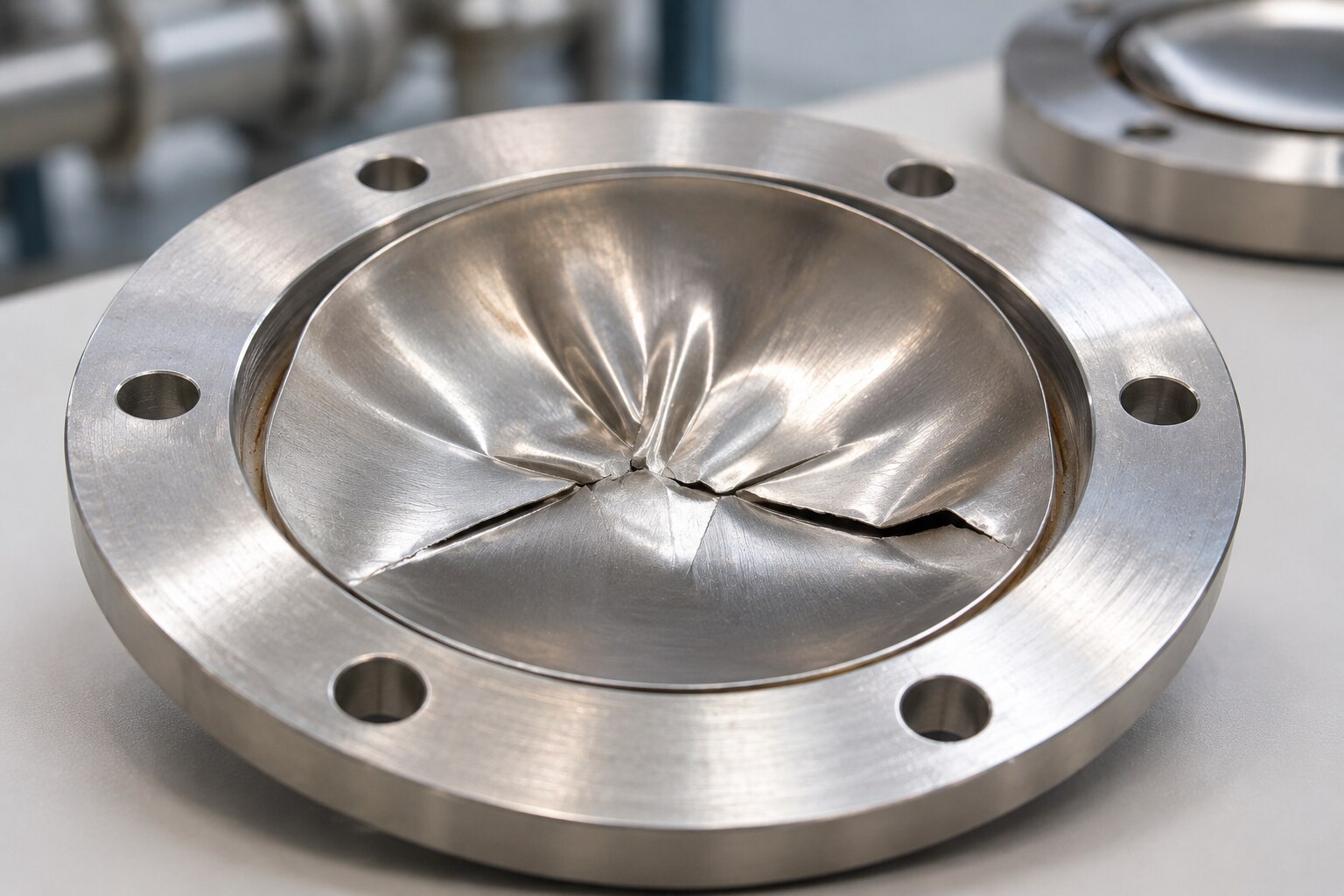
A reverse-buckling disc can open too early, fail to open, leak, or appear to fail when the real cause is installation damage, blocked discharge piping, pressure-transmitter error, or unsuitable process conditions. You will be able to classify the failure, preserve the evidence, separate disc damage from system faults, and specify a defensible replacement.
Key takeaways
- Classify activation before blaming the disc or its manufacturer.
- Isolate the vessel, document conditions, and preserve the failed disc.
- Check the holder, gauges, piping, and explosion-suppression controls together.
- Replace the complete pressure-relief assembly, not only the disc.
Classify the failure before blaming the disc
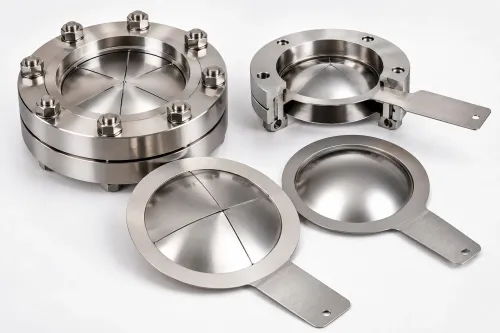
A reverse-buckling rupture disc inverts from its concave side when differential pressure reaches its marked burst pressure; it does not simply tear like a thin membrane. For anyone investigating a reverse buckling rupture disc for failure heavy manufacturing in vadodara, classify the event before blaming manufacturing variation.
1. Incorrect burst pressure: compare the disc tag, purchase record, temperature, backpressure and certified burst value with the design case.
2. Premature rupture: check reversed orientation, the wrong holder, missing support, gasket intrusion, flange misalignment, over-torquing, scoring and pressure pulsation.
3. Failure to open: inspect blocked discharge piping, an isolation valve, excessive backpressure, incorrect flow direction and a holder that does not match the disc.
4. Leakage without full activation: look for damaged sealing surfaces, corrosion, poor seating, thermal distortion and fragment retention.
5. Buckling instability or fatigue: examine compressor pulsation, pump trips, batch pressure swings and repeated start-stop cycles; fatigue can rupture the disc below its nominal burst pressure.
6. Corrosion or erosion: identify process chemicals, moisture, temperature exposure and wall thinning before assigning the cause.
7. Fragment retention: determine whether the holder or support trapped the disc and restricted relief flow.
Number the investigation record, then preserve the failed disc, holder, gaskets, tags, rupture indicator, calibration records and pressure-temperature trends. Photograph the fracture pattern before cleaning anything, and collect process samples when corrosion or deposits are suspected. This evidence separates a disc defect from installation, measurement or discharge-path failure.
Secure the vessel and preserve evidence after activation
Treat the vessel as unprotected immediately after activation: a rupture disc does not reclose, so pressure relief is absent at that location until the assembly is replaced. Stop the affected operation, establish an exclusion zone, and isolate ignition sources, toxic releases, and moving equipment.
- Depressurize, drain, purge, and cool the vessel through an approved route. Apply lockout/tagout, and do not close a valve that could trap pressure unless the site procedure confirms the vessel remains protected.
- Photograph the vessel, holder, discharge piping, rupture indicator, gauges, and surrounding damage before disturbing anything. Include orientation marks and flange-bolt positions.
- Remove the failed disc and holder only under the site’s pressure-equipment procedure. Keep the disc, gaskets, fragments, tags, and any deposits in clean, labelled containers; do not clean or flatten the disc.
- Record the disc tag, marked burst pressure, temperature rating, installation direction, holder type, and replacement history. Preserve calibration certificates for pressure transmitters and gauges.
- Export trends showing upstream pressure, process temperature, vacuum or backpressure, compressor pulsation, batch changes, trips, and any pressure-safety-valve operation before and during activation.
- Collect representative process deposits or samples if corrosion, contamination, polymerisation, or combustible dust could have affected the disc or discharge path.
For reverse buckling rupture disc problems in vadodara, preserve the failed assembly before blaming manufacturing variation. Reversed installation, blocked discharge piping, thermal exposure, pressure cycling, and incorrect replacement records can produce the same event signature. Do not restart until the cause is documented and an approved replacement restores a complete, correctly oriented relief path.
Separate disc failure from holder, instrument and piping faults
A disc is the cause only after its marked burst pressure, loading direction, and physical condition agree with the event record. Preserve the disc, holder, gaskets, tags, calibration certificates, pressure trends, temperature history, and downstream condition before fitting a replacement.
- Disc evidence: inspect the inversion pattern, scoring, corrosion, fatigue cracks, and fragment retention. Compare the disc marking with the specified burst pressure and temperature.
- Installation evidence: confirm the concave side faced the process, the correct holder was used, gaskets did not intrude, sealing faces were undamaged, bolts were aligned and torqued correctly, and vacuum support was fitted where required. A reversed disc or distorted holder can mimic a manufacturing defect.
- Measurement evidence: compare the transmitter trend with a calibrated test gauge and the trip record. Check impulse lines, plugged sensing ports, calibration dates, and temperature compensation; a false pressure signal can make a sound disc appear to fail early or fail late.
- Discharge evidence: inspect the outlet for isolation-valve closure, debris, liquid blockage, undersized piping, unsupported loads, and backpressure. An open disc does not prove that pressure escaped safely.
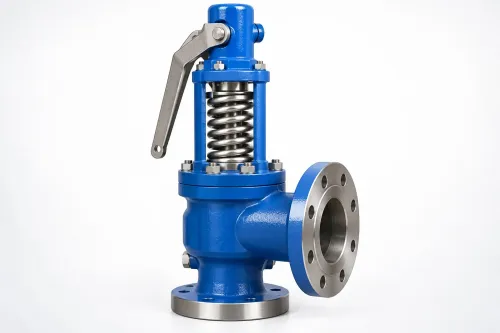
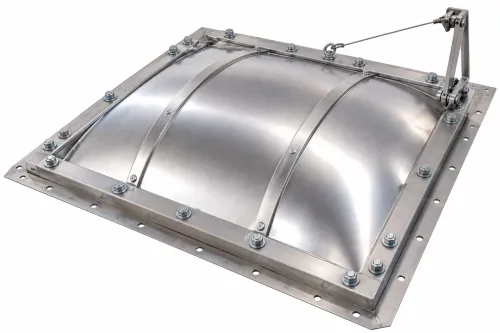
- Other-device evidence: verify whether a pressure safety valve, explosion vent, suppression actuator, or isolation valve operated first, opened late, leaked, or failed to respond.
The disc is non-reclosing. If it opened correctly but detection, suppression, isolation, or discharge failed, investigate that system rather than assigning blame to the disc. Compare every conclusion with the vessel pressure history and the recovered hardware.
Account for cyclic, corrosive and explosion-related plant conditions
Cyclic pressure swings, corrosive service and high process temperatures change the evidence you need. A disc that opened after repeated pulsation is not investigated like one weakened by chloride, acid, moisture or thermal cycling. Compare the marked burst pressure and temperature with the actual pressure-temperature history, not with a cold workshop test.
For a rupture disc failure in an explosion suppression system in Vadodara, classify the event by what happened:
- The disc failed to open: check reversed installation, the wrong holder, excessive back pressure, corrosion, scoring and a pressure transmitter that did not record the true peak.
- The disc opened too early: examine cyclic fatigue, thermal exposure, corrosion thinning, gasket intrusion, bolt loading and the specified manufacturing tolerance.
- The disc opened but discharge was restricted: inspect isolation valves, flame arresting components, vent or discharge piping, accumulated dust and undersized or obstructed outlets.
- The disc opened correctly but suppression failed: verify detector response time, extinguishing-agent release, isolation valves, flame-pressure barriers and protected-vessel integrity.
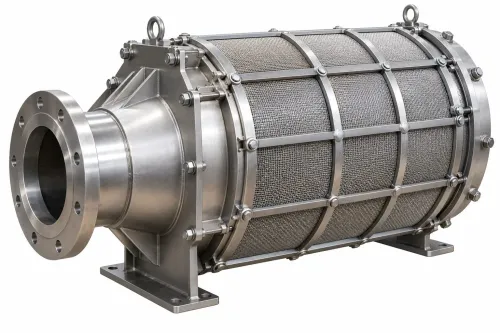
Do not treat the disc as the suppression system. Detection, rapid extinguishing, isolation against flame and pressure propagation, and a correctly protected enclosure must be tested as one arrangement. Retain the disc, holder, gaskets, rupture indicator and process samples; preserve alarm trends, detector logs, valve-position records and maintenance history.
Corrosion products and dust deposits can identify the mechanism, while a replacement disc alone cannot prove the system is safe.
Specify and verify the replacement as a complete pressure-relief assembly
Approve the heavy manufacturing rupture disc replacement in Vadodara only against a signed, complete assembly specification—not a catalogue match for diameter and pressure class. The specification must state burst pressure, burst temperature, manufacturing tolerance, material, nominal size, holder model, flow direction, vacuum and back-pressure conditions, fragment-retention requirement, and the applicable code or certification basis.
Require the supplier to identify every part that affects opening:
- Disc tag number and arrow direction
- Holder orientation and assembly drawing
- Gasket material, thickness, and approved position
- Vacuum-support or other support components
- Flange-bolt torque and sealing-surface requirements
- Discharge-pipe size, routing, drain condition, and isolation-valve status
A marked burst pressure is valid at its specified temperature. Comparing a hot-process disc with a cold replacement can create a false equivalence, while the wrong holder, gasket intrusion, missing support, or reversed disc can cause premature buckling or prevent opening. Obtain the manufacturer’s written confirmation that the disc and holder are an approved pair.
For a heavy manufacturing rupture disc replacement in Vadodara, verify the new tag against the purchase specification, process design pressure, temperature trend, and vacuum scenario before installation. Photograph the installed arrow and holder, record torque, and retain the certificate with the maintenance file.
If the location forms part of explosion protection, also verify detection, suppression, isolation, and venting interfaces; a rupture disc alone is not a suppression system. Flammer Technologies Private Limited is one manufacturer you can ask to confirm assembly compatibility in writing before approval.
Related product
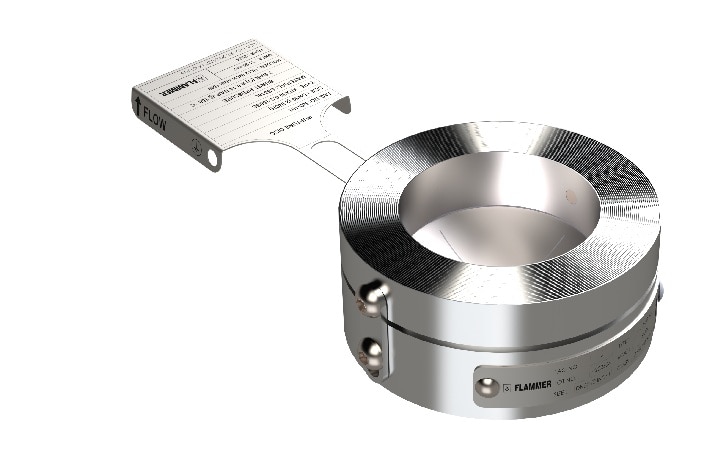 | Rupture Disc Established in 2019 and headquartered in Vadodara, Gujarat, Flammer Technologies Pvt. Ltd. View product → |
Frequently asked questions
How do you classify a reverse buckling rupture disc failure?
Determine whether the disc activated at its marked burst pressure, inverted prematurely, failed after corrosion or fatigue, or responded to an external event such as an explosion.
What should you do after a reverse buckling rupture disc activates?
Secure and isolate the vessel, prevent re-pressurisation, record pressure and temperature readings, photograph the installation, and preserve the disc, holder, gaskets, and fasteners as evidence.
Which faults can resemble reverse buckling rupture disc failure?
A damaged or incorrectly assembled holder, blocked or undersized piping, inaccurate instruments, wrong flow direction, gasket intrusion, and faulty explosion-suppression equipment can all produce similar symptoms.
How do plant conditions affect reverse buckling rupture discs?
Pressure cycling can cause fatigue, corrosive service can weaken the disc, and combustible-dust or gas explosions can impose loads outside ordinary pressure-relief operation.
What must you verify when replacing a reverse buckling rupture disc?
Match the burst pressure and temperature, material, size, flow direction, holder design, process compatibility, vacuum requirements, and installation records for the complete pressure-relief assembly.
Keywords