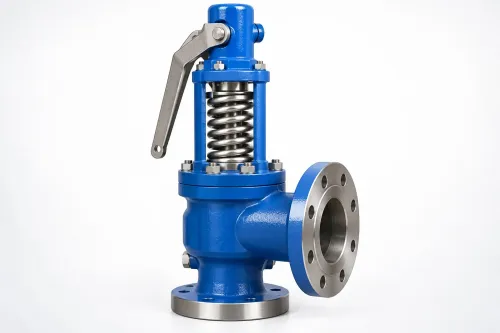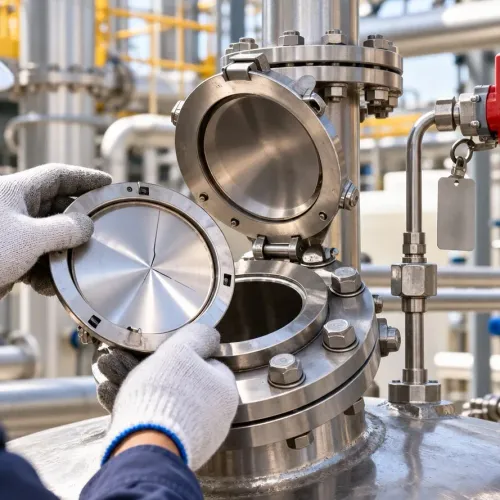
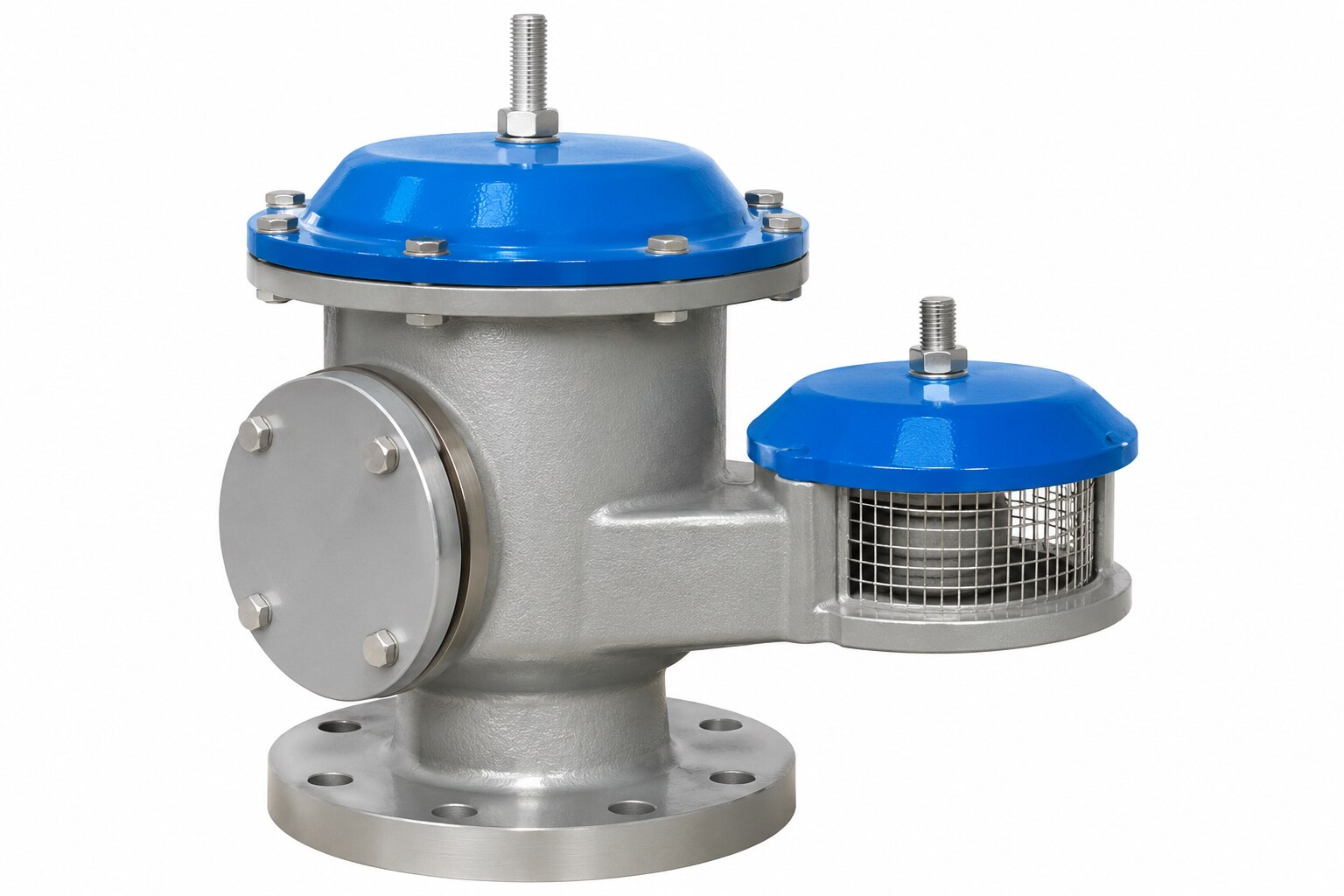
A storage tank can buckle under vacuum while a process vessel can exceed its allowable pressure, and one relief device does not solve both hazards. You will be able to separate normal tank breathing from emergency pressure relief, identify the operating data required for sizing, and compare the safeguards and documents to request before buying.
Key takeaways
- Use a PVRV for tank pressure and vacuum protection during normal breathing.
- Do not rely on a conventional PSV to prevent tank collapse from vacuum.
- Size valves for outbreathing, inbreathing, fire exposure, and emergency flow cases.
- Request setpoint, capacity, materials, test reports, and API compliance documents before purchase.
Two valves, two pressure-protection jobs
A pressure vacuum relief valve protects a low-pressure tank in both directions: it opens for excess internal pressure during outbreathing and admits air or inert gas when withdrawal or cooling creates vacuum. A conventional pressure safety valve is an overpressure device; it does not normally protect the tank against collapse from inbreathing.
| Valve | Primary job | What it does not cover |
|---|---|---|
| Pressure Vacuum Relief Valve | Controls routine tank breathing during filling, withdrawal, vapour condensation and thermal change | It is not automatically adequate for fire exposure, runaway reaction or major gas blow-by |
| Pressure Safety Valve | Relieves emergency overpressure from blocked outlets, process upsets, fire exposure or gas blow-by | It does not replace vacuum relief and does not prevent overfill or loss of containment |
Treating a PSV as a substitute for a PVRV is a specification error. The pressure safety valve protection in Vadodara must be assessed with high-high level shutdown, overfill prevention, isolation-valve control and safe vent or flare routing.
For pressure safety valves in Vadodara, verify the relieving case, set pressure, required flow, allowable accumulation, relieving temperature and backpressure; for the pressure vacuum relief valve, verify both pressure and vacuum capacity against the tank’s design limits.
Why one tank can need normal breathing and emergency relief
A storage tank needs both devices because routine breathing and abnormal overpressure are different events. A Pressure Vacuum Relief Valve opens during liquid filling, thermal expansion, or vapour generation, and admits air or inert gas when withdrawal, cooling, or vapour condensation creates vacuum.
A conventional Pressure Safety Valve handles overpressure; it does not normally protect against tank vacuum.
- Use the Pressure Vacuum Relief Valve for frequent, lower-rate pressure and vacuum changes. Set its pressure and vacuum points below the tank’s design limits but above normal operating fluctuations; a poor setting causes leakage, simmering, or chatter.
- Add an emergency vent or suitably sized Pressure Safety Valve for high-rate overpressure from external fire, a blocked outlet, a process upset, or instrument failure. An emergency device is not a replacement for normal breathing protection.
- Check the emergency discharge route before approving the arrangement. Venting vapour into an unsafe area can move the hazard rather than remove it.
- Pair relief protection with high-high level shutdown, overfill prevention, managed isolation valves, and fire safeguards. A valve limits pressure; it cannot stop overfilling or prevent every loss-of-containment event.
When specifying an industrial tank valve in Vadodara, match each device to the tank’s liquid, vapour service, temperature, emissions limits, and allowable pressure and vacuum.
Setpoints and flow cases that determine the right size
Establish the tank’s operating and mechanical limits before choosing capacity. Record normal pressure, design pressure or MAWP, design vacuum, normal temperature, and the allowable pressure accumulation. A setpoint close to normal pressure causes simmering, leakage or chatter; a high setpoint can exceed the tank’s pressure rating, while a weak vacuum setting can collapse it.
Collect these figures for the sizing calculation:
- Maximum liquid filling and withdrawal rates, including the liquid density and temperature.
- Vapour generation from thermal expansion, condensation, evaporation and gas blow-by.
- Fire-exposure relief load and any blocked outlet or process-upset case.
- Required vacuum-relief flow from liquid withdrawal, cooling, condensation and inert-gas consumption.
- For a PSV, relieving temperature, fluid composition or molecular weight, required mass or volumetric flow, set pressure, allowable overpressure or accumulation, and superimposed and built-up backpressure.
| Device | Setpoint and capacity basis | Cases to calculate |
|---|---|---|
| Pressure Vacuum Relief Valve | Pressure setpoint, vacuum setpoint, pressure and vacuum capacity separately | Filling, withdrawal, thermal change, condensation, gas blow-by and fire exposure |
| Pressure Safety Valve | Set pressure, accumulation, relieving temperature, flow, backpressure and fluid properties | Blocked outlet, fire, reaction or process upset |
Do not approve either valve from inlet and outlet size alone. Confirm that each certified capacity exceeds its governing flow and that the setpoints remain within tank limits. For pressure safety valves in Vadodara, request calculations that show these inputs rather than accepting a catalogue capacity.
Choosing between a breather valve, PSV, pilot valve and rupture disc
Choose the device by failure case, required response, and what happens after it opens. A breather valve suits routine tank breathing; a PSV handles emergency overpressure; a pilot-operated PSV suits tighter operating margins; a rupture disc gives rapid, leak-tight one-time protection.
| Option | Response and reseating | Leakage, maintenance and service fit |
|---|---|---|
| Breather valve | Opens at small pressure or vacuum deviations and reseats after flow stops | Low leakage when seated; inspect pallets, seats and flame screens for dust, corrosion and sticking |
| Spring-loaded PSV | Opens at its set pressure and recloses after pressure falls | Simple and serviceable, but seat leakage and blowdown demand attention; verify backpressure and temperature |
| Pilot-operated PSV | Provides tight operation near set pressure and high capacity in suitable services | Needs clean sensing lines and instrument gas; dirt, liquid carryover or blocked filters can defeat response |
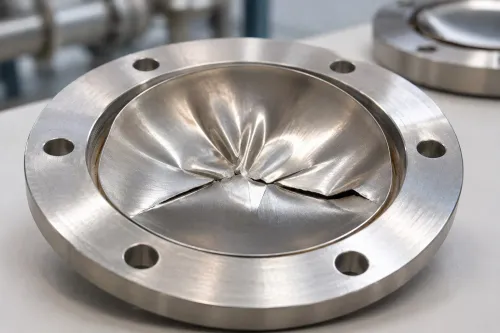
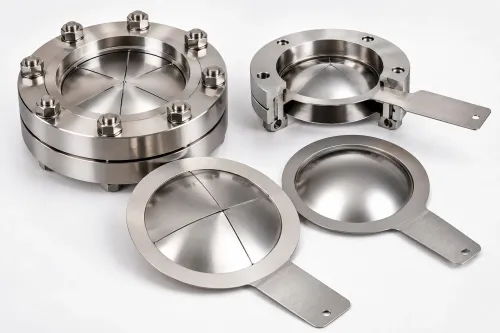
| Rupture disc | Bursts quickly at its specified pressure and does not reseat | No operating leakage before rupture, but replacement follows activation; use where corrosion, polymerisation or rapid relief favours a disposable barrier |
For pressure safety valve protection in Vadodara, match the arrangement to the fluid and site conditions: corrosive vapour may favour a lined disc, while fouling service can make a pilot system difficult to maintain. Pair a rupture disc with a PSV when you need zero PSV leakage, then account for added backpressure and inspection access.
A PSV does not replace vacuum protection; retain the breather valve when tank inbreathing remains possible.
Where API 2000, API 520 and API 521 apply
API 2000 governs normal and emergency venting for atmospheric and low-pressure storage tanks. API 520 governs the sizing, selection and installation of pressure-relief devices such as spring-loaded PSVs. API 521 establishes relieving scenarios and the design basis for depressuring and disposal systems.
| Standard | Main application | What it determines |
|---|---|---|
| API 2000 | Atmospheric and low-pressure storage tanks | Normal inbreathing, outbreathing, thermal effects, filling, emptying and emergency fire venting |
| API 520 | Pressure-relief devices | PSV capacity, sizing method, set pressure, allowable overpressure and installation guidance |
| API 521 | Pressure-relief and depressuring systems | Fire, blocked outlet and process-upset cases, plus flare, vent, knockout and disposal-system design |
An emergency vent is not automatically a replacement for a normal PVRV. API 2000 addresses tank venting; API 520 sizes a PSV when that device is selected; API 521 determines how released vapour or liquid reaches a safe disposal point.
An industrial tank valve in Vadodara therefore needs a documented design basis linking tank limits, relieving cases, backpressure and emissions controls—not merely a catalogue size.
What to verify from a Vadodara valve supplier before purchase
Do not approve a catalogue model until the supplier ties each valve to your tank, fluid and relieving cases. Ask for a signed technical package, not only a quotation showing inlet and outlet sizes.
1. Request certified pressure and vacuum set-pressure data, allowable operating pressure and full-vacuum rating, flow coefficient or certified capacity, and the sizing calculation. The calculation must show liquid filling, withdrawal, thermal expansion, condensation, fire exposure and gas blow-by for the PVRV, plus the PSV relieving case, set pressure, accumulation, temperature, composition, and backpressure.
2. Check the materials-of-construction schedule against corrosion, temperature, viscosity, solids, polymerisation and crystallisation. Confirm the seat, pallet, spring, body, gasket and coating materials, along with the specified leak-tightness class.
3. Obtain inspection and test records, pressure and vacuum calibration certificates, calibration traceability, serial numbers, and the final set-pressure report.
4. Ask for spare-seat, pallet, spring and gasket part numbers, recommended inspection intervals, installation drawings, torque values, commissioning support, technician availability, response time, and shutdown requirements.
For pressure safety valve protection in Vadodara, also document high-high level shutdown, overfill protection, isolation-valve control and vent or flare routing. If Flammer Technologies Private Limited is shortlisted, use this same evidence checklist rather than accepting a catalogue pressure range.
Related product
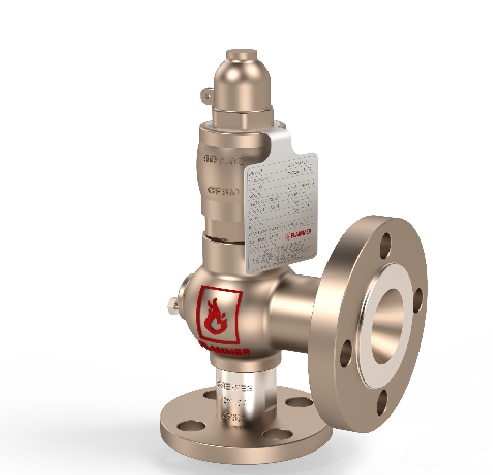 | Pressure Safety Valves Flammer Technologies provides good-quality Pressure Safety Valve solutions that protect industrial equipment, pipelines, pressure vessels and process... View product → |
Frequently asked questions
What is the difference between a pressure vacuum relief valve and a pressure safety valve?
A pressure vacuum relief valve protects a low-pressure tank during both outbreathing and inbreathing. A conventional pressure safety valve protects against excess pressure and does not normally prevent vacuum collapse.
Why can one tank need both normal breathing protection and emergency relief?
Liquid withdrawal and cooling can create vacuum, while filling, heating, or process upsets can create pressure. A breather valve handles normal pressure and vacuum changes, while a PSV or other emergency device handles higher-pressure events.
Which flow cases determine pressure vacuum relief valve sizing?
Sizing must account for liquid filling and emptying, temperature changes, vapour generation or condensation, inert-gas blanketing, and emergency fire exposure where applicable.
When do API 2000, API 520, and API 521 apply?
API 2000 addresses venting of atmospheric and low-pressure storage tanks. API 520 covers sizing, selection, and installation of pressure-relief devices, while API 521 addresses pressure-relieving and depressuring-system design for process facilities.
What should you verify from a Vadodara valve supplier before purchase?
Request the valve datasheet, set pressures and vacuum settings, certified capacity, materials, connection details, temperature range, inspection and test records, calibration details, and documentation showing the specified standard or design basis.
Keywords