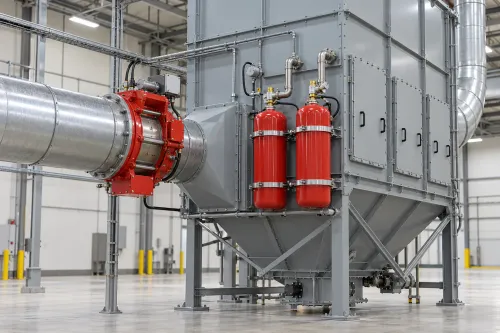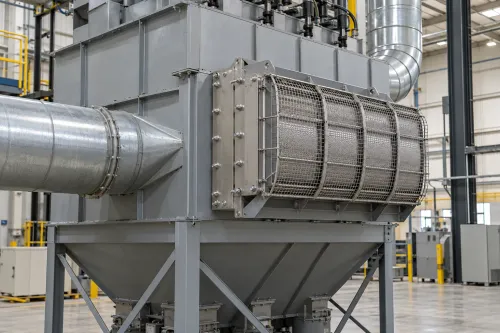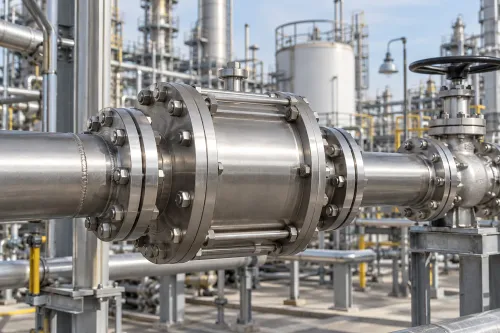
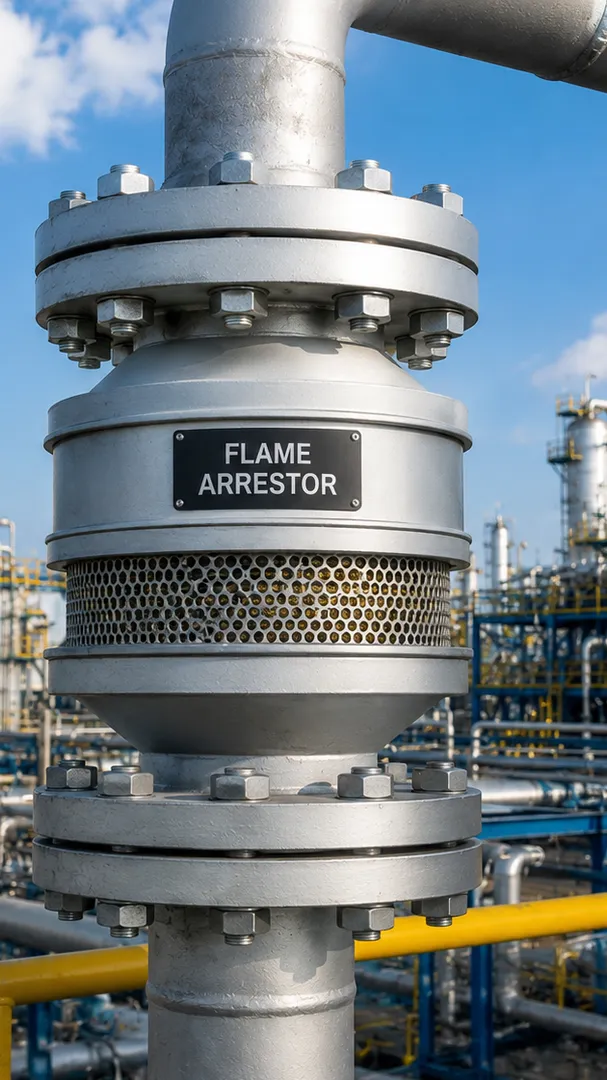
Industrial facilities handling flammable gases and vapors must manage fire risks carefully. While preventive measures reduce the likelihood of ignition, engineered protection systems remain essential for minimizing the impact of accidental flame propagation. An industrial flame arrestor is one such safety device that helps prevent flames from travelling through pipelines, storage tanks, and process systems.
With Gujarat serving as one of India's largest industrial regions, facilities in and around Vadodara increasingly rely on flame arrestors to strengthen process safety and protect critical infrastructure.
What Is an Industrial Flame Arrestor?
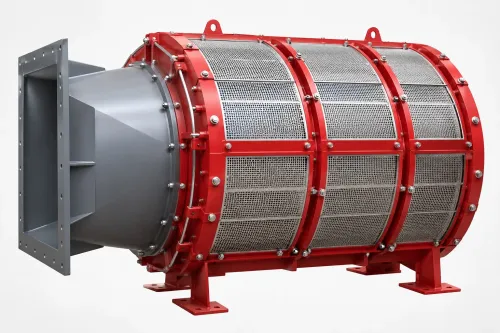
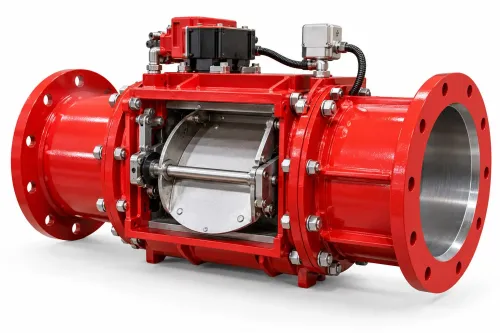
An industrial flame arrestor is a passive safety device designed to stop flames from spreading through combustible gas or vapor systems.
The device contains specially engineered flame-quenching elements that absorb heat from the flame front. As the temperature drops below the ignition point, flame propagation is interrupted before it reaches downstream equipment.
This protection helps prevent fires and explosions from spreading through connected systems.
Why Flame Arrestors Are Important
Many industrial operations involve flammable substances under varying pressure and temperature conditions.
Without adequate flame protection, ignition in one section of a system may spread rapidly to other connected equipment.
Installing flame arrestors helps:
- Protect process equipment
- Reduce explosion risks
- Improve personnel safety
- Limit fire propagation
- Support regulatory compliance
- Reduce production losses
These benefits make flame arrestors an essential component in hazardous process environments.
Where Flame Arrestors Are Commonly Installed
Industrial flame arrestors are used in numerous applications, including:
- Storage tank vents
- Chemical processing systems
- Solvent handling equipment
- Fuel transfer lines
- Vapor recovery systems
- Petrochemical facilities
- Biogas plants
- Oil terminals
- Gas distribution systems
Each installation requires careful evaluation of flow conditions and operating characteristics.
Types of Flame Arrestors
Different industrial applications require different flame arrestor designs.
Common types include:
End-of-Line Flame Arrestors
Installed at the end of vent systems to prevent external flames from entering equipment.
In-Line Flame Arrestors
Mounted within process piping to stop flames travelling between interconnected equipment.
Deflagration Flame Arrestors
Designed for lower-speed flame fronts typically encountered in many industrial processes.
Detonation Flame Arrestors
Used where high-speed flame propagation or pressure waves may occur.
Understanding the expected operating conditions helps engineers select the most suitable design.
Factors to Consider During Selection
Several technical factors influence flame arrestor performance.
These include:
- Gas composition
- Operating pressure
- Temperature
- Flow rate
- Pipe size
- Explosion characteristics
- Installation location
- Maintenance accessibility
Evaluating these factors improves long-term system reliability.
Maintenance Supports Reliable Protection
Like other industrial safety equipment, flame arrestors require periodic inspection.
Recommended maintenance practices include:
- Cleaning flame elements
- Inspecting for corrosion
- Checking pressure drop
- Verifying installation integrity
- Replacing damaged components when required
Regular maintenance helps maintain effective flame-quenching performance.
Why Engineering Expertise Matters
Selecting a flame arrestor involves more than matching pipe sizes. Engineers must understand the characteristics of the process media, ignition sources, and explosion hazards before specifying the appropriate protection device.
Industrial manufacturers in Vadodara often work with experienced suppliers who can recommend suitable flame arrestor designs based on specific operating conditions and applicable safety standards.
Flammer Technologies Private Limited manufactures industrial flame arrestor solutions engineered for demanding process environments. By combining precision manufacturing with technical expertise, the company supports industries across Gujarat and India in improving fire prevention strategies, enhancing operational safety, and protecting critical industrial assets.
Keywords