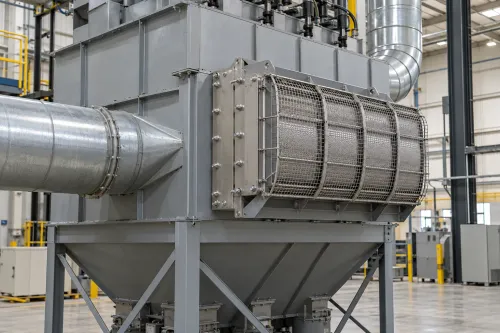
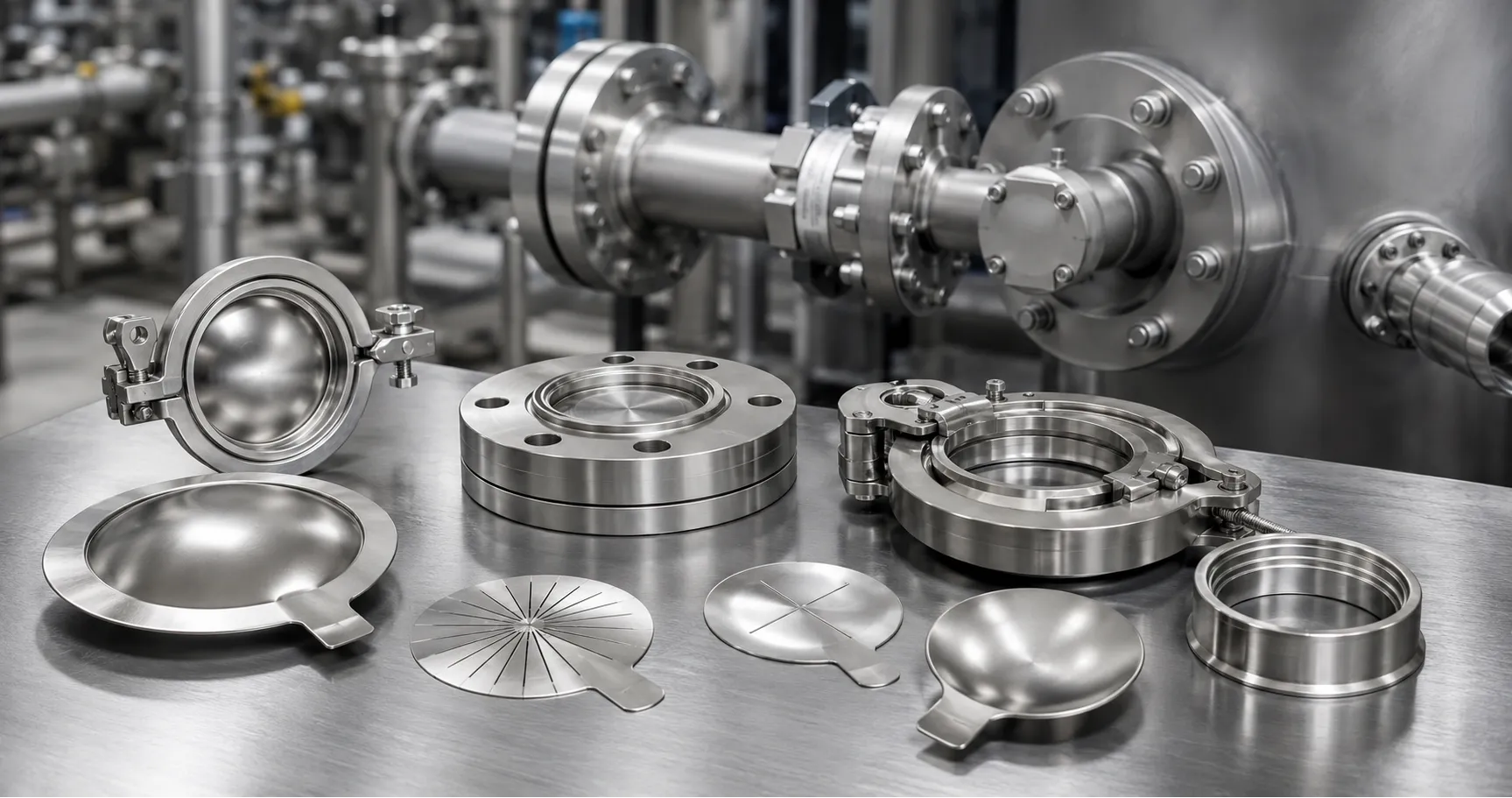
Unexpected pressure rise can damage vessels, piping, heat exchangers and processing equipment within seconds. A rupture disc provides a predetermined pressure-relief path by opening when specified conditions are reached. Because it is a non-reclosing device, its selection requires careful coordination between process engineering, mechanical design and plant safety teams.
Choosing a rupture disc manufacturer should therefore involve more than comparing diameter, pressure rating and price. Procurement teams need a device that matches the process conditions, relief calculations, installation arrangement and applicable project requirements.
Begin With the Overpressure Scenario
The manufacturer cannot recommend a suitable disc without understanding why excess pressure may develop. Typical causes include:
- Blocked discharge lines
- Runaway chemical reactions
- External fire exposure
- Cooling or utility failure
- Thermal expansion of trapped liquid
- Gas breakthrough
- Equipment malfunction
- Abnormal operating procedures
Each scenario may produce a different relief load. The required flow area should be established through engineering calculations rather than by selecting a disc based only on the nominal pipe size.
Rupture discs are recognised as non-reclosing pressure-relief devices, while spring-loaded relief valves are reclosing devices. Their sizing, selection and installation must reflect the applicable vessel, piping and pressure-protection requirements. ASME identifies correct design, installation and maintenance as essential to pressure-relief-device performance.
Prepare Complete Process Data
A useful enquiry should include:
- Normal operating pressure
- Required burst pressure
- Maximum allowable working pressure
- Operating and relieving temperatures
- Vacuum or back-pressure conditions
- Process medium and concentration
- Expected pressure cycling
- Required flow capacity
- Nominal size and flange standard
- Available installation space
- Corrosion or hygiene requirements
Minimum and maximum temperatures both matter because disc behaviour can vary with temperature. The manufacturer also needs to know whether the medium is a gas, vapour, liquid or multiphase mixture.
Where the disc will operate close to its marked burst pressure, the operating ratio becomes particularly important. Repeated pressure pulsation, vibration or vacuum exposure can influence the most appropriate disc design.
Review Material Compatibility
Disc and holder materials must be compatible with the process fluid and surrounding environment. Stainless steel, nickel alloys and other corrosion-resistant materials may be considered depending on chemical exposure, temperature and project specifications.
Compatibility should also cover gaskets, protective linings and any sensor components installed with the assembly. General material compatibility charts can support preliminary screening, but plant-specific experience and engineering review remain important.
Evaluate Manufacturing Documentation
A technically capable rupture disc manufacturer should be able to define what documentation accompanies the product. Depending on the project, the procurement package may require:
- Product datasheet
- Marked burst pressure and temperature
- Manufacturing range
- Material details
- Dimensional drawing
- Direction-of-flow marking
- Batch or lot traceability
- Test documentation
- Installation instructions
- Applicable conformity records
The submitted quotation should clearly separate confirmed specifications from assumptions. Unresolved process information should be closed before manufacturing begins.
Consider the Complete Assembly
A rupture disc does not function independently of its installation. Holder orientation, gasket arrangement, bolt loading, piping alignment and downstream discharge conditions can all affect performance.
Procurement managers should therefore assess the disc, holder and optional burst indication as one pressure-protection assembly. ISO material notes that a rupture-disc device includes both the disc and its holder, reinforcing the importance of evaluating them together. ISO references rupture-disc devices within the broader framework for protection against excessive pressure.
For industrial projects in Vadodara and other manufacturing centres across Gujarat, local engineering coordination can help resolve nozzle dimensions, shutdown schedules and replacement requirements efficiently. Flammer Technologies Private Limited works within this industrial safety field and can be included in technical discussions where application data is available for review.
The final selection should be approved by qualified personnel responsible for the protected system. A well-prepared specification reduces procurement ambiguity and helps ensure that the supplied device matches the actual pressure-relief duty.
Keywords