A pressure safety valve and an explosion-suppression system respond to different failure mechanisms, so installing one does not make the other unnecessary. You will be able to map the incident sequence, identify the protection layer your process needs, and specify a valve that remains effective alongside detection, suppression, isolation, or venting equipment.
Key takeaways
- Treat pressure relief and explosion suppression as separate protection layers.
- Match valve set pressure and relieving capacity to the protected boundary.
- Check discharge routing, fouling risk, chattering risk and maintenance access.
- Request hazard data, drawings, calculations and compatibility records before purchase.
How the two protection systems work during the same incident
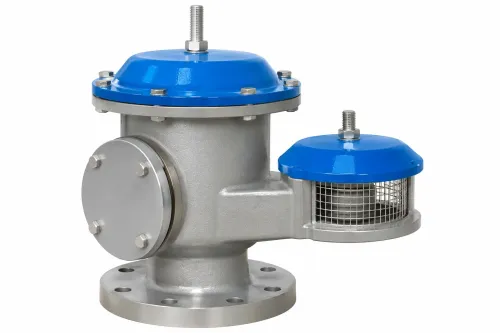
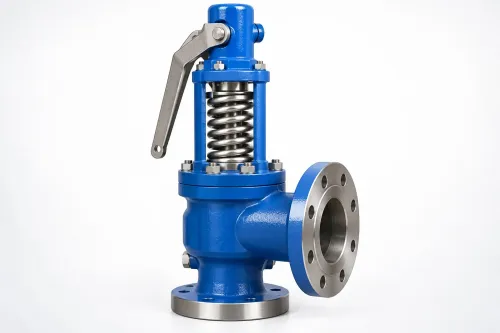
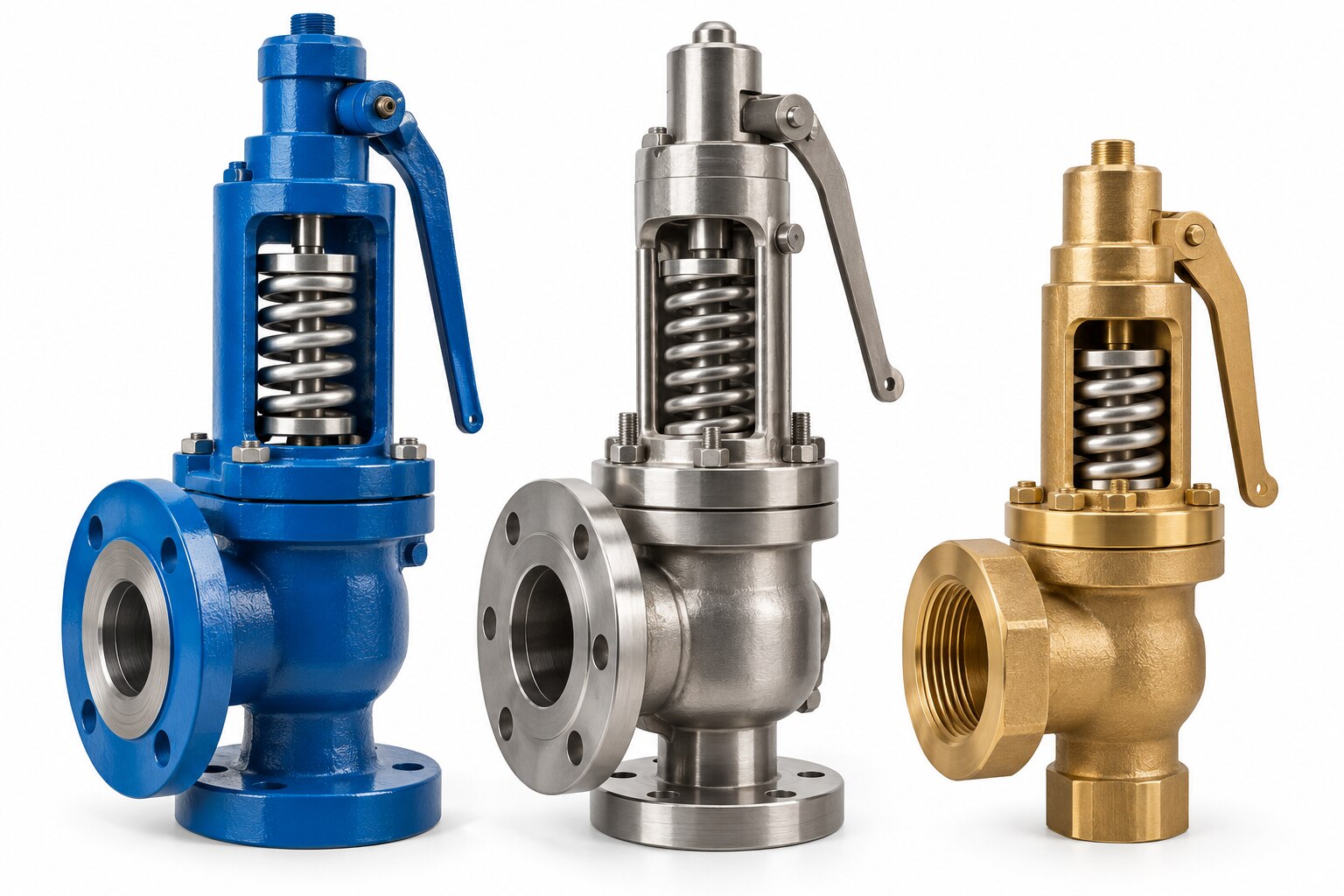
A pressure safety valve limits pressure from a process upset; an explosion-suppression system limits the growth of a deflagration. The pressure safety valve benefits pressure boundaries exposed to blocked outlets, fire, thermal expansion, or control failure, but it cannot replace suppression inside a dust collector, silo, mill, filter, or conveying line.
1. A detector identifies the pressure rise, flame, or explosion signal and sends it to the suppression control panel.
2. The system rapidly actuates an extinguisher, releasing a tested suppressant into the vessel to interrupt combustion and reduce flame development.
3. Pressure still rises during the event. The vessel, suppression hardware, and isolation devices must withstand the calculated reduced explosion pressure and temperature.
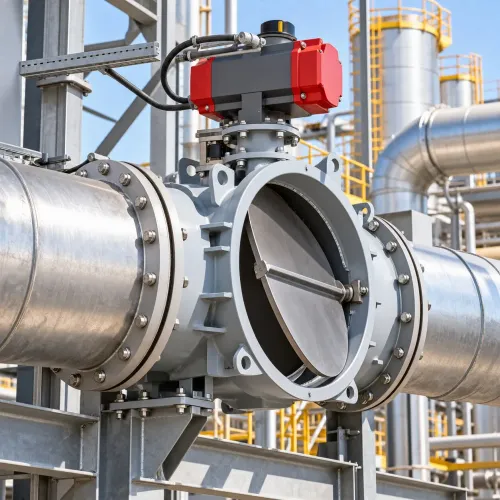
4. Isolation valves or barriers close connected ducts and pipelines, limiting flame and pressure transmission. Shutdown logic stops fans, feeders, or ignition sources.
5. A pressure safety valve opens only if pressure reaches its set point from an applicable overpressure scenario. If it discharges during an explosion, route the outlet to a safe, suitable destination; venting combustible gas, dust, vapour, or burning material indoors creates another hazard.
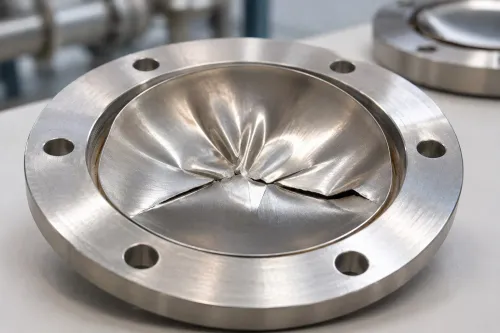
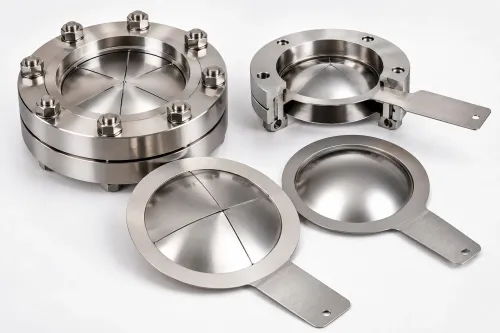
Design the pressure safety valves explosion suppression system combination around separate failure modes. Explosion suppression is not explosion venting, flameless venting, a rupture disc, or a pressure safety valve: each addresses a different pressure, flame, or containment problem.
A PSV also protects ancillary receivers and suppressant containers, but only after correct inspection, testing, and set-pressure verification.
Choose protection for the actual overpressure and explosion hazard
Start with the material, energy source, and pressure path—not the equipment catalogue. Ask what can generate pressure, how fast it rises, and where the released contents would go.
| Scenario | Clues to confirm | Protection implication |
|---|---|---|
| Ordinary overpressure | Control-valve failure, thermal expansion, pump dead-heading, or excess heating in a noncombustible process | Size a PSV for the credible flow and set pressure; suppression equipment does not address this cause. |
| Blocked outlet | A closed valve, plugged filter, frozen line, or isolated downstream vessel traps incoming flow | Provide a PSV or thermal-relief valve, then route discharge to a safe destination. |
| Dust deflagration | Combustible dust, suspended concentration, ignition source, and test values such as Kst and Pmax in a mill, silo, filter, or conveyor | Use explosion suppression, venting, or flameless venting with explosion isolation. A PSV cannot stop flame propagation. |
| Gas explosion | A flammable gas or vapour, air mixture, confinement, ignition source, and gas-explosion data such as Pmax and KG | Select suppression or venting for the enclosure and isolate connected pipework; do not treat it as ordinary relief. |
| Runaway reaction | Polymerisation, decomposition, foaming, rapid gas generation, or rising temperature after cooling failure | Use reaction calorimetry, two-phase-flow analysis, emergency depressurisation, or a dedicated reaction-relief device. |
| Fire exposure | External flame heats a vessel, raises vapour pressure, or weakens its contents | Provide fire-case PSV capacity and a discharge route that will not release burning or toxic material into the workplace. |
For ancillary vessels, suppressant containers, air receivers, and accumulators, a PSV can protect the pressure boundary during the event. It complements, never replaces, explosion suppression equipment.
Set pressure, relieving capacity, and compatibility with suppression hardware
Set pressure must sit above the highest normal operating pressure and below the protected equipment’s allowable pressure, with the permitted accumulation stated by the governing design code. Set it too low and the valve opens during routine pressure fluctuations; set it too high and the vessel can exceed its pressure boundary before full lift.
Specify capacity for every credible relieving case, not only blocked outlet: fire exposure, thermal expansion, control-valve failure, runaway reaction, and gas generation. Confirm the valve’s certified flow at the relieving pressure, fluid temperature, molecular weight, viscosity, and backpressure. Undersized inlets, excessive outlet pressure, or wrong discharge piping can cause late opening, reduced lift, and chattering.
The benefits of a pressure safety valve for an explosion suppression system in Vadodara depend on coordination with the suppression guarantee, not on location alone.
| Detail | Check | Failure prevented |
|---|---|---|
| Set pressure and blowdown | Design pressure, allowable accumulation, normal operating range | Early opening or late protection |
| Relieving capacity | Each credible scenario, certified flow, inlet and outlet pressure loss | Pressure-boundary overload |
| Suppression compatibility | Guaranteed reduced explosion pressure, detector response time, agent temperature, isolation layout | Suppression hardware undermining vessel protection |
| Materials and discharge | Process chemistry, corrosion, ambient temperature, safe discharge destination | Sticking, leakage, toxic or flame discharge |
Keep the PSV and suppression functions separate: suppression controls a fast deflagration, while the PSV protects pressure boundaries. Include ancillary suppressant bottles, instrument-air receivers, hydraulic accumulators, ducts, and isolation devices in the compatibility review.
Prevent fouling, chattering, unsafe discharge, and missed maintenance
A PSV with a fouled inlet, restricted outlet, or incorrect orientation may open late or fail to pass its rated flow. Keep inlet pressure loss within the valve manufacturer’s limit; excessive loss causes chattering, which damages the seat and turns a protective device into a leak.
Backpressure from a narrow or blocked discharge line creates the same danger.
Route the discharge to a location designed for the released material. Venting combustible gas, vapour, dust, or burning fragments into an indoor work area makes an ordinary overpressure response an ignition or exposure event. Confirm that the discharge destination, supports, drains, and weather protection suit the process and ambient conditions.
Use a documented maintenance schedule for both protection systems:
- Inspect the PSV inlet and outlet for deposits, corrosion, isolation-valve mispositioning, and unauthorized adjustment.
- Test the set pressure, reseat performance, and relieving capacity at the stated interval; record the valve tag, test date, and result.
- Function-test suppression detectors, wiring, control logic, actuators, suppressant cylinders, and explosion-isolation devices.
- Recheck settings after process changes, cleaning-system changes, or alterations to connected ducts and vessels.
Do not accept a suppression system as proof against every pressure rise. In industrial pressure protection in Vadodara, request proof-test records and the guaranteed reduced explosion pressure after commissioning. A system that cannot discharge its agent, isolate connected equipment, or communicate a shutdown signal provides catalogue protection only.
What to request when specifying a combined protection system in Vadodara
Do not compare suppliers on detector speed or PSV catalogue size alone. For industrial pressure protection in Vadodara, give every bidder the same process basis:
- Vessel, duct, silo, filter, and interconnection volumes
- Normal and maximum pressure, temperature, inventory, flow, and vacuum
- Blocked outlet, fire exposure, thermal expansion, runaway reaction, and explosion scenarios
- Discharge destination, hazardous-area classification, ambient temperature, and inspection access
- Dust particle-size distribution, moisture, concentration, hybrid-mixture status, Kst, Pmax, and MEC results
| Evidence to compare | Ask for | Reject or question |
|---|---|---|
| Explosion-suppression performance | Guaranteed reduced explosion pressure (Pred), detection-to-discharge response time, agent quantity, operating temperature, and tested enclosure configuration | Catalogue ratings without representative test conditions |
| PSV performance | Set pressure, relieving capacity, blowdown, backpressure limit, materials, and certified sizing calculation | A valve sized without the vessel’s credible scenarios |
| System compatibility | Layout showing detectors, suppression vessels, isolation devices, vents, discharge piping, and shutdown logic | “Compatible” stated without pressure, temperature, and failure-mode limits |
| Documentation and service | Test reports, calibration certificates, code basis, drawings, commissioning records, inspection intervals, spares, and response times | No local service plan or no procedure after a discharge |
Ask Flammer Technologies Private Limited, as you would any bidder, to place these values in the quotation rather than directing you to an explosion suppression equipment catalogue.
Related products
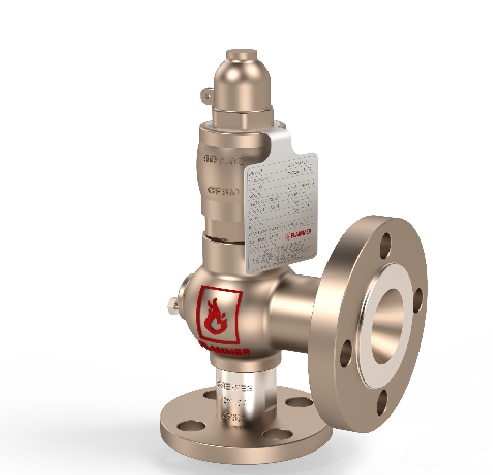 | Pressure Safety Valves Flammer Technologies provides good-quality Pressure Safety Valve solutions that protect industrial equipment, pipelines, pressure vessels and process... View product → |
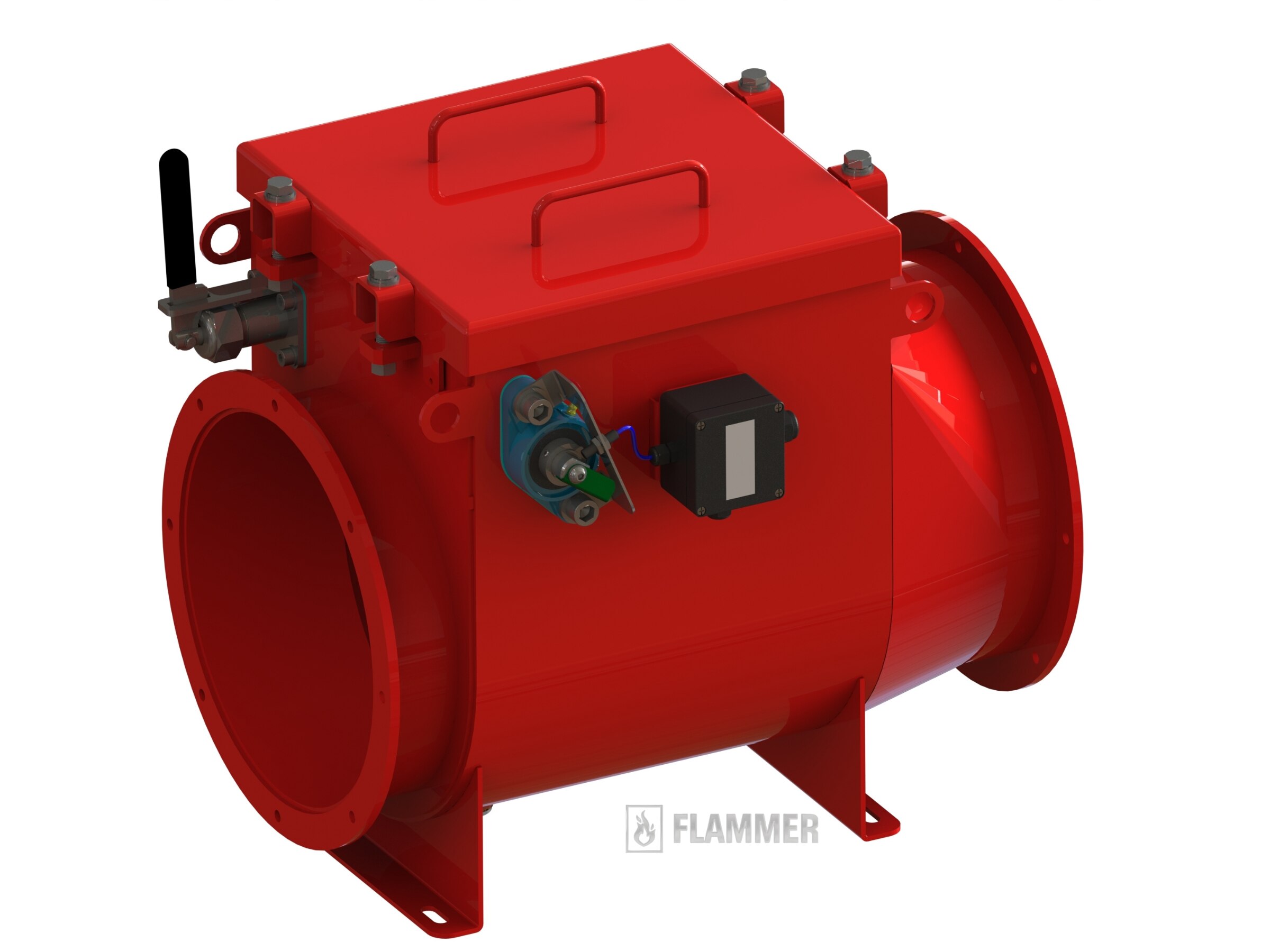 | Dust Explosion Protection Devices Explosion Isolation Valve ( B-FLAP I PRO) Explosion Isolation Valve: B-FLAP I PRO Explosion Isolation Flap Valve — Standard (Carbon Steel) The B-FLAP I PRO is Flammer's certified passive... View product → |
Frequently asked questions
How do pressure safety valves and explosion suppression systems work during the same incident?
A pressure safety valve protects the pressure boundary from overpressure caused by process upsets, while suppression equipment detects and quenches a developing deflagration inside equipment such as a dust collector, silo, mill or filter. A valve cannot replace suppression inside that equipment.
How do you choose protection for the actual overpressure and explosion hazard?
Identify whether the hazard comes from blocked outlets, fire, thermal expansion, control failure, combustible dust or gas deflagration. Size each protection layer for the pressure, fuel, equipment volume, venting arrangement and credible incident scenario.
What must be checked when setting and sizing a pressure safety valve?
Confirm the set pressure, relieving capacity, protected design pressure, inlet and outlet pressure losses, discharge destination and compatibility with the suppression hardware. The valve must protect the pressure boundary without interfering with detection, suppression or venting.
How can you prevent fouling, chattering, unsafe discharge and missed maintenance?
Control contamination at the valve inlet, avoid unstable operating conditions near the set pressure, route discharge to a safe location and document inspection, testing, replacement and access requirements. Include these checks in the combined system specification.
Related products
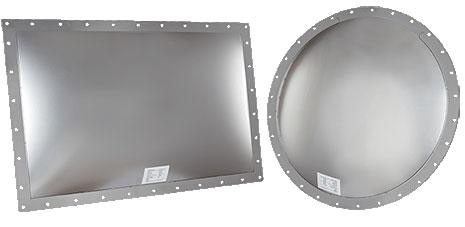 | Explosion Vents At Flammer, we are manufacturers of Explosion Vent — purpose-built passive safety devices designed to protect your industrial equipment, your... View product → |
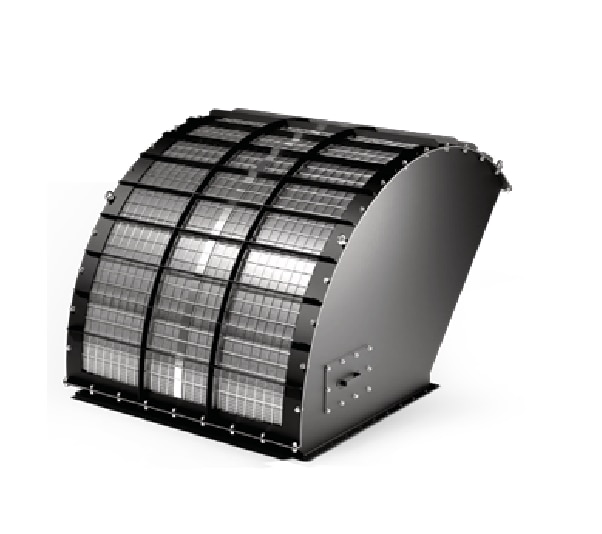 | Flameless Explosion Vent At Flammer, we are manufacturers of Flameless Explosion Vents — specialist safety devices that protect industrial equipment from explosion pressure... View product → |
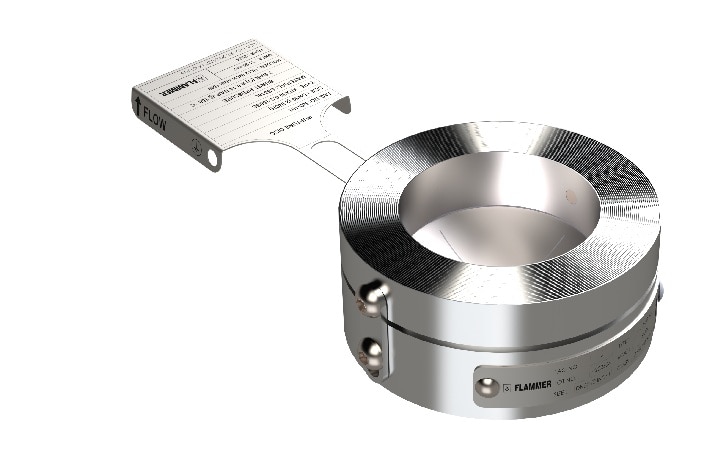 | Rupture Disc Established in 2019 and headquartered in Vadodara, Gujarat, Flammer Technologies Pvt. Ltd. View product → |
Keywords