An explosion rarely remains confined to the equipment where it begins. In interconnected industrial processes, pressure waves and flames can travel through ducts, pipelines, and conveyors, causing secondary explosions that often result in far greater damage than the initial event. An explosion isolation protection system is designed to stop this propagation, helping contain an explosion within a limited area and protecting the rest of the production facility.
For manufacturers operating in Vadodara, Gujarat, where industrial plants continue to grow in size and complexity, explosion isolation has become an essential part of comprehensive process safety.
What Is an Explosion Isolation Protection System?
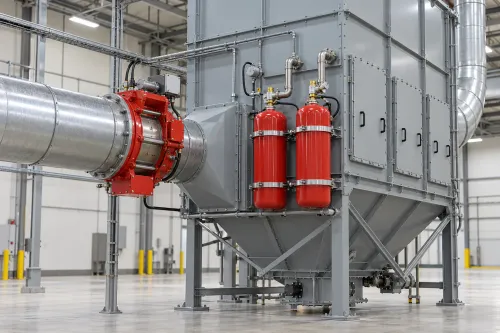
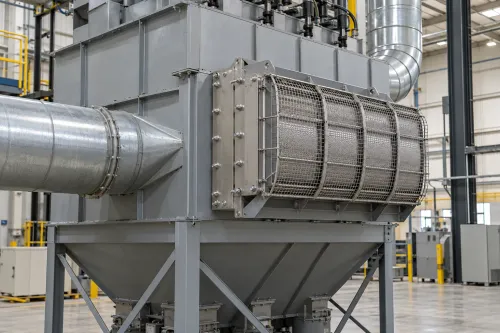
An explosion isolation protection system prevents flames and pressure waves from travelling beyond the equipment where an explosion originates.
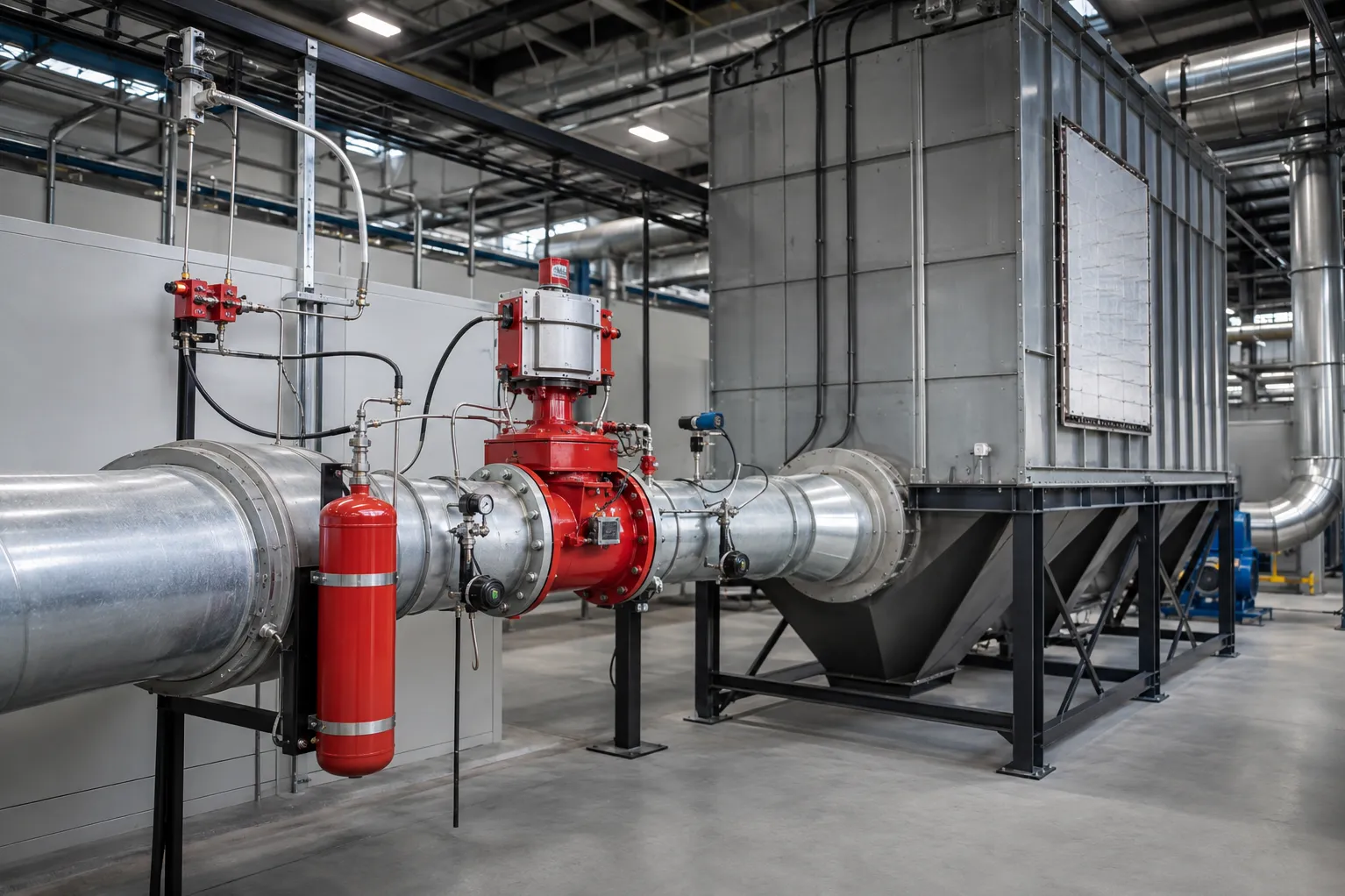
Instead of allowing combustion to spread through interconnected machinery, the system activates rapidly and isolates the affected section.
This approach limits damage, reduces downtime, and enhances personnel safety.
Why Isolation Is Essential
Without isolation, an explosion in one machine can spread to:
- Dust collectors
- Silos
- Storage vessels
- Conveyors
- Process piping
- Cyclones
- Mixers
- Production lines
Secondary explosions are often more destructive because they involve additional combustible materials and larger equipment volumes.
Isolation significantly reduces this risk.
Types of Isolation Systems
Different industrial applications require different isolation technologies.
Mechanical Isolation
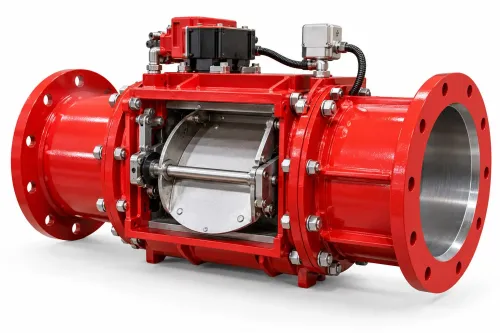
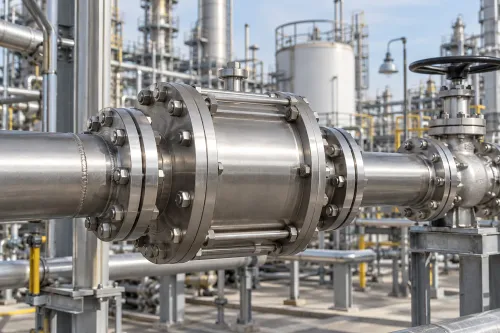
Mechanical systems use specially designed valves that close automatically during an explosion event.
Advantages include:
- Passive operation
- Reliable performance
- Minimal maintenance
- Long service life
Active Isolation
Active systems detect pressure or flame development and trigger isolation devices within milliseconds.
These systems are suitable for complex industrial processes requiring rapid response.
The choice depends on equipment design, process conditions, and hazard assessment.
Factors to Consider Before Selection
Selecting an explosion isolation protection system involves evaluating several technical parameters.
These include:
Process Material
Different combustible materials generate different explosion characteristics.
Examples include:
- Pharmaceutical powders
- Grain dust
- Metal powders
- Plastic dust
- Chemical powders
- Wood dust
Understanding material behavior helps determine suitable protection methods.
Process Equipment
Engineers should review:
- Pipe diameter
- Airflow direction
- Equipment layout
- Duct length
- Process pressure
- Dust loading
These details influence isolation system design.
Compliance Requirements
Industrial facilities should ensure that isolation systems meet applicable engineering and safety standards for explosion protection.
Documentation, testing records, and product certifications support regulatory compliance and plant safety programs.
Benefits of Proper Explosion Isolation
A well-designed system offers numerous operational advantages.
These include:
- Reduced secondary explosion risk
- Improved personnel safety
- Protection of connected equipment
- Lower repair costs
- Faster recovery after incidents
- Improved operational continuity
- Enhanced plant reliability
These benefits extend beyond compliance and contribute to long-term operational resilience.
Selecting the Right Manufacturing Partner
Explosion isolation systems require specialized engineering rather than standard product selection. Manufacturers should understand the customer's process, hazard profile, and equipment configuration before recommending a solution.
Important evaluation points include:
- Engineering expertise
- Product testing
- Customization capability
- Technical support
- Manufacturing quality
- Industry experience
Working with a knowledgeable supplier helps ensure that the selected solution is appropriate for the intended application.
Building Safer Industrial Operations
Modern manufacturing plants are increasingly interconnected, making explosion isolation a critical component of industrial risk management. Investing in the right isolation technology helps protect employees, equipment, and production continuity while supporting compliance with evolving safety expectations.
Flammer Technologies Private Limited designs and manufactures explosion isolation protection systems for industrial applications requiring dependable explosion containment. From its manufacturing base in Vadodara, the company supports engineering teams, EPC contractors, and industrial facilities with solutions tailored to demanding process environments.
Keywords