The right supplier will not quote a sanitary rupture disc from nominal pipe size alone. By the end, you will know how to prepare a technically complete enquiry, compare Vadodara buying routes, verify holder and hygienic fit, and determine whether your flame-arrestor requirement needs a separate validated arrangement.
Key takeaways
- Request the complete disc-and-holder assembly, not a generic rupture-disc catalogue code.
- Provide pressure, temperature, vacuum, connection, material, and cleaning details in your quotation request.
- Match disc dimensions, holder geometry, gasket, clamp, and sanitary connection before ordering.
- Use flame-arrestor support only after assessing the vessel’s gas path and explosion scenario.
Which Vadodara buying route gives you a verifiable sanitary assembly?
Start with a channel that can prove the complete disc-and-holder assembly, not a generic catalogue part. For where to buy rupture disc for clean sanitary applications in Vadodara, compare these routes:
| Route | What you receive | What to verify |
|---|---|---|
| Authorised manufacturer channel | Factory-backed selection and documentation | Authorisation letter, technical contact, replacement-disc route |
| Makarpura, Nandesari, or Savli integrator | Local sourcing, fitting, and installation coordination | Whether stock is local or ordered against a factory lead time |
| Direct manufacturer supply | Direct quotation with local installation support | Quoted lead time, site-service commitment, and commissioning responsibility |
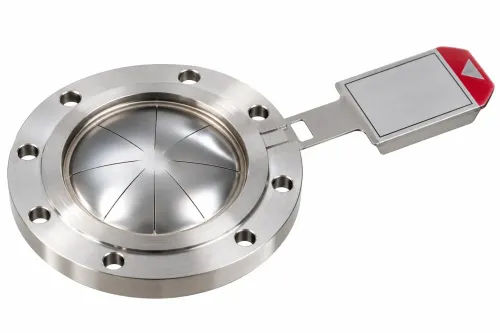
A sanitary rupture disc supplier in Vadodara is credible only when it identifies the disc type, holder model, connection dimensions, flow direction, test documentation, and traceability route. “In stock” means the seller can state the quantity, batch or serial number, and dispatch date; “available” can mean a factory quotation with an unconfirmed lead time.
Ask for these items before issuing a purchase order:
- Legal company name, registered address, GST details, and manufacturing or authorisation status
- Assembly drawing showing holder orientation, hygienic connection, gasket location, drain or vent provisions, and any flame-arrester interface
- ISO 4126-2-related technical information, certified sizing method, and pressure-vessel-code documentation
- Actual-disc burst-test certificate, material or lot traceability, certificate of conformity, and test-equipment calibration status
- Written confirmation of local installation support, replacement-disc identification, and post-burst requalification procedure
Include local manufacturers in the comparison, but accept the supplier only when its documents identify your exact assembly.
What information should go into a pharmaceutical rupture-disc quotation request?
A request for a rupture disc for clean sanitary applications must describe the relieving scenario, not just a nominal pipe size. That is the foundation of pharmaceutical rupture-disc sourcing.
1. Identify the process fluid, whether it is liquid or gas phase, normal operating pressure, required burst or set pressure, relieving temperature, backpressure, mass-flow rate, design temperature, vacuum conditions, pressure cycles, pulsation, and applicable vessel or piping code.
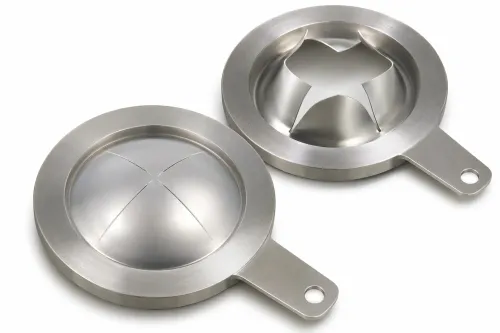
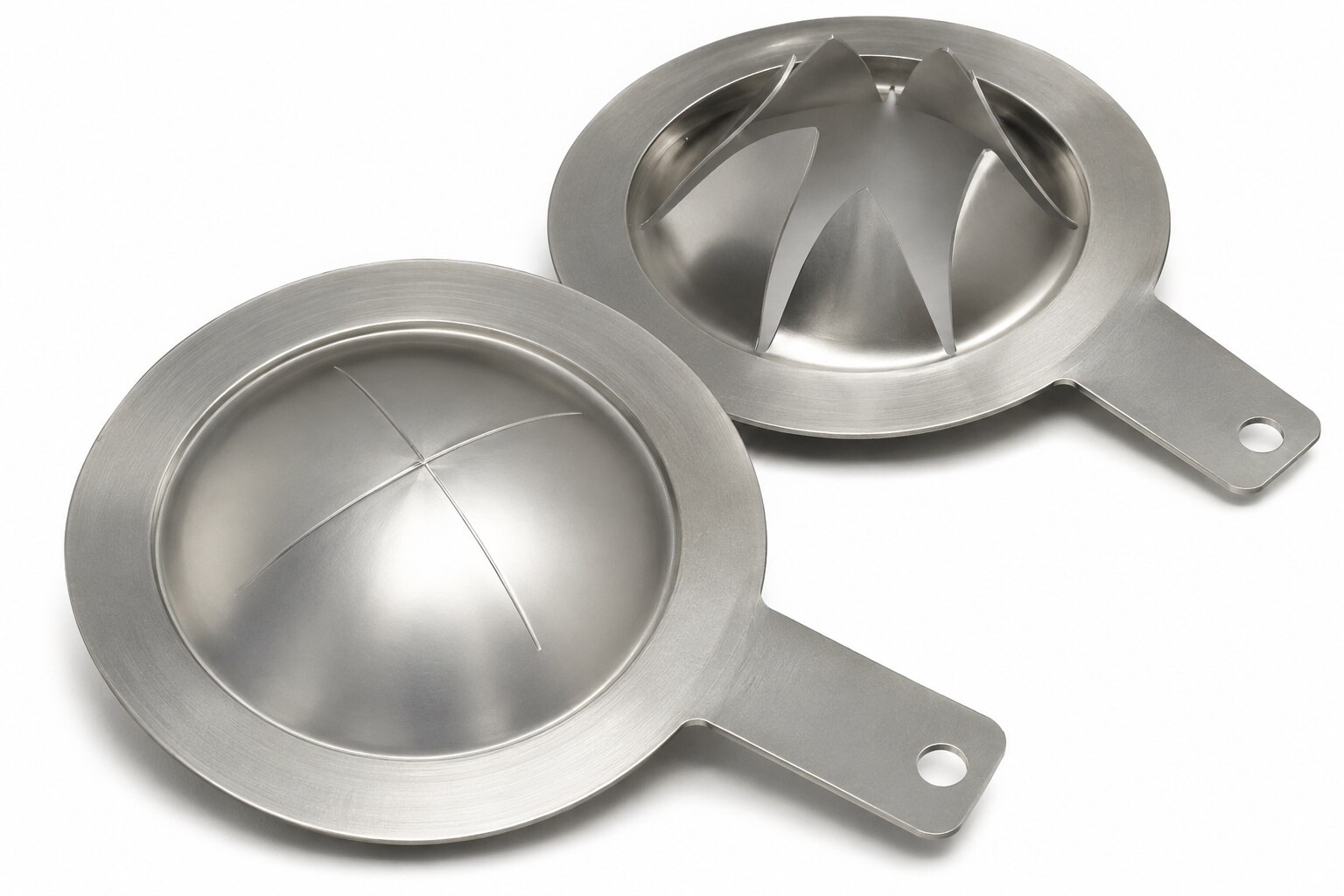
2. Specify disc diameter, construction—forward-acting, reverse-buckling, scored, or composite—holder type, flow direction, connection standard, ferrule dimensions, gasket location, metal grade, internal surface finish, electropolishing requirement, hygienic weld expectations, and CIP or SIP conditions.
3. Require the supplier to assess operating-pressure ratio, temperature basis, manufacturing tolerance, vacuum exposure, pulsation, and compatibility with the proposed flame-arrester arrangement. Ask for a dimensional drawing showing the holder, connection, flow direction, gasket position, and any arrester interface.
4. Make the quotation include a burst-test certificate identifying the actual disc, a material test certificate with heat or lot traceability, certificate of conformity, gasket or liner compound and grade, and the calibration status of burst-test equipment.
5. Request a written change-notification commitment and replacement-part identification. The quotation should also state how the disc is marked, replaced, and traced after installation.
How do you prove the disc, holder and sanitary connection will fit?
Prove fit from the installed dimensions, not from a catalogue’s nominal line size. Send the supplier the holder manufacturer and model, disc orientation, nominal line size, actual ferrule dimensions, gasket seat, clamping method, bolt pattern if used, available face-to-face space, and upstream and downstream piping arrangement.
Order a matched disc-and-holder assembly; nominal pipe size alone proves neither fit nor burst performance.
Ask for these items before ordering:
- A drawing showing holder orientation, flow direction, drain or vent provisions, gasket location, removal clearance, and every flame-arrester interface.
- Confirmation that the installed holder, gasket, adjacent piping, and flame arrester can undergo CIP and SIP in position.
- The replacement-disc identification, post-burst replacement steps, inspection or requalification procedure, and sealing-element requirements.
Compare the connection by measurable features:
| Fitting description | Verify | Why it matters |
|---|---|---|
| Tri-Clamp | Ferrule outside diameter, thickness, geometry, and gasket profile | Matching labels do not ensure a seal |
| Other sanitary fitting | Manufacturer standard, ferrule dimensions, gasket seat, and clamp or bolt pattern | “Sanitary” does not define interchangeability |
Inspect the existing run for crevices, trapped liquid, non-drainable pockets, weld irregularities, and dead legs; an installation drawing can expose a holder that cannot be removed without opening the line. Check the exact elastomer compound and grade against product, cleaning chemicals, steam temperature, sterilisation cycle, pressure, and exposure time.
FDA compliance alone does not prove process suitability for a rupture disc for clean sanitary applications.
What does flame-arrestor support require beyond a sanitary rupture disc?
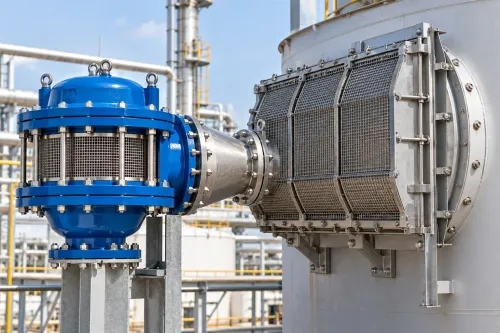
A “flame-arrestor support” clause must identify a complete, validated arrangement, not imply that a sanitary rupture disc stops flame.
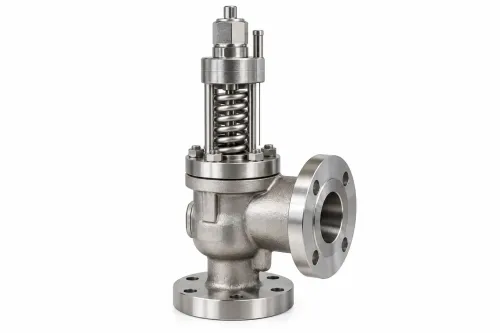
A rupture disc relieves liquid or gas overpressure; a pressure safety valve reseats after pressure relief; a vacuum breaker admits gas to prevent vessel collapse; an explosion vent relieves dust-explosion pressure; and a flame arrester limits flame transmission under defined combustion conditions. None is interchangeable.
For a rupture disc for clean sanitary applications, require the supplier to state which protection concept applies: a separate flame arrester, explosion-isolation system, flameless vent, or process-specific ignition and flame-propagation review. Put these checks in the purchase specification:
- Confirm arrester pressure drop, disc burst behaviour, flow capacity, operating and relieving temperature, gas or vapour group, and maximum experimental safe gap or equivalent flame-propagation data.
- State the explosion direction and hazard type, including whether the risk involves vapour, gas, or combustible dust.
- Require a calculation showing how the arrester changes relieving capacity, backpressure, and disc operation.
- Link the pressure-relief calculation to the flame-propagation assessment, with drawings showing flow direction and the interface between holder and arrester.
Flammer Technologies Private Limited can be included in a Vadodara comparison only after it identifies this arrangement and supplies the supporting calculations, drawings, and traceability documents. Selecting the disc and arrester independently can produce an uncertified or hydraulically inadequate assembly. Dust-explosion venting and isolation require a different review from vapour-line flame arresting.
Related product
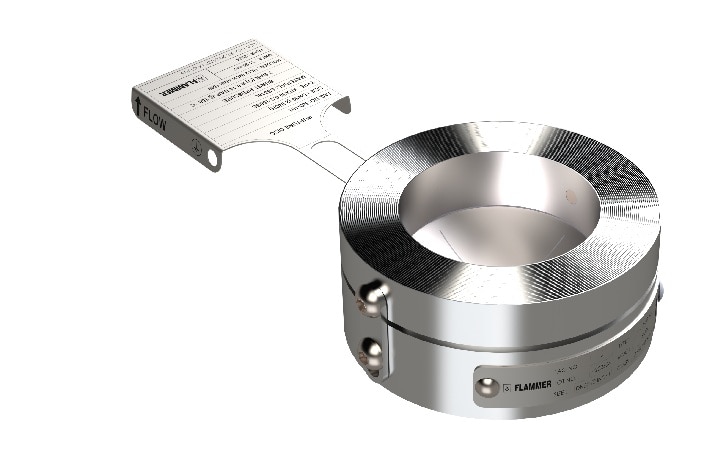 | Rupture Disc Established in 2019 and headquartered in Vadodara, Gujarat, Flammer Technologies Pvt. Ltd. View product → |
When is a sanitary rupture disc the wrong choice for your vessel?
Choose another device when the vessel needs repeated relief, reseating, or stable pressure control. A rupture disc is normally a one-time device: after it bursts, replace the disc and sealing elements, then follow the specified inspection or requalification procedure.
Frequent pressure cycling, pulsation, operation near marked burst pressure, vacuum exposure, corrosion, temperature differences, or repeated CIP and SIP cleaning can cause premature rupture or change effective burst performance. Ask for the allowable operating-pressure ratio and temperature basis in the datasheet; do not accept an invented rule of thumb.
| Option | What it does | When it applies |
|---|---|---|
| Rupture disc | One-time overpressure relief | Infrequent relief with known burst conditions |
| Pressure safety valve | Reseating, repeatable relief | Repeated relief or stable pressure control |
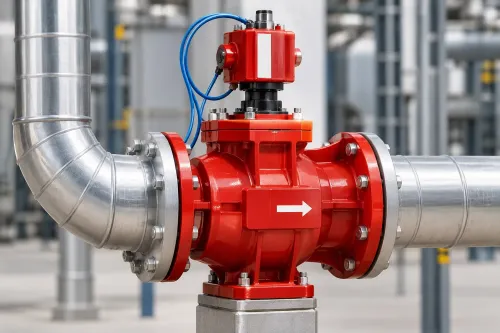
| Disc and valve assembly | Protects the valve from fouling or corrosive media | When the supplier sizes and documents both as one assembly |
Use vacuum protection when external pressure, cooling, draining, or steam condensation could collapse the vessel. A flame arrester limits flame transmission; it does not replace a correctly sized pressure-relief device.
For pharmaceutical rupture disc sourcing, require the supplier to provide:
- Exact burst-pressure tolerance, temperature correction, vacuum-support requirement, installation direction, and gasket specification
- Replacement-disc identification, availability, and the post-burst inspection procedure
- ASME Section VIII or the governing vessel-code basis separately from hygienic or food-contact claims
- Evidence that the selected forward-acting, reverse-buckling, scored, or composite disc suits sterile, cyclic duty and the flame-arrester arrangement
Before deciding where to buy rupture disc for clean sanitary applications in vadodara, obtain these documents and compare the complete assembly, not a nominal pipe size.
Frequently asked questions
Which Vadodara buying route gives you a verifiable sanitary assembly?
Choose a supplier or authorised channel that can identify the disc, holder, sanitary connection, materials, and test documentation as one assembly. Ask for the manufacturer, part numbers, batch or serial traceability, and certificate copies before purchase.
What information should go into a pharmaceutical rupture-disc quotation request?
Include the required burst pressure and tolerance, design and operating temperatures, vessel volume, process medium, vacuum conditions, connection size and standard, wetted materials, cleaning or sterilisation method, cycle frequency, and required certificates.
How do you prove the disc, holder and sanitary connection will fit?
Compare the disc outside diameter, thickness, orientation, holder seat, gasket dimensions, clamp or ferrule standard, face finish, bolt pattern where applicable, and available installation clearance against the supplier’s certified drawings.
What does flame-arrestor support require beyond a sanitary rupture disc?
Assess the combustible gas or vapour, flame path, pressure and temperature, deflagration or detonation risk, vent direction, equipment volume, and interaction between the rupture disc and arrestor. Obtain a documented design review rather than treating the arrestor as a sanitary-disc accessory.
When is a sanitary rupture disc the wrong choice for your vessel?
Select another arrangement when the vessel needs frequent resetting, repeated pressure cycling beyond the disc’s fatigue capability, reliable reseating, large two-phase relief capacity, vacuum protection, or a certified explosion-venting system that the sanitary disc cannot provide.
Keywords